Crude oil surge sparks market panic as Sensex and Nifty slide to 11-month lows, raising concerns over inflation, fuel costs and investor confidence.
Indian equities opened the week on a steep decline as soaring oil prices rattled financial markets and raised fresh concerns about inflation and economic stability. Investors reacted sharply to escalating tensions in the Middle East, sending benchmark indices to their lowest levels in nearly a year.
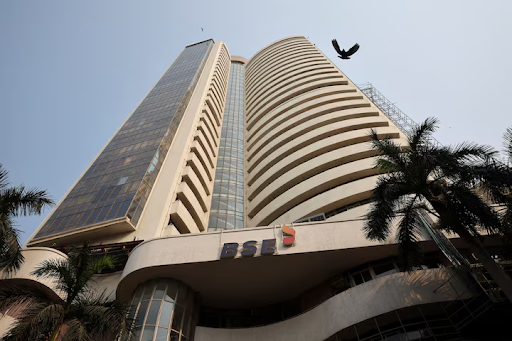
By mid-morning trading on Monday, the Nifty 50 had dropped 2.74 percent to 23,791.7, while the BSE Sensex slid 2.77 percent to 76,735.77. Both indices touched 11-month lows and are now more than 10 percent below their recent peaks — a level that typically signals a market correction.
The sell-off was triggered largely by a sudden spike in crude oil prices, a development that carries serious implications for India, the world’s third-largest importer of oil.
Oil Shock Ripples Through Markets
Crude prices surged roughly 26 percent in early trading, climbing to their highest level since mid-2022. The spike followed reports linked to developments in Iran’s leadership and mounting instability across key energy-producing regions.
Supply worries intensified further as Iraq and Kuwait began cutting oil production. At the same time, earlier reductions in liquefied natural gas shipments from Qatar added to fears of tighter global energy supplies.
With conflict disrupting transportation routes in the Middle East, traders anticipate prolonged pressure on global fuel prices.
For India, the surge is particularly troubling. Higher oil prices can quickly push up import bills, fuel domestic inflation, and weigh on economic growth.
Currency and Bond Markets React
The shockwaves spread beyond equities. The Indian rupee weakened to a record low against the U.S. dollar, reflecting heightened risk aversion among global investors.
Meanwhile, yields on India’s benchmark 10-year government bond climbed to 6.76 percent, rising seven basis points as markets priced in potential inflation risks and the possibility of tighter monetary conditions.
Market analysts say the situation underscores how geopolitical tensions can rapidly influence financial markets worldwide.
Global Turbulence Adds Pressure
The impact was not limited to India. Broader Asian stocks dropped around 4.6 percent, while futures for U.S. and European markets also moved lower. Investors are increasingly worried that rising energy prices could trigger another wave of inflation globally.
Higher inflation typically forces central banks to maintain or raise interest rates — a scenario that tends to weigh heavily on equity markets.
At the same time, demand for safe-haven assets strengthened the U.S. dollar, another factor putting pressure on emerging-market currencies.
Investors Pull Back
Foreign investors have already been reducing their exposure to Indian markets. According to data from the National Stock Exchange of India, foreign portfolio investors withdrew about 218 billion rupees from the market last week.
Domestic institutional investors partly offset those outflows by purchasing stocks worth nearly 328 billion rupees during the same period.
Still, analysts warn that international funds may remain cautious until there is greater clarity about the geopolitical situation and energy prices stabilize.
Broad-Based Market Losses
The downturn was widespread across sectors. All 16 major industry groups were trading lower during the session, with broader indices reflecting similar declines.
Small-cap and mid-cap stocks both fell roughly 2.7 percent, highlighting the breadth of the sell-off.
Banking shares were particularly hard hit. The HDFC Bank and ICICI Bank each dropped about 3.3 percent as investors worried that rising bond yields could squeeze financial-sector profits.
State-owned banking stocks also tumbled, extending losses from the previous week.
Energy Costs Hit Key Companies
Companies with strong exposure to energy prices or the Middle East saw some of the sharpest declines.
Engineering giant Larsen & Toubro fell more than 4 percent amid concerns about its operations linked to the region.
Airline operator InterGlobe Aviation plunged over 7 percent as investors feared higher aviation fuel costs and slower international travel demand could affect earnings.
Oil marketing firms such as Bharat Petroleum, Hindustan Petroleum and Indian Oil Corporation also dropped between five and six percent due to rising crude input costs.
Volatility Surges
Market volatility spiked sharply as uncertainty grew. India’s volatility index jumped to its highest level in nearly two years, reflecting heightened investor anxiety.
Analysts say the coming weeks will likely depend heavily on developments in the Middle East and the direction of global oil prices.
Until there is clearer visibility on those fronts, markets may continue to experience sharp swings.