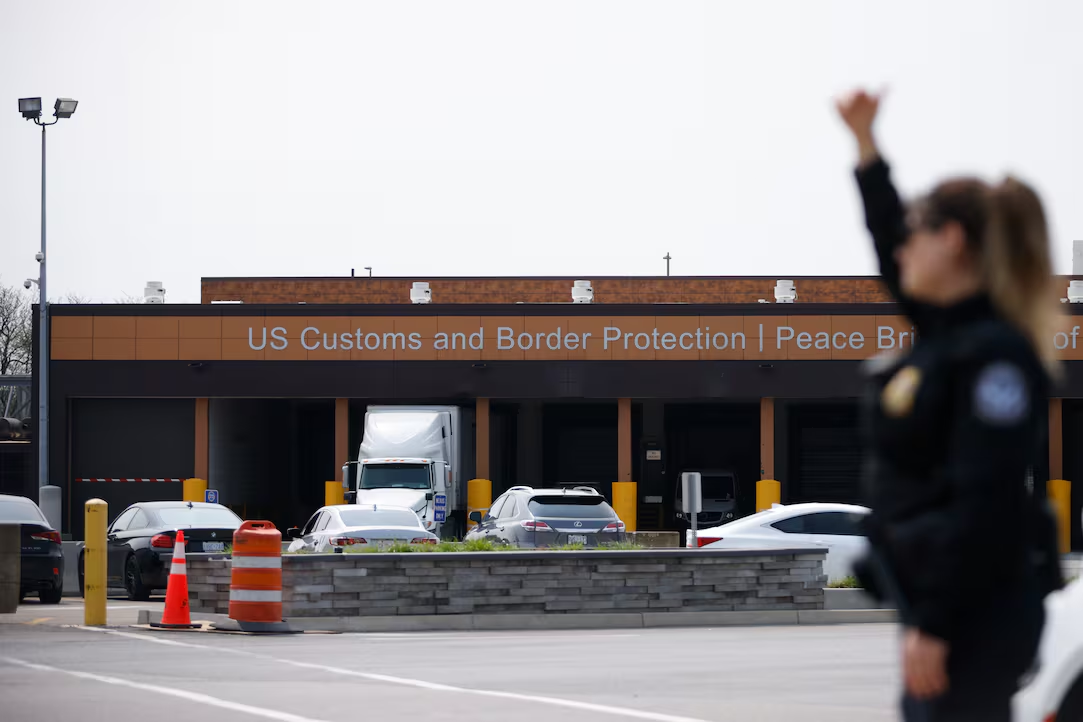
Smartwatches, Phones Now Searchable at U.S. Border. (CBC News)
Border officers in the United States searched more electronic devices than ever before last year, sparking renewed debate over privacy and security at international crossings.
According to figures released by U.S. Customs and Border Protection, officers inspected 55,318 electronic devices in 2025. The number marks a steady climb from 47,047 searches in 2024 and 41,767 in 2023.
The searches involve items such as laptops, mobile phones, and digital storage devices carried by travellers entering or leaving the country. While the total represents only a tiny fraction of overall travellers, civil liberties advocates say the consistent rise highlights growing surveillance powers at the border.
Routine Searches Continue to Rise
Most device inspections fall under what authorities call “basic searches.” These examinations allow officers to review a device’s contents without needing reasonable suspicion of wrongdoing.
In 2025, basic searches increased significantly, rising from 42,725 the year before to 50,922.
More intrusive “advanced searches” — where officers may copy or analyze device data — also ticked upward. Those searches reached 4,396 in 2025, slightly higher than the 4,322 conducted in 2024.
Under existing rules, advanced searches are supposed to occur only when officers suspect a violation of law or when national security concerns arise.
Officials declined to provide further details about where most searches take place, including whether they occur more frequently at airports or land crossings.
More Americans Caught in the Net
While device searches of non-U.S. citizens have gradually increased over time, the number involving American citizens has grown more sharply.
In 2023, officers searched 8,657 devices belonging to U.S. citizens. By 2025, that number had jumped to 13,590.
Advocates argue the trend reflects expanding government capabilities as border agencies adopt more advanced technology.
Canada’s Response and Comparison
Concerns over device inspections have also prompted responses north of the border.
Last year, the Government of Canada updated its travel advisory for the United States, warning Canadians that border officers may inspect phones, laptops, and other digital devices during entry procedures.
However, similar searches appear far less common in Canada. Data from the Canada Border Services Agency shows that officers conducted 1,108 device examinations in 2024.
Those searches led to 498 violations being identified.
When viewed relative to the number of travellers, the difference becomes even more striking. U.S. authorities searched devices belonging to roughly 0.011 percent of the more than 420 million travellers entering the country. In Canada, only about 0.0012 percent of the nearly 94 million incoming travellers had their devices examined.
Courts and Civil Liberties Debate
Privacy advocates say the growing use of digital searches raises serious constitutional questions.
Esha Bhandari of the American Civil Liberties Union argues that such inspections can expose deeply personal information unrelated to border security.
She says courts need to impose clearer limits on when and how device searches are carried out.
Legal rulings across the United States currently vary. In parts of the country governed by the Ninth Circuit Court of Appeals, officers are limited to searching for digital contraband. In other regions, courts have allowed broader searches.
Because the Supreme Court of the United States has not yet ruled directly on the constitutionality of these searches, a patchwork of legal standards remains in place.
New Rules Expand Searchable Devices
At the same time, border authorities have broadened the list of electronic devices that can be inspected.
A revised directive issued earlier this year by U.S. Customs and Border Protection expanded the definition of searchable technology. The updated rules now explicitly include flash drives, SIM cards, GPS systems, vehicle infotainment systems, unmanned aircraft systems, and smartwatches.
The directive also added new offences officers may investigate during device inspections, including narcotics smuggling, firearms trafficking, and the theft of proprietary information.
Advice for Travellers
Immigration lawyer Jessica Jensen says the revised rules offer more clarity for both officers and travellers, even though they also confirm the broad scope of border search powers.
She advises travellers to log out of apps, remove sensitive or privileged information, and switch devices to airplane mode before handing them over to officials.
Travellers can refuse a request to surrender their devices, she noted, but doing so often comes with consequences.
Those consequences may include being denied entry into the United States — meaning the trip could end before it even begins.
A Growing Issue at the Border
While device searches still affect only a small percentage of travellers, the steady year-by-year increase suggests the practice is becoming more common.
For privacy advocates, the issue reflects a broader challenge in balancing national security interests with personal digital rights.
Until the country’s highest court weighs in, the debate over how far border officers can go in examining travellers’ digital lives is likely to continue.