Jose Antonio Kast assumes office in Chile, marking a major rightward political shift amid debates on security, immigration, and democracy.
Chile entered a new political chapter on Wednesday as José Antonio Kast formally assumed office, signaling the country’s most pronounced shift toward conservative leadership since the era of Augusto Pinochet. His inauguration followed a decisive election victory that reflected widespread public concern about crime, immigration, and economic uncertainty.
Speaking from the balcony of La Moneda Palace, Kast addressed supporters gathered in the capital city of Santiago. In his first presidential speech, he framed his administration as a government determined to restore order and protect national sovereignty. He warned that Chile faces “real adversaries,” referring to criminal groups and individuals who enter the country illegally to exploit communities or spread violence.
According to Kast, his government will pursue those responsible for crime and ensure they face justice, emphasizing that the state “will not negotiate” with such threats.
Demonstrations Reflect a Divided Nation
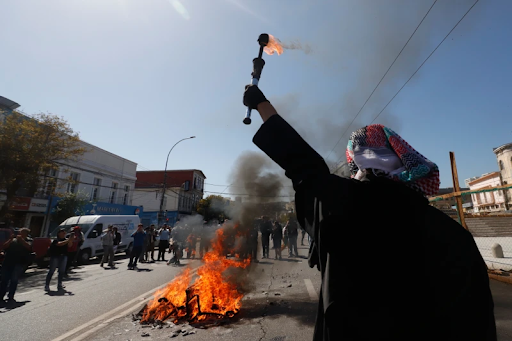
While Kast’s supporters celebrated his inauguration, the day also revealed deep political divisions across Chile. Demonstrations both supporting and opposing the new president unfolded near Congress in Valparaíso and around La Moneda Palace in Santiago.
Supporters waved national flags and carried banners calling Kast a “president of change.” Many viewed his victory as a necessary response to rising insecurity and political dissatisfaction. Melisa Muñoz, a 38-year-old secretary attending the celebration, said she believed the country must unite behind the new leader after a strong electoral mandate.
At the same time, critics gathered nearby to protest what they described as a worrying return to hardline politics. Some demonstrators compared Kast’s ideology to policies associated with the Pinochet-era dictatorship. One protester said she feared Chile might return to the political climate of the 1980s, a period remembered for authoritarian rule and widespread protests.
To maintain security during the inauguration, authorities temporarily closed several subway stations in downtown Santiago.
A Political Realignment Across Latin America
Kast’s rise to power also reflects a broader political shift across Latin America, where voters in several countries have recently replaced incumbent governments with conservative leaders. Similar political changes have taken place in Argentina and Bolivia, as public frustration over crime, economic instability, and governance continues to reshape regional politics.
The Chilean president has signaled interest in strengthening ties with the United States and maintaining closer cooperation with conservative governments in the region. His approach aligns in some ways with the policies of Donald Trump, particularly regarding immigration enforcement and security.
Although Kast has largely avoided commenting on controversial policy debates during the transition period, his diplomatic signals suggest a shift in Chile’s foreign policy direction.
Changing Relations with Washington
Relations between Chile and the United States experienced tension under former President Gabriel Boric, who frequently criticized Trump’s leadership style and foreign policy approach. The relationship became increasingly strained during Trump’s second administration, particularly over geopolitical projects and regional alliances.
One dispute centered on a proposed submarine cable linking Chile with China, which faced criticism from Washington. Kast’s decision to abruptly halt the transition process for that project signaled a potential recalibration of Chile’s international partnerships.
His presence at a recent gathering of right-leaning leaders in Miami, known as the “Shield of the Americas” summit, further highlighted the emerging political alignment among conservative governments in the Western Hemisphere.
Crime and Immigration Shape the Political Landscape
Kast’s victory represents a dramatic turnaround from the 2021 presidential election, when he narrowly lost to Boric. At that time, many Chilean voters rejected his conservative positions on issues such as abortion and same-sex marriage, as well as his praise for aspects of the Pinochet era.
However, shifting public priorities over the past four years reshaped the political debate. Rising organized crime, concerns over illegal immigration, and dissatisfaction with the Boric government’s unmet expectations significantly altered voter sentiment.
Campaigning on promises to strengthen law enforcement and tighten border controls, Kast secured nearly 60 percent of the vote in the recent election. That mandate now places him at the center of a crucial moment in Chilean politics.
As his administration begins, the country faces a delicate balance between calls for stronger security policies and fears of a return to more authoritarian political traditions. Whether Kast can unite a divided nation while delivering on his promises will likely define the trajectory of Chile’s political future.