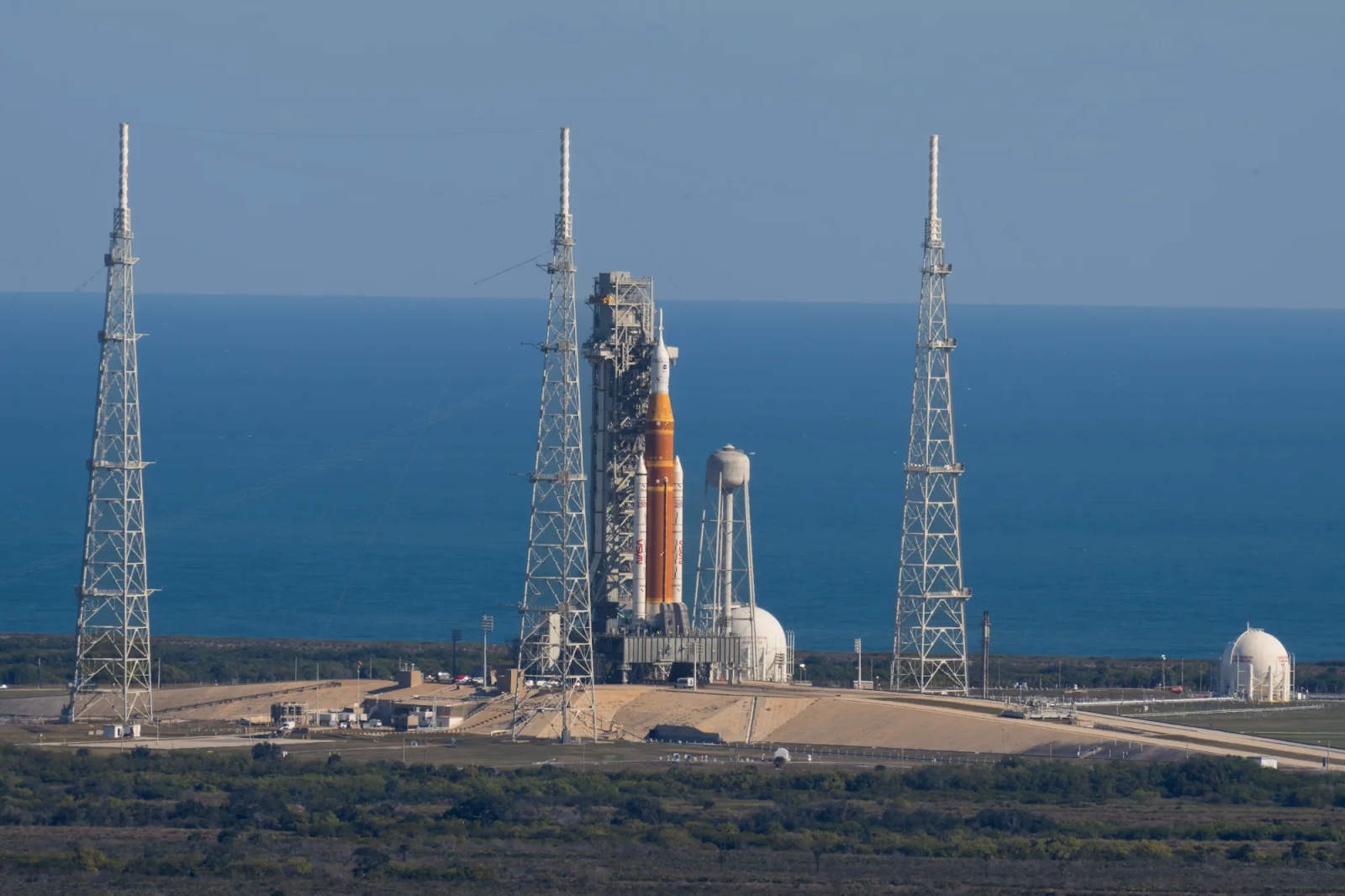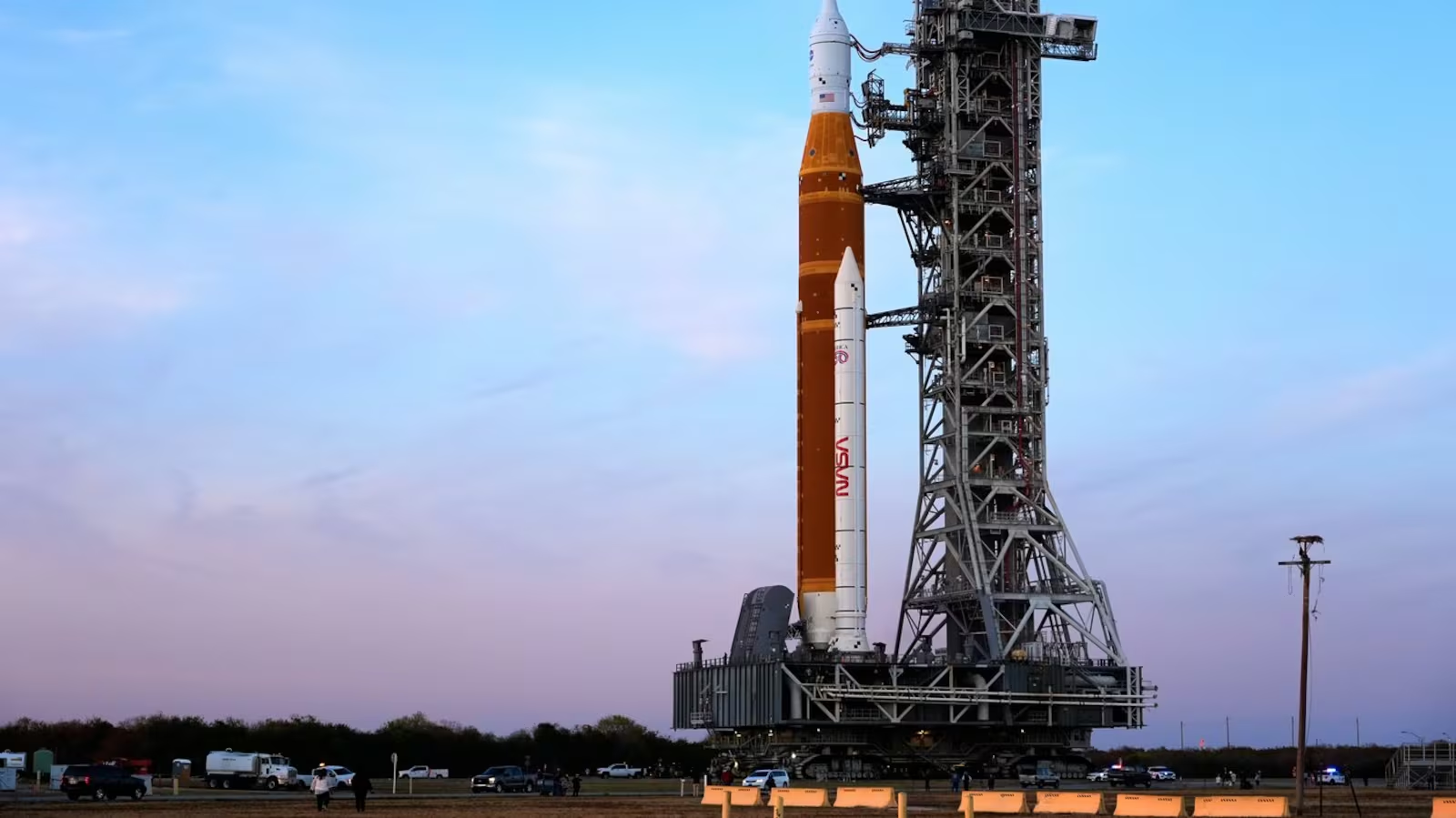
NASA's Artemis II SLS (Space Launch System) moon rocket with the Orion spacecraft slowly rolls back towards the Vehicle Assembly Building at the Kennedy Space Center, Wednesday, Feb. 25, 2026, in Cape Canaveral, Fla. (AP Photo)
NASA has cleared its powerful Space Launch System rocket for an April launch, paving the way for humanity’s first crewed mission around the moon in more than 50 years.
The 322-foot rocket is scheduled to roll out from the Vehicle Assembly Building next week and return to the launch pad at Kennedy Space Center in Florida. NASA is targeting a launch attempt as early as April 1 for the Artemis II mission.
The flight will carry four astronauts on a lunar flyaround, marking the first time people travel toward the moon since the Apollo program ended in the 1970s.
The mission had originally been planned for earlier this year but was delayed after engineers detected hydrogen fuel leaks and other technical issues with the rocket. NASA managed to fix the hydrogen leaks at the launch pad in February, but a separate helium-flow problem forced the agency to return the rocket to the assembly building for additional repairs.
With those repairs now complete, NASA has a limited launch window in early April. If the rocket cannot lift off then, the next opportunity would be between April 30 and early May.
Meanwhile, the broader Artemis program is undergoing changes. NASA administrator Jared Isaacman recently announced a restructuring of the program aimed at speeding up the pace of lunar missions.
Under the revised plan, an additional practice flight in orbit around Earth will take place next year. That mission will now be designated Artemis III, while the first crewed moon landing has been moved to Artemis IV.
Isaacman said NASA is targeting one or possibly two lunar landings in 2028.
At the same time, a recent audit from NASA’s Office of Inspector General warned that the agency still needs a clearer rescue strategy for future lunar crews. Landing missions planned near the moon’s south pole could be more dangerous than the equatorial landing sites used during Apollo missions due to the region’s rugged terrain.
Private companies are also racing to prepare the hardware needed for those missions. SpaceX, led by Elon Musk, and Blue Origin, founded by Jeff Bezos, are developing lunar landers for NASA astronauts.
According to the inspector general’s report, both companies still face major technical challenges, including refueling their landers in orbit before heading to the moon.