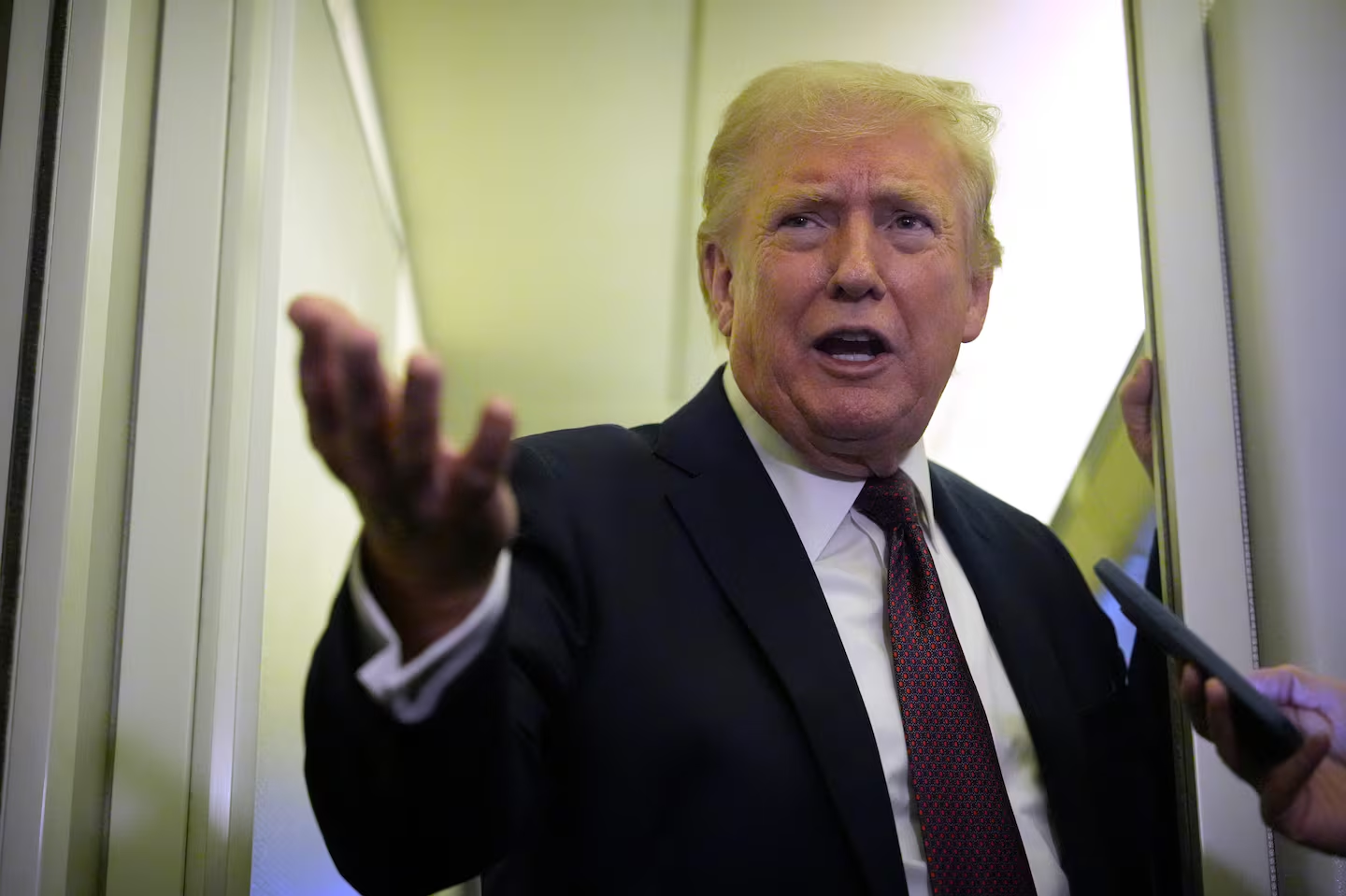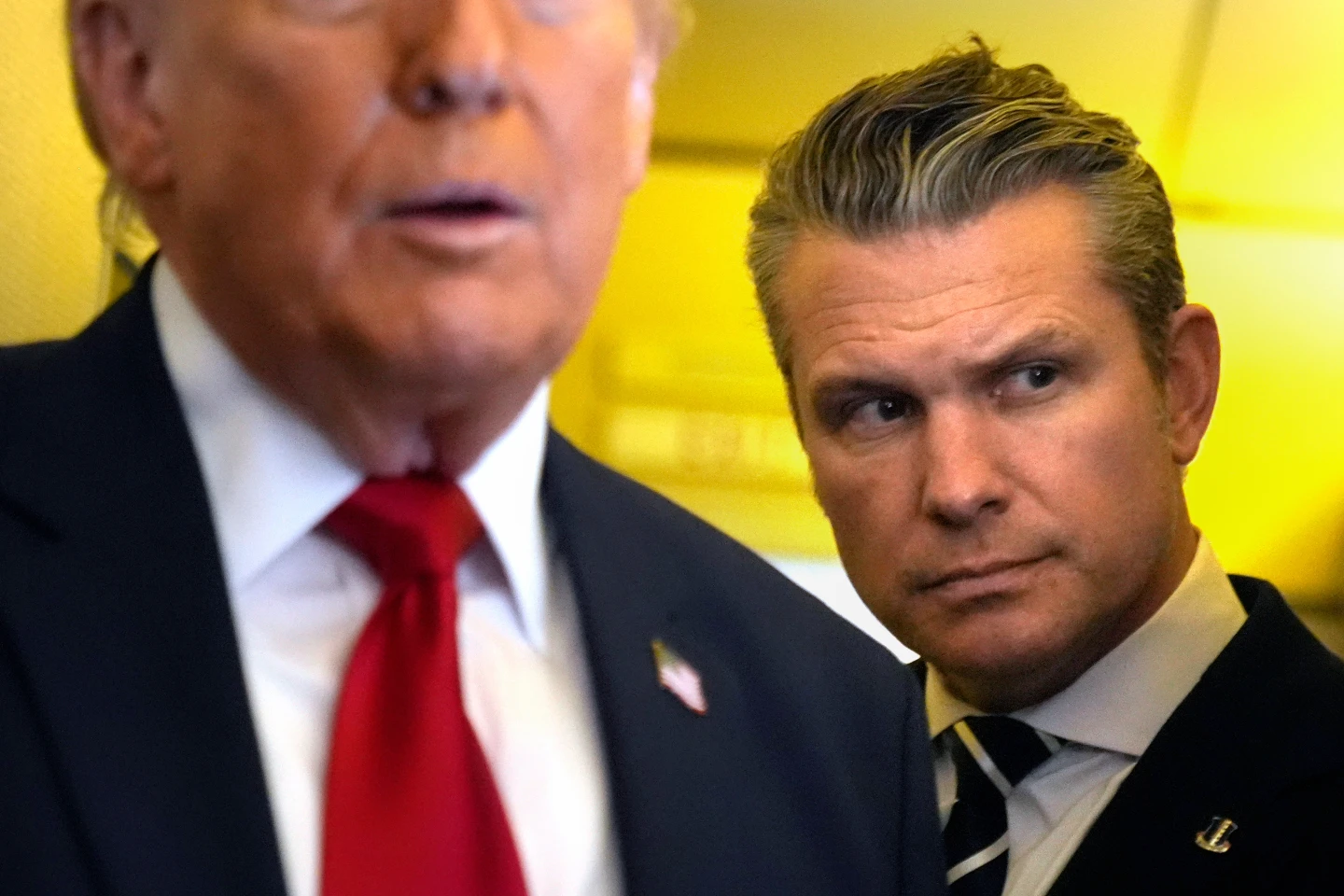
Defence Secretary Pete Hegseth listens as President Donald Trump speaks to reporters while travelling abroad Air force One en route to Dover Air force Base.
Tensions between the White House and major news organizations have intensified as the Trump administration increases pressure on journalists covering the Middle East conflict. Through sharp public criticism, regulatory warnings, and confrontations with reporters, President Donald Trump and his allies are urging media outlets to frame the war in ways the administration believes better reflect U.S. interests and military success.
The escalating dispute highlights a longstanding conflict between political leadership and the press. Yet recent developments suggest a deeper clash over the role of journalism itself, raising concerns among legal experts and media observers about the boundaries of government influence on news coverage.
Growing Confrontation Between the Trump Administration and the Press
President Donald Trump has repeatedly expressed frustration with coverage he considers unfair or misleading. In recent social media posts, he accused several news organizations of exaggerating the damage caused by Iranian attacks on aircraft at a Saudi Arabian airport. He also criticized what he described as “corrupt media outlets,” claiming some journalists repeated false reports allegedly generated through Iranian artificial intelligence propaganda.
According to the president, the media has largely ignored positive developments regarding U.S. military operations in the region. These complaints have fueled broader criticism of mainstream outlets, which the administration frequently accuses of undermining public confidence in American actions abroad.
While disputes between presidents and journalists are common in democratic systems, the tone of recent exchanges has drawn attention from constitutional scholars who see a potential conflict with press freedoms protected under the First Amendment.
A Heated Exchange Aboard Air Force One
The tension was visible during a recent interaction with reporters aboard Air Force One. While returning to Washington from Florida, Trump responded sharply to a question from Mariam Khan of ABC News regarding a fundraising message that used a photograph taken during a dignified transfer ceremony for fallen U.S. service members.
When Khan identified her organization, the president immediately criticized the network. Trump called ABC “one of the most corrupt news organizations,” illustrating the increasingly adversarial relationship between the administration and major media companies.
Such exchanges have become more frequent, reflecting broader dissatisfaction from the White House with how the war is being portrayed across national and international news platforms.
Regulatory Warnings Add New Pressure on Broadcasters
The dispute has expanded beyond rhetoric as the federal government’s communications regulator entered the conversation. Brendan Carr, head of the Federal Communications Commission, recently warned broadcasters that airing “news distortions” could affect their license renewals.
Carr’s statement suggested television stations should ensure their reporting serves the public interest and avoid what he characterized as hoaxes or misinformation. His comments referenced Trump’s criticism of war reporting and urged broadcasters to “correct course” ahead of future license reviews.
However, legal analysts note that the FCC’s authority is limited. The agency does not regulate national networks such as CBS, NBC, or ABC directly, nor does it oversee newspapers like The New York Times or The Wall Street Journal. Cable channels including CNN and Fox News Channel also fall outside the commission’s direct jurisdiction.
First Amendment Experts Warn of Chilling Effects
Constitutional scholars argue that punishing broadcasters for coverage critical of government policy would likely face significant legal challenges. Veteran First Amendment attorney Floyd Abrams noted that while broadcast media operate under licensing rules, they still receive strong constitutional protection.
Abrams explained that thorough reporting on wartime developments is precisely the kind of journalism that serves the public interest. In his view, threats tied to licensing could be interpreted as attempts to influence editorial decisions, raising serious constitutional questions.
Media professionals also worry that aggressive rhetoric may discourage sources from speaking with journalists. Former CNN Pentagon correspondent Barbara Starr warned that a climate of intimidation could lead government officials or insiders to avoid interacting with reporters.
Calls for a “Patriotic Press” Intensify Debate
Members of the administration have also criticized specific outlets for their coverage of the conflict. Defense Secretary Pete Hegseth recently targeted CNN during a Pentagon briefing, rejecting a report suggesting the administration had been unprepared for potential Iranian attacks on global oil infrastructure.
Hegseth went further by suggesting how a “patriotic press” might frame headlines supporting the administration’s position. Meanwhile, several traditional news organizations have lost permanent workspace inside the Pentagon after declining to follow new rules governing press activity.
The administration has also restricted certain media access, with some reporters returning only occasionally for briefings. Still photographers have reportedly been barred from these sessions without a detailed explanation.
Despite these tensions, news organizations insist their reporting remains independent. CNN chief executive Mark Thompson defended the network’s coverage, stating that journalists will continue pursuing factual reporting regardless of political criticism.
Press Freedom Debate Continues
The clash between the Trump administration and major media outlets underscores the enduring friction between government officials and the press. While political leaders often challenge unfavorable coverage, critics argue that threats tied to regulation or patriotism could push the confrontation into more troubling territory.
For journalists, the conflict has become another test of the profession’s watchdog role. Even as access becomes more limited and rhetoric intensifies, reporters say their responsibility to inform the public about wartime decisions remains unchanged.