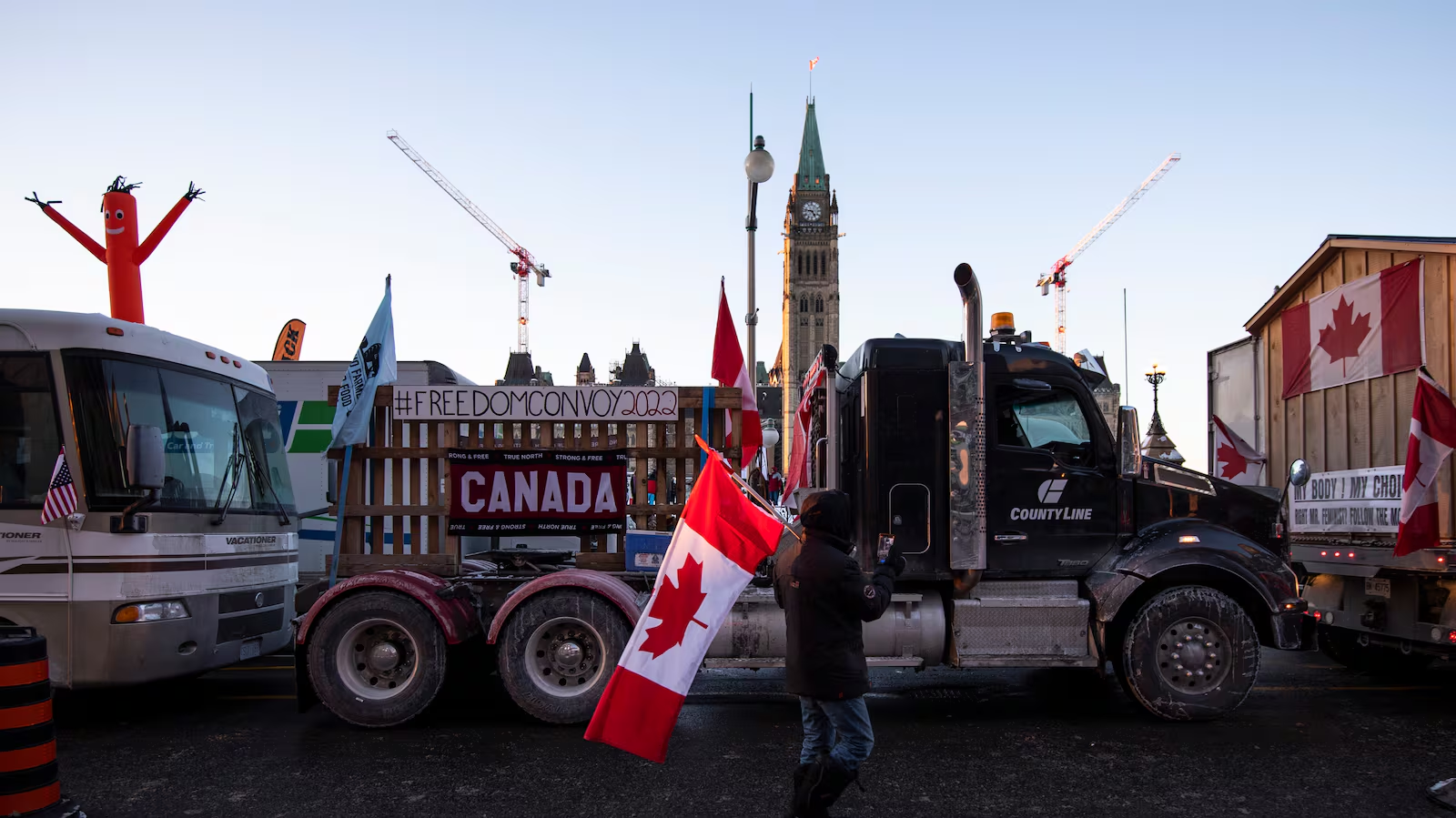
Trucks taking part in a nationwide convoy protesting COVID-19 restrictions line Wellington Street in front of Parliament Hill in Ottawa on January 28, 2022. THE CANADIAN PRESS
The federal government has taken its fight over the use of the Emergencies Act to the country’s highest court. Officials filed an appeal on Tuesday, asking the Supreme Court of Canada to review earlier rulings tied to the 2022 convoy protests.
The law came into effect during large demonstrations known as the “Freedom Convoy,” which disrupted cities and key border crossings across the country.
“Canada has sought leave to appeal to the Supreme Court of Canada to review of the use of the Emergencies Act during the convoy protests and blockades that caused serious disruptions across the country,” Lola Dandybaeva, a spokesperson for Justice Minister Sean Fraser, said.
Government Defends Its Actions
The government says it acted to protect public safety and restore order during a tense period. Officials believe the law gave them the tools needed to respond to the situation.
“Our government remains committed to ensuring it has the tools needed to protect the safety and security of Canadians in the face of threats to public order and national security,” the statement added.
The government has declined further comment as the case now moves through the courts.
Courts Previously Ruled Against Decision
Earlier court decisions have not supported the government’s actions. In 2024, a Federal Court ruled that the use of the Emergencies Act violated constitutional rights.
More recently, in January, the Federal Court of Appeal also found the government’s decision to use the law “unreasonable.”
These rulings have raised serious legal questions about how and when the government can use emergency powers.
Background on the Convoy Protests
The protests began in early 2022 and lasted for several weeks. Thousands of demonstrators gathered in Ottawa, blocking streets near Parliament Hill.
Many protesters opposed COVID-19 health rules and broader government policies. At the same time, trucks blocked important border crossings in Ontario and Alberta, affecting trade and travel.
In response, the federal government invoked the Emergencies Act on February 14, 2022. This marked the first time the law had been used since it replaced the War Measures Act in 1988.
The measures allowed authorities to restrict certain areas, freeze financial support linked to protests, and limit assistance to demonstrators.
Political Reaction Divided
The decision to appeal has drawn criticism from some political leaders. Ontario Conservative MP Marilyn Gladu called the move “disappointing.”
“There are far better uses for taxpayer dollars than to pay lawyers to defend their choice to illegally suspend the rights of Canadians,” Gladu said.
She also stated, “Conservatives have always maintained that the imposition of the Emergency Measures Act was unjustified and illegal. This appeal is a waste of time and money.”
What Happens Next
The Supreme Court will now decide whether it will hear the case. If the court agrees, it could set an important legal standard for future use of emergency powers in Canada.
The outcome may shape how governments respond to large-scale protests and public disruptions in the years ahead.