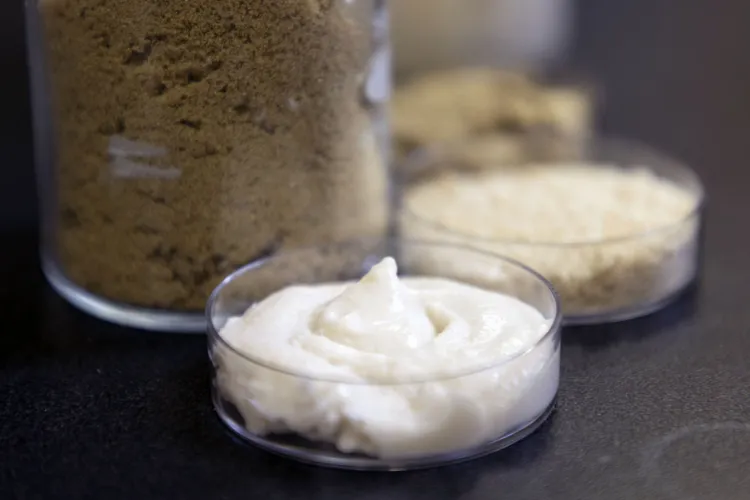
Scientists found that “rice protein” does not refer to just one type. They studied proteins from brown rice, rice bran, and broken grains separately to understand how each works. The results showed clear differences, which influenced the final cheese, creating options that range from firm slices to smooth, spreadable textures. UADA Photo
A new study suggests that rice could play a key role in improving dairy-free cheese, offering hope to people who cannot eat traditional dairy products.
Researchers at the University of Arkansas have explored how proteins found in rice can help create better plant-based cheese. Their findings show that rice protein may improve both texture and nutrition in dairy-free alternatives.
A New Look at Rice Protein
Food scientist Mahfuzur Rahman and graduate student Ruslan Mehadi Galib led the research. They focused on understanding how different types of rice protein work.
“In a single rice grain, we have three different types of protein — from brown rice, white rice, and bran,” Rahman said. “That’s the fundamental understanding we wanted to develop. When you say, ‘rice protein,’ what does that mean? Is it brown rice protein? Bran protein? Broken kernel protein?”
The team found that each type of protein behaves in its own way. This discovery helped them create different versions of dairy-free cheese.
How Rice Shapes the Cheese
The researchers tested proteins from three sources: brown rice, rice bran, and broken kernels. They combined each with coconut oil and corn starch to form cheese samples.
Each version showed clear differences. Protein from broken kernels produced a soft cheese that melted easily, making it suitable for dishes like grilled sandwiches. Brown rice protein created a firmer texture and added more nutritional value. Rice bran protein helped hold moisture, which reduced oil separation and worked well for spreadable cheese.
These findings show that the type of rice protein used can change how the cheese feels, melts, and tastes.
Higher Protein Content
The study also revealed that rice-based cheese contains more protein than many current dairy-free products. The samples reached about 12 per cent protein, which stands higher than most plant-based cheeses available today.
Many existing options rely on nuts, soy, or oils. While they often match the creamy feel of dairy cheese, they usually offer very little protein.
Rice protein may provide a better balance between texture and nutrition.
A More Sustainable Choice
The research also points to environmental benefits. Rice bran and broken kernels often go unused or serve as low-value materials. Farmers and producers may now find new ways to use these byproducts.
“Utilizing these rice milling byproducts for protein extraction presents a significant opportunity to expand the U.S.-based rice protein market while promoting a sustainable circular economy,” Rahman said.
This approach could reduce waste and support farmers by creating new income opportunities.
What Comes Next
The team plans to continue improving the recipe and study how long the cheese can stay fresh. More testing will help determine how well it performs in everyday use.
Rice-based cheese may also suit people with food allergies. Unlike many dairy-free options, it does not rely on common allergens such as nuts or soy.
If further research confirms these results, rice protein could open the door to better, healthier dairy-free cheese for a wider range of people.