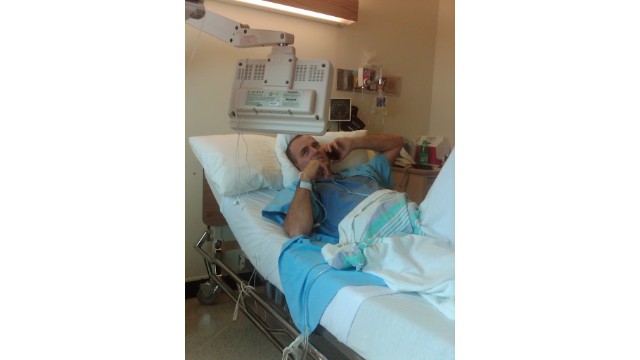
Cancer patient Wylie Butler is pictured in hospital. (CTVNews)
The Canadian Cancer Society is calling on provinces and territories to lower the starting age for colorectal cancer screening, citing a rise in diagnoses among younger Canadians.
The organization released updated national guidelines recommending screening begin at age 45 instead of 50, saying recent data shows more people under 50 are being diagnosed with the disease.
“Younger and younger Canadians are being diagnosed with colorectal cancer,” said Heather Mulligan, a spokesperson with the Canadian Cancer Society. She said people under 50 are now two to two-and-a-half times more likely to develop the disease than previous generations.
Importance of Early Detection
Colorectal Cancer is the fourth most commonly diagnosed cancer in Canada and the second leading cause of cancer-related deaths.
Health experts say early detection significantly improves survival rates. When the disease is identified at its earliest stages, survival rates are about 90 percent, Mulligan said. That rate drops to roughly 15 percent when the cancer is diagnosed at a later stage.
Patients Share Their Experiences
Advocates say lowering the screening age could help detect the disease earlier, before symptoms appear.
Jackie Foster learned she had colon cancer in 2024, less than five months after her mother died from cancer.
Foster said she had experienced stomach problems for several months and was initially told the symptoms could be irritable bowel syndrome. After three visits to the emergency department within four days, doctors discovered a blockage in her large intestine.
She underwent surgery that night and was later diagnosed with Stage 2 colon cancer.
“I had just turned 48,” Foster said. “I was active and healthy. Cancer was the last thing on my mind.”
Foster now shares her story publicly to raise awareness about early screening.
“I’m doing it for my mom,” she said.
Calls for Earlier Screening
Wylie Butler, from Paradise, Newfoundland and Labrador, Canada, was also diagnosed with colorectal cancer at age 48.
He said his symptoms initially seemed minor, but the disease eventually required several surgeries and led to serious complications.
“Being checked earlier would have made a big difference,” Butler said.
Advocates say stories like these highlight the need to reconsider screening guidelines as colorectal cancer rates rise among younger adults.