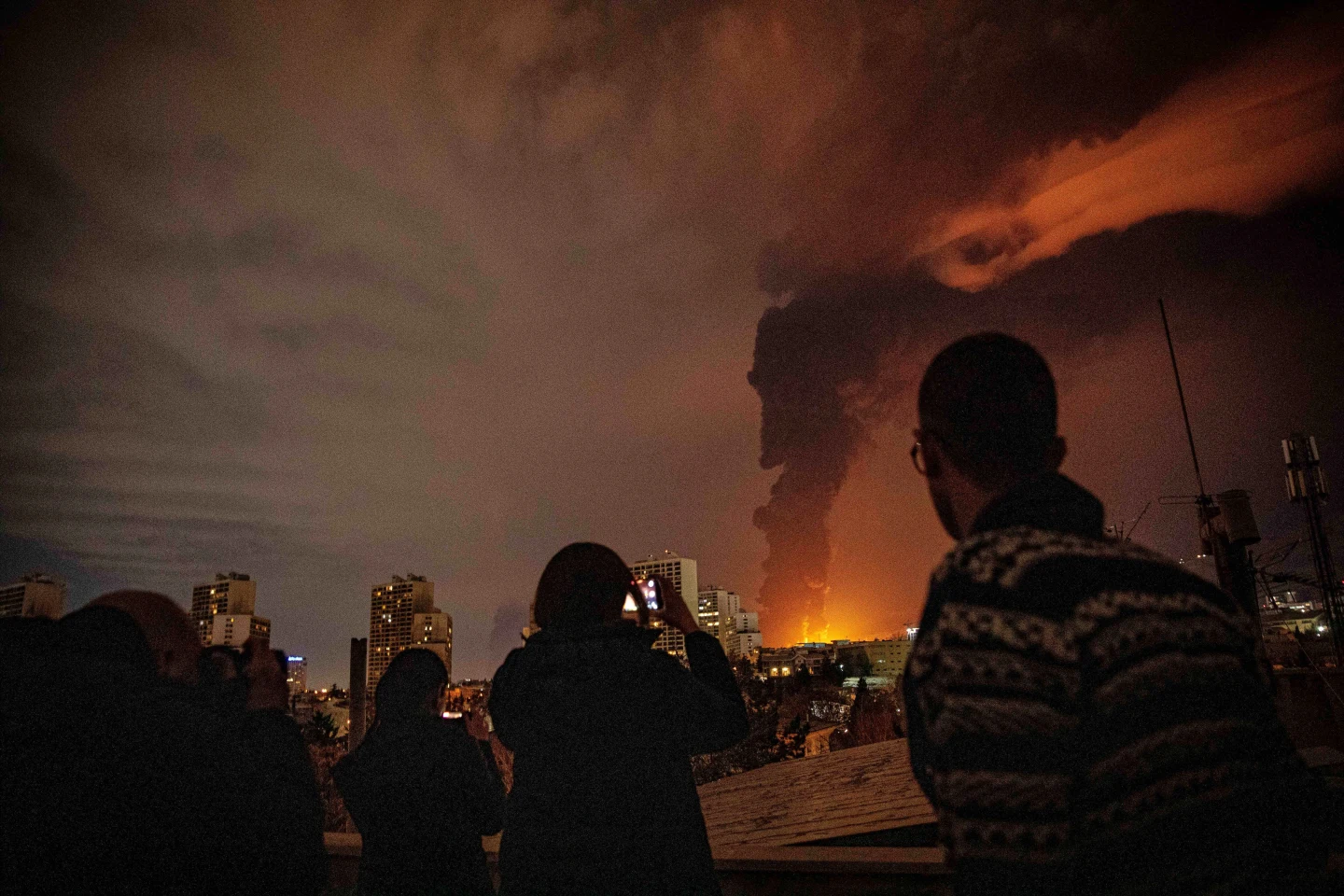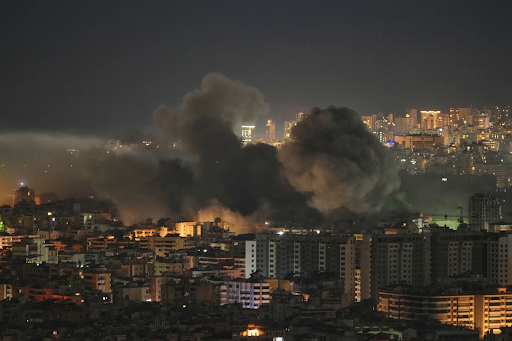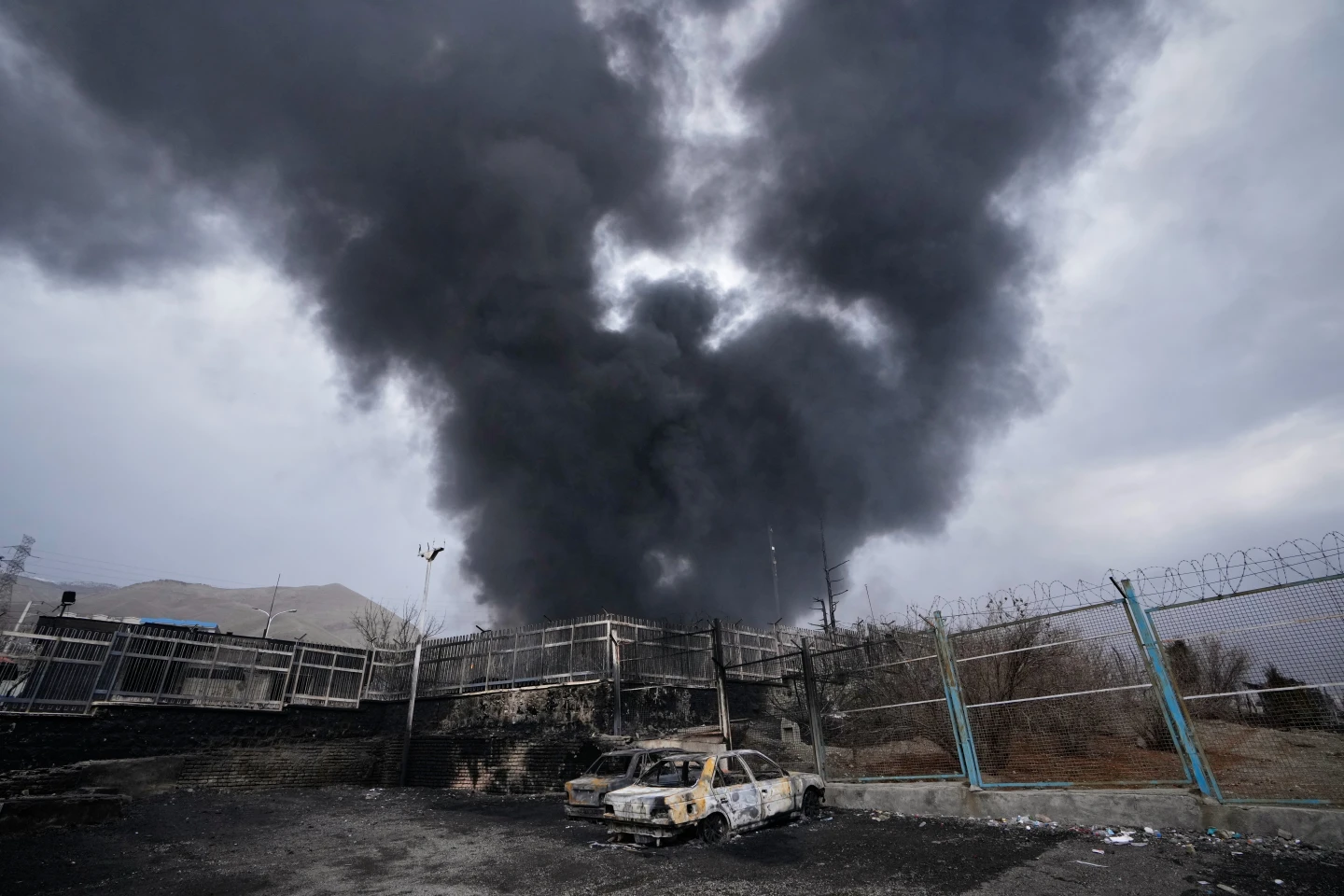
A thick plume of smoke rises from oil storage facility in Iran.
Crude oil prices surged dramatically on Monday as escalating tensions in the Iran war rattled global energy markets and financial systems. The growing conflict in the Middle East has raised concerns about oil production and transportation, particularly through critical maritime routes that carry a significant share of the world’s energy supplies.
The price of Brent crude, the global oil benchmark, briefly jumped to $119.50 per barrel before easing slightly to around $112.98. Meanwhile, West Texas Intermediate (WTI), the primary U.S. crude benchmark, climbed as high as $119.48 before retreating to about $110.17. The sharp swings reflected deep uncertainty among traders as the conflict threatens to disrupt the steady flow of oil from the Persian Gulf.
Strait of Hormuz Under Threat as Conflict Expands
At the center of the market’s anxiety is the Strait of Hormuz, one of the most critical shipping lanes for global energy. Each day, roughly 15 million barrels of crude oil—nearly one-fifth of the world’s supply—normally pass through this narrow waterway.
However, fears of missile and drone attacks have sharply reduced tanker traffic in the region. The strait connects oil-producing nations including Saudi Arabia, Kuwait, Iraq, Qatar, Bahrain, the United Arab Emirates, and Iran to global markets. Any disruption along this route can quickly tighten supplies and trigger price spikes across international energy markets.
As the war entered its second week, the conflict increasingly touched areas vital to energy infrastructure. Reports from Bahrain accused Iran of targeting a desalination facility essential for drinking water, while Israeli strikes reportedly hit oil depots in Tehran overnight, leaving several facilities damaged.
Energy Infrastructure Becomes a Strategic Target
Iranian authorities confirmed that Israeli attacks on oil depots and a petroleum transfer terminal in Tehran resulted in at least four deaths. Israeli officials said the facilities were being used to supply fuel for missile operations.
The growing damage to energy facilities has amplified fears that the war could significantly disrupt oil production and exports. Iran currently exports about 1.6 million barrels of oil each day, with China serving as its largest buyer. Any prolonged disruption to these shipments could force major importers to seek alternative sources, further tightening global supply.
Iranian parliamentary speaker Mohammad Bagher Qalibaf warned that the conflict’s impact on the country’s oil industry could escalate if hostilities continue.
Rising Energy Costs Ripple Through Global Markets
The surge in crude oil prices is already influencing global financial markets and consumer costs. Higher energy prices tend to push inflation upward, placing additional pressure on household budgets and weakening consumer spending in many economies.
Stock markets reacted sharply to the uncertainty. Japan’s Nikkei 225 index dropped more than 7% early Monday, while U.S. stock futures signaled potential losses when Wall Street opened. The previous trading session already reflected market anxiety, with the S&P 500 falling 1.3%, the Nasdaq Composite dropping 1.6%, and the Dow Jones Industrial Average swinging sharply before closing with a sizable loss.
Fuel prices are also rising quickly for consumers. In the United States, the average price of regular gasoline reached $3.45 per gallon on Sunday, roughly 47 cents higher than the previous week. Diesel prices climbed even more sharply, rising about 83 cents to around $4.60 per gallon.
Uncertain Outlook for Energy Markets
Despite the surge, U.S. Energy Secretary Chris Wright suggested that the spike may not last long. Speaking on CNN’s “State of the Union,” he indicated that gasoline prices could fall back below $3 per gallon in the near future if the conflict stabilizes.
Still, analysts caution that sustained oil prices above $100 per barrel could place heavy strain on the global economy. Prolonged disruptions in supply routes or exports would likely keep markets volatile and energy costs elevated.
Natural gas prices have also risen during the conflict, though less dramatically than oil. The commodity traded around $3.33 per 1,000 cubic feet late Sunday, up about 4.6% from Friday’s close after gaining roughly 11% over the previous week.
As the Iran war continues to unfold, energy markets remain on edge. The stability of global oil supply now depends largely on whether critical infrastructure and shipping routes in the Middle East can remain operational amid intensifying hostilities.