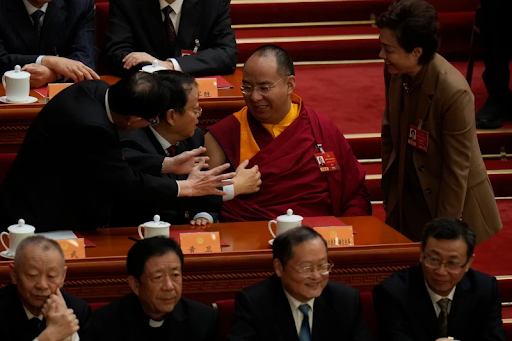
China’s proposed Ethnic Unity Law raises concerns about minority rights, language policies, and cultural assimilation across the country.
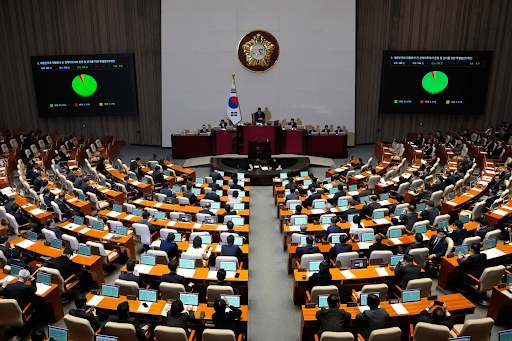
China is preparing to approve a sweeping China Ethnic Unity Law, a proposal that officials say will strengthen national cohesion but critics argue could deepen the assimilation of minority communities. The legislation is expected to pass through the country’s ceremonial legislature, the National People’s Congress, as part of a broader effort to reinforce a shared national identity.
Government representatives describe the measure as a way to promote a stronger sense of belonging among the country’s many ethnic groups. However, scholars, activists, and human rights observers warn that the policy may weaken the cultural and linguistic autonomy long promised to China’s minorities.
Government Push for a Unified National Identity
The proposed China Ethnic Unity Law calls on government institutions, private companies, social organizations, and even the military to actively promote a shared national consciousness. According to lawmakers, every sector of society must contribute to building a collective identity centered on the idea of a unified Chinese nation.
China’s population is overwhelmingly Han Chinese, while the remaining 8.9 percent consists of 55 officially recognized ethnic minority groups. The government maintains that stronger unity is necessary for stability and development, especially in regions with significant minority populations.
Yet critics say the law signals a decisive shift in ethnic policy under President Xi Jinping. Experts argue that the proposal represents a culmination of Beijing’s recent efforts to prioritize national unity over regional autonomy.
James Leibold, a scholar who studies China’s minority policies, believes the measure could effectively undermine earlier commitments to meaningful self-governance. In his view, the law strengthens the central government’s authority over policies that once allowed minority communities limited cultural independence.
Language Policy at the Center of the Debate
One of the most controversial elements of the China Ethnic Unity Law involves education policy, particularly language instruction. The legislation mandates that Mandarin Chinese be taught to all children before kindergarten and remain the primary language throughout compulsory schooling.
Mandarin is already widely used in many regions, including Inner Mongolia, Tibet, and Xinjiang. However, the new law effectively eliminates the possibility of minority languages serving as the main language of instruction in schools across the country.
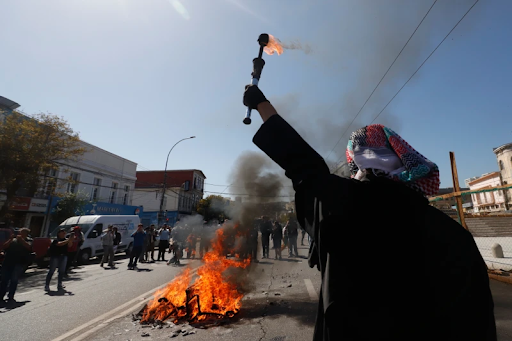
In earlier decades, some regions exercised greater flexibility. For example, schools in Inner Mongolia previously taught large portions of the curriculum in Mongolian. That changed in 2020 when Chinese-language textbooks replaced Mongolian materials for many subjects, sparking widespread protests that authorities quickly suppressed.
Today, students in those areas can typically study their native language only as a separate subject for limited hours each day.
Supporters argue that Mandarin proficiency improves educational opportunities and economic mobility. Critics counter that the policy risks eroding linguistic diversity and cultural heritage within minority communities.
Assimilation Concerns Beyond Education
Beyond language policy, scholars say the China Ethnic Unity Law may reshape how communities are organized. The legislation promotes the creation of what it describes as “mutually embedded community environments,” a phrase that analysts interpret as encouraging greater mixing of ethnic populations.
Some researchers believe this could lead to the restructuring of neighborhoods that historically have had large minority populations. According to Minglang Zhou, a professor specializing in language policy, the goal appears to be integrating Han Chinese and minority groups more closely within shared communities.
Chinese officials often present these efforts as part of a broader strategy to bring economic development and modernization to historically underserved regions. Nevertheless, human rights advocates argue that development initiatives should not come at the expense of cultural autonomy.
Legal Reach Extending Beyond China
Another notable aspect of the China Ethnic Unity Law is its legal scope. The proposal includes provisions allowing authorities to pursue legal action against individuals or organizations outside China if their activities are deemed harmful to ethnic unity.
Observers say this approach resembles provisions in Hong Kong’s 2020 National Security Law, which also claims jurisdiction over certain actions conducted abroad. Critics worry the measure could be used to target activists or advocacy groups operating outside China.
Legal scholar Rayhan Asat argues that such provisions could provide justification for broader enforcement actions. Her concerns are shaped by personal experience, as her brother, Uyghur entrepreneur Ekpar Asat, is currently serving a lengthy prison sentence in Xinjiang on charges related to ethnic discrimination.
The situation of Uyghurs, a Muslim minority group, has drawn international attention in recent years due to reports of mass detention and imprisonment in the region.
A Defining Moment for China’s Ethnic Policy
As the China Ethnic Unity Law moves toward approval, it highlights the tension between national integration and cultural preservation. Beijing insists the legislation will promote stability, unity, and economic progress across diverse regions.
However, critics argue that the policy may accelerate the assimilation of minority groups and weaken protections that once allowed them to maintain distinct languages and traditions.
For many observers, the law marks a pivotal moment in China’s evolving approach to ethnic governance, one that could shape the cultural landscape of the country for decades to come.