Guinea Opposition Parties dissolved by government order as opposition leader Diallo warns the nation may be turning into a one-party state.
Guinea’s political landscape has entered a tense new phase after the government dissolved dozens of political organizations, a move that has triggered sharp criticism from the country’s opposition. The decision has reignited debate about democracy and political freedom in the West African nation, where military rule has shaped the political environment since the 2021 coup.
On Friday, Guinea’s Ministry of Territorial Administration and Decentralization issued a decree dissolving 40 political parties for what it described as failure to meet their legal obligations. The order immediately revoked the groups’ legal recognition and prohibited them from carrying out political activities. It also barred the use of party names, logos, emblems, and other symbols associated with the organizations.
Diallo Accuses Government of Building a “Party-State”
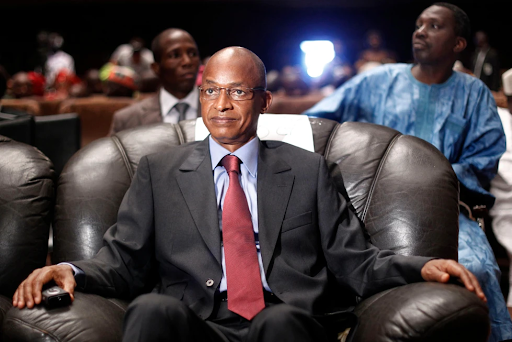
The announcement quickly drew a strong response from Cellou Dalein Diallo, one of Guinea’s most prominent opposition figures. Diallo, who leads the Union of Democratic Forces of Guinea (UFDG), condemned the decision and warned that the country was moving toward a system dominated by a single political force.
In a video posted on social media, Diallo accused President Mamadi Doumbouya of attempting to eliminate political rivals in order to consolidate power. According to him, the dissolution of major opposition parties signals a deliberate effort to transform Guinea into what he described as a “party-state.”
Diallo urged supporters of the UFDG and citizens who value political freedoms to stand together against the current leadership. He argued that traditional avenues such as dialogue or legal challenges were unlikely to bring meaningful political change under the current conditions.
Major Opposition Groups Among Dissolved Parties
Several of Guinea’s most influential political organizations were included in the decree. Along with the UFDG, the government dissolved the Rally of the Guinean People (RPG), the party associated with former President Alpha Condé. Another significant group affected by the decision was the Union of Republican Forces (UFR), led by veteran opposition leader Sidya Touré.
All three leaders — Diallo, Condé, and Touré — are currently living in exile, highlighting the growing distance between Guinea’s political leadership and many of its opposition figures.
The parties targeted in Friday’s decree had already faced government action months earlier. In August, authorities suspended several of them for allegedly failing to comply with the national charter governing political parties. That suspension came shortly before a referendum that paved the way for the country’s junta leader to run in presidential elections.
Political Tensions Since the 2021 Coup
Guinea has experienced significant political shifts since Mamadi Doumbouya seized power in a military coup in September 2021. The takeover ended the rule of President Alpha Condé, whose controversial constitutional changes had allowed him to seek a third term.
Since then, the political climate has grown increasingly restrictive. Multiple political parties and media organizations have been suspended, while several opposition leaders and civil society activists have been arrested or forced to leave the country.
In December, Doumbouya was declared the winner of a presidential vote that excluded many major opposition leaders from participating. Critics argued that the election lacked genuine competition, while supporters of the government framed it as part of a broader transition toward civilian rule.
A Wider Regional Pattern
Guinea’s political turmoil reflects a broader trend unfolding across parts of West Africa. Since 2020, several countries in the region have witnessed coups or attempted coups, often driven by public frustration with economic hardship, disputed elections, and worsening security conditions.
Military leaders in these nations have frequently justified their actions as necessary to restore stability or reform governance. However, critics warn that prolonged military rule risks weakening democratic institutions and limiting political participation.
As tensions continue to rise, the dissolution of Guinea’s opposition parties has deepened concerns about the country’s democratic future. Whether the government will open space for political dialogue or continue tightening control remains an open question for Guinea’s evolving political landscape.