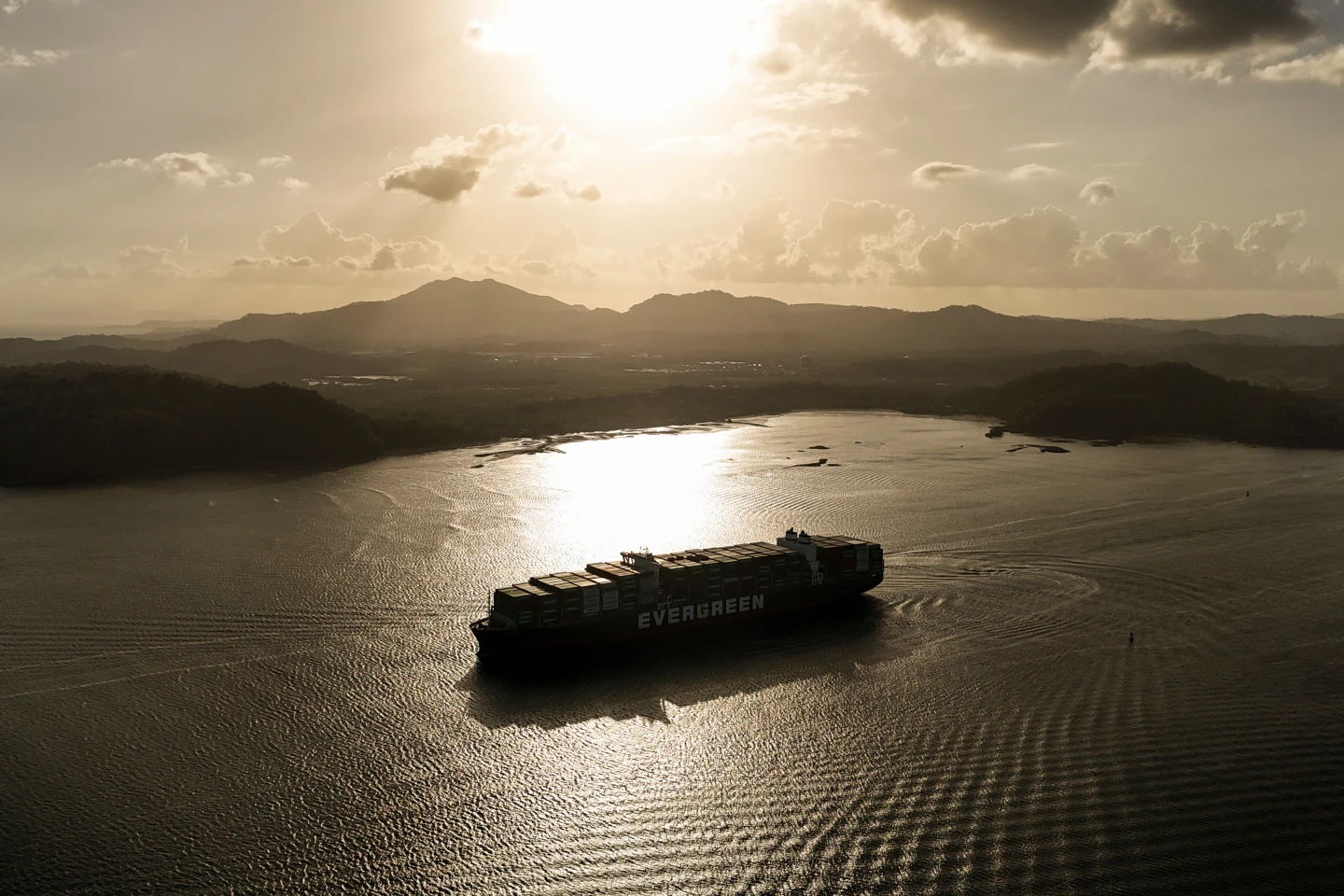
A cargo ship transits the Panama channel.
Global shipping routes are beginning to shift as the Iran war and rising fuel costs disrupt established trade patterns. According to Panama Canal Administrator Ricaurte Vásquez, the situation in the Middle East could ultimately increase traffic through the Panama Canal as shipping companies look for more efficient and economical routes.
Speaking in an interview with Associated Press, Vásquez explained that higher operating expenses often push cargo operators to reconsider their navigation choices. When marine fuel prices rise significantly, shipping companies typically search for routes that shorten travel time and reduce fuel consumption. In many cases, that shift makes the Panama Canal an increasingly attractive option.
Rising Energy Costs Reshape Shipping Decisions
The surge in energy prices is closely linked to the escalating conflict in the Middle East. Oil markets reacted sharply after Iran temporarily closed the Strait of Hormuz following military actions by the United States and Israel.
This narrow passage at the entrance to the Persian Gulf carries roughly one-fifth of the world’s oil supply, making any disruption there a major concern for global trade. As oil prices climb in response, the cost of marine fuel for cargo ships also rises, placing pressure on shipping companies to optimize routes and reduce expenses wherever possible.
Vásquez noted that under such conditions, the Panama Canal often becomes a practical alternative. By cutting long ocean journeys through the canal, shipping companies can reduce voyage durations while lowering fuel consumption.
Faster Routes Offer Strategic Advantage
Depending on the origin and destination of cargo, routing ships through the canal can shorten trips by anywhere between three and fifteen days. Those savings become particularly valuable when fuel prices remain high for extended periods.
The benefits could apply across several sectors of maritime trade. Container ships, bulk carriers, and liquefied natural gas tankers are all likely to feel the impact of rising fuel costs and shifting trade routes.
For LNG transport, the changes could be even more pronounced. If supplies from the Middle East become disrupted due to the conflict, importers may increasingly turn to alternative exporters such as the United States. In such scenarios, cargo that might otherwise travel to Europe could instead head toward Asian markets, with the Panama Canal providing a shorter path across oceans.
LNG Shipments May See the Biggest Impact
Industry experts believe liquefied natural gas shipments could become one of the most affected segments. Gerardo Bósquez from the Panama Maritime Chamber suggested that a prolonged Middle East conflict may reshape global energy shipping patterns.
If that happens, LNG transport routes could increasingly favor the canal as exporters adjust their delivery strategies to meet demand in Asia and other regions. Such shifts would not only influence energy trade but could also boost the canal’s strategic importance within global logistics networks.
Changes Will Depend on Duration of the Conflict
Despite the potential advantages, Vásquez cautioned that any increase in Panama Canal traffic will likely develop gradually rather than immediately. Shipping companies typically wait to see whether geopolitical disruptions are temporary or long-lasting before making major route adjustments.
Cargo operators closely monitor stability in the Gulf region before committing to new shipping patterns. If the conflict continues and fuel prices remain elevated, however, the economic case for using the canal could strengthen significantly.
For now, global trade remains in a period of uncertainty. Yet as energy markets respond to geopolitical tensions, the Panama Canal may once again emerge as a key route helping shipping companies balance cost, time, and efficiency in an increasingly complex world.