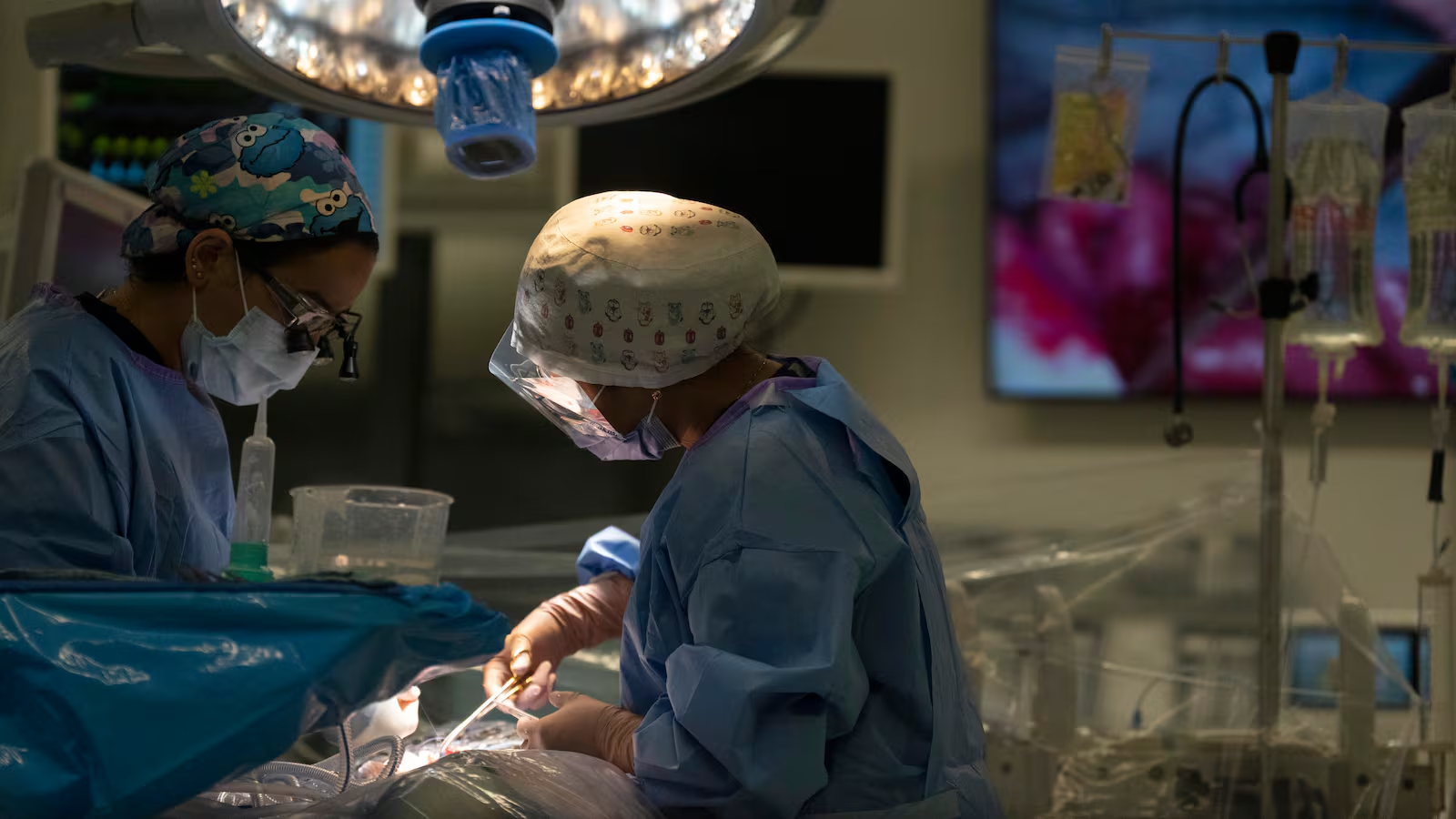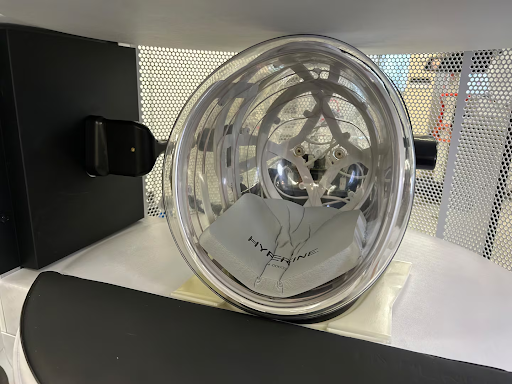
A Portable MRI machine inside an LHSC operating room helps neurosurgeons scan the brain during surgery, ensuring tumors are fully removed.
A new piece of medical technology is quietly reshaping how brain surgery is performed at the London Health Sciences Centre (LHSC). Neurosurgeons there say a portable MRI system is already changing the way complex procedures are carried out, offering surgeons immediate imaging during operations and reducing the chances of patients needing repeat surgeries.
For patients like Dave Evans, the innovation arrived just in time.
The Owen Sound resident had spent years noticing subtle changes in his eyesight. At first, he dismissed it as a natural part of getting older. The decline was gradual, almost imperceptible.
Evans later compared the experience to watching a television screen slowly dim over time. The brightness fades little by little, so slowly that the change is barely noticeable until the difference becomes significant.
Eventually, his doctor suspected something more serious and ordered additional tests. Those examinations revealed the real cause: a pituitary tumor growing deep inside his brain.
A Tumor Hidden in a Critical Space
Evans learned that the growth was slow but potentially dangerous. Removing it would require delicate neurosurgery.
The procedure was assigned to neurosurgeon Neil Duggal and his surgical team at LHSC.
The tumor itself was small, roughly the size of a human thumbnail. Yet its location made the operation extremely complex.
Dr. Duggal explained the challenge with a vivid analogy. Removing the tumor, he said, was like carefully draining the contents of an eggshell without cracking the shell itself.
Around that tiny tumor sit some of the brain’s most critical structures. On both sides run the carotid arteries, which supply blood to the brain. Just above lie the optic nerves responsible for transmitting visual signals from the eyes to the brain.
One wrong move could cause serious complications.
Dave Evans is seen in this undated photo (Source: LHSC)
A Scan That Happens During Surgery
This is where the hospital’s new technology proved invaluable.
LHSC recently introduced the Hyperfine Swoop Portable MRI System, a compact imaging device designed to be used directly in clinical settings.
Unlike traditional MRI scanners, which require patients to be moved to a specialized imaging suite, this system can be wheeled directly into the operating room.
For surgeons, that means they can scan the brain during the procedure itself.
The immediate feedback helps answer a critical question before surgery ends: has the entire tumor been removed?
Catching What Surgeons Could Not See
During Evans’ operation, the portable MRI proved its value almost immediately.
After removing the main portion of the tumor, the surgical team performed a scan. The images revealed a small remaining section of the growth that had not been visible during the procedure.
Instead of discovering the leftover tissue later — which could have meant another surgery — the team acted right away.
They returned to the surgical site and safely removed the remaining tumor before closing the operation.
For Dr. Duggal, the ability to make that decision in real time represents a major step forward in neurosurgery.
Avoiding a second operation, he said, can dramatically improve patient outcomes and recovery.
A Noticeable Change After Surgery
Evans noticed the difference almost immediately.
Shortly after waking in the neurosurgery intensive care unit, he realized his eyesight had improved.
Even on the day of the operation, the clarity of his vision felt noticeably better.
The experience left him deeply grateful for the medical team and the technology that supported the procedure.
A Tool With Broader Potential
So far, the portable MRI has been used in several neurosurgical procedures at LHSC. But doctors believe its applications could soon extend beyond the operating room.
One promising use is in intensive care units, where critically ill patients often need brain imaging. Traditionally, these patients must be transported through hospital corridors to reach large MRI scanners — a process that can be risky for those in fragile condition.
A portable MRI machine at London Health Sciences in London is unlocking new opportunities for life-saving procedures. March 7, 2026 (CTV News)
With a portable system, the scan can come directly to the patient.
Doctors say that could reduce complications, limit risks associated with transport, and allow faster diagnosis and monitoring.
For neurosurgeons and critical care teams alike, the technology represents a new level of flexibility in brain imaging.
And for patients like Evans, it has already proven its worth.