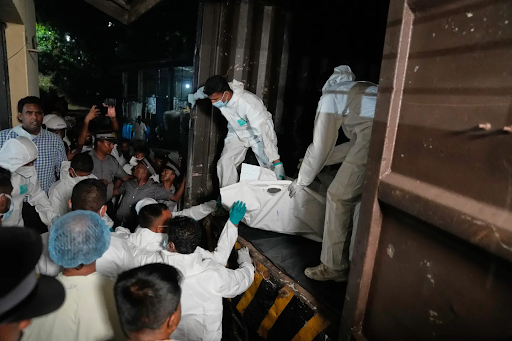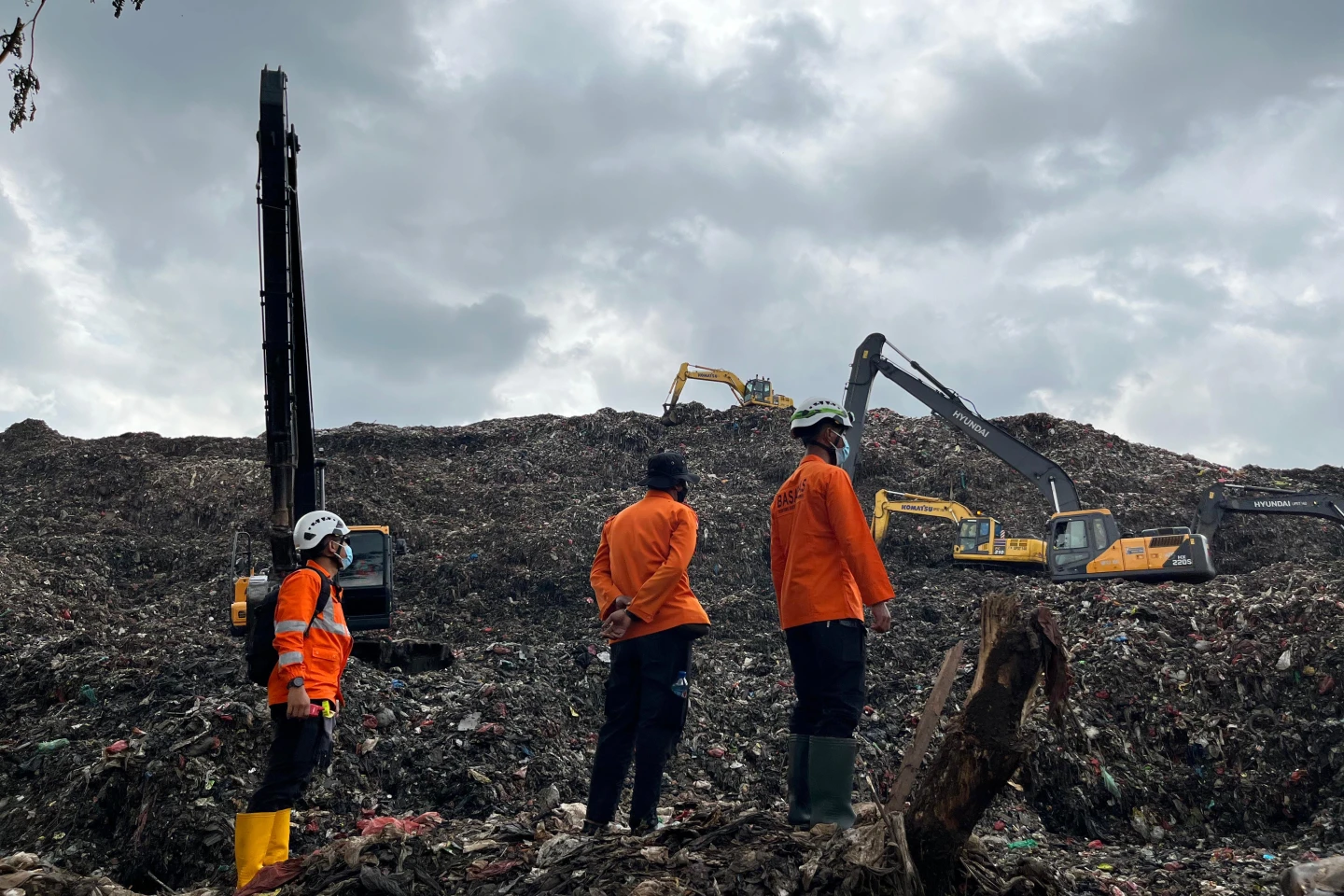
In this photo released by the Indonesian National Search and Rescue Agency (BASARNAS) on Monday, March 9, 2026, rescuers inspect the site of an avalanche of garbage that killed multiple people as heavy machines are used to search for victims at a landfill in Bantargebang, West Java, Indonesia.
A deadly waste mound collapse at Indonesia’s largest landfill has left at least five people dead and several others missing after heavy overnight rain destabilized a massive pile of garbage. The disaster occurred at the Bantargebang Integrated Waste Treatment Facility near Jakarta, triggering a large avalanche of waste that buried workers, vehicles, and nearby stalls.
Authorities launched an intensive rescue operation on Sunday night as emergency teams rushed to the sprawling landfill site in Bekasi, a city located just outside Indonesia’s capital.
Rescue Efforts Continue Amid Dangerous Conditions
More than 300 search-and-rescue personnel have been deployed to the landfill, working carefully through unstable piles of debris. Teams are using excavators, heavy equipment, and specially trained sniffer dogs to locate victims buried beneath the collapsed waste.
According to Desiana Kartika Bahari, head of Jakarta’s Search and Rescue Office, rescuers are proceeding cautiously due to the unstable nature of the site. The avalanche of garbage buried several vehicles and structures, making it difficult to determine how many people were trapped when the collapse occurred.
Initial reports confirmed that the victims included two garbage truck drivers and two food stall vendors who had been working near the landfill. Four individuals managed to escape the disaster shortly after the waste mound gave way.
Rescue teams, including police officers, soldiers, and volunteers, are continuing to search for at least three people who are still believed to be missing. Authorities have also warned that the final casualty count could rise as the search progresses.
Excavators and Sniffer Dogs Deployed at Disaster Site
Images released by Indonesia’s National Search and Rescue Agency show excavators digging through towering heaps of garbage where several trucks and small food stalls were buried during the collapse.
The scale of the disaster has complicated recovery operations, as unstable waste layers continue to shift under the weight of heavy machinery.
Abdul Muhari, spokesperson for the National Disaster Management Agency, urged rescue teams to follow strict safety protocols during the ongoing operation. Weather forecasts predict more rain in Jakarta and surrounding satellite cities over the coming days, raising concerns about further instability at the site.
Officials warned that additional ground movement remains possible because the collapsed waste material is highly unstable, posing risks to both rescuers and nearby workers.
Renewed Concerns Over Bantargebang Landfill
The waste mound collapse at Indonesia’s largest landfill has once again drawn attention to the mounting pressure on the Bantargebang facility, which receives the majority of household waste from Greater Jakarta.
For years, experts have warned that the landfill is approaching its operational limits. The site plays a critical role in managing waste for millions of residents, yet it has struggled with capacity and environmental safety concerns.
The latest tragedy has intensified calls for improved waste management systems across the region.
Government Pushes Waste-to-Energy Solution
Indonesia’s government recently announced plans to reduce the country’s dependence on massive landfill sites like Bantargebang. Late last year, authorities introduced a two-year target to significantly reduce waste accumulation at the facility.
The strategy centers on accelerating a waste-to-energy program that would convert garbage into electrical or thermal energy. Officials hope the initiative will reduce reliance on open dumping while creating a more sustainable waste management system.
The plan is supported by a new presidential regulation designed to streamline licensing procedures and attract private investment into waste processing infrastructure.
Past Landfill Disasters Highlight Regional Risks
The latest landfill tragedy is not an isolated incident in Southeast Asia. In January, a similar collapse occurred at a landfill in the Philippines, where garbage and debris buried workers in nearby buildings. That disaster killed at least four people, injured more than a dozen others, and left over 30 individuals missing.
Indonesia itself has faced similar tragedies before. In 2005, heavy rain triggered a massive rubbish dump landslide near Bandung in West Java. The collapse buried homes in two villages, killing 31 people and leaving dozens missing.
As rescue teams continue searching through the unstable landfill debris, authorities warn that the full impact of the latest waste mound collapse at Indonesia’s largest landfill may only become clear once recovery operations are complete.