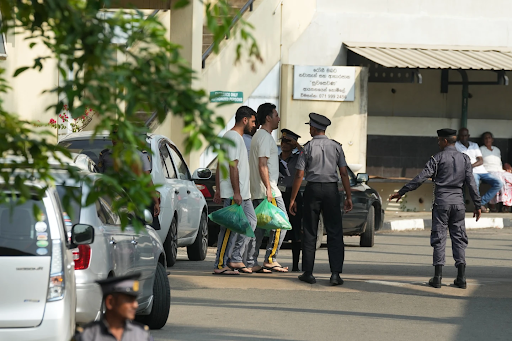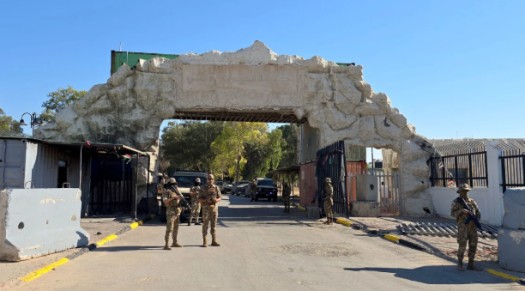
Libyan security forces stand guard at the entrance of Tripoli Zoo on May 28, 2025.
The United Nations is demanding an urgent, independent investigation after dozens of bodies were discovered in detention centers in Tripoli, Libya. The gruesome findings have highlighted severe human rights violations and renewed global concerns about militia-led operations in the conflict-ridden country.
Mass Graves and Torture: A Grim Discovery
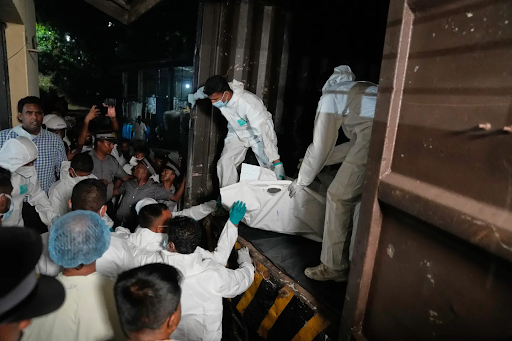
From May 18 to May 21, authorities uncovered horrific scenes at sites controlled by Libya’s Stabilization Support Apparatus (SSA), a powerful militia group operating in Tripoli. The UN reports that ten charred bodies were found at the SSA’s headquarters in Abu Salim. Additionally, 67 decomposing bodies were found in hospital refrigerators at Abu Salim and Al Khadra hospitals, reportedly due to ongoing power outages.
In an even more disturbing twist, a burial ground was discovered inside the Tripoli Zoo — another location under SSA control. Alongside the bodies, investigators uncovered suspected torture devices and signs of extrajudicial killings.
A Pattern of Abuse in SSA-Run Detention Sites
The Stabilization Support Apparatus was established in 2021 as a militia umbrella group and has since become a dominant force in western Libya. Its members have long faced allegations of brutality. According to the United Nations Support Mission in Libya (UNSMIL), the recent discoveries reinforce earlier reports of torture, disappearances, and extrajudicial killings in SSA detention centers.
UN High Commissioner for Human Rights Volker Türk expressed deep alarm. “Our worst fears are being confirmed,” he said, calling for the sites to be sealed off and treated as crime scenes.
Call for Immediate Accountability and Evidence Preservation
Türk emphasized the need to protect evidence at the sites. He urged Libyan authorities to conduct a transparent and independent investigation without delay. So far, Libyan forensic teams have not been granted access, raising concerns about possible tampering or evidence loss.
“These sites must be preserved,” said Türk. “Every piece of evidence could help bring those responsible to justice.”
He also appealed to the Libyan government to allow the UN direct access to document the human rights violations as part of its mandate.
Social Media Footage Raises Ethical Concerns
As graphic images and videos of the discovered bodies surfaced online, the UN urged the public and media to act responsibly. Türk reminded that the dignity and privacy of the victims and their families must be respected.
Such footage, while shocking, underscores the urgency of a full probe and international monitoring to prevent future atrocities in Libya’s detention system.
Escalating Violence After SSA Leader’s Death
These revelations come in the wake of escalating violence following the killing of SSA leader Abdulghani Kikli in May. His death triggered deadly clashes between armed groups and state security forces. The unrest has sparked protests across Tripoli, demanding an end to militia violence.
However, the protests themselves were met with excessive force. Reports confirm that civilians and police officers were killed, and several properties, including hospitals, were damaged.
Volker Türk warned this crackdown violates citizens’ rights to freedom of expression and peaceful assembly. “This raises serious concerns for Libya’s civic space,” he said.
Libya’s Fragile State Post-Gaddafi
Since the fall of Muammar Gaddafi in 2011, Libya has remained fractured, with rival militias vying for control. A 2020 ceasefire brought brief stability, but long-term peace remains elusive.
The latest discoveries have put a spotlight back on the militia-run detention centers, calling for urgent international action. Human rights advocates are pressing for immediate reform and accountability.
A Plea for Justice and Reform
As global pressure mounts, the UN continues to advocate for justice, transparency, and respect for human rights in Libya. Without decisive action, experts warn, the country risks sliding deeper into violence and lawlessness.
The world watches closely as Libya faces a critical moment — one that could either restore justice or further entrench impunity.