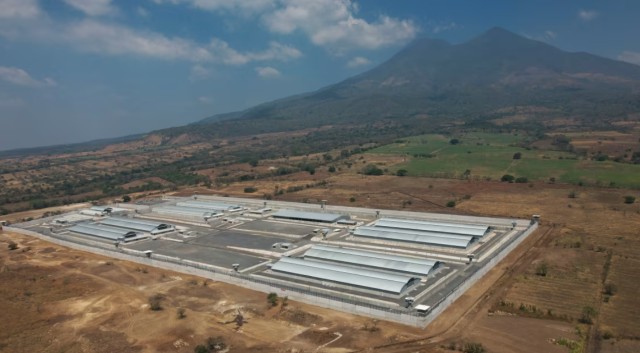
The Detention Center Against Terrorism (CECOT) stands in Tecoluca, El Salvador, on March 5, 2023.
Peru may soon transfer some of its most dangerous foreign inmates to El Salvador’s infamous CECOT prison. Prime Minister Eduardo Arana announced the proposal on Thursday while addressing Congress. The move, he said, is part of a broader security plan to combat rising crime and prison overcrowding in Peru.
This bold step, if finalized, could echo a similar arrangement made by the United States. The U.S. recently began deporting Venezuelan gang members to El Salvador, funding their detention there.
Peru Eyes International Prison Cooperation
The Peruvian government is exploring bilateral cooperation with other countries to manage high-risk foreign inmates. The idea is to repatriate prisoners to their countries of origin or send them to specialized international detention centers.
One such facility under consideration is CECOT, a mega-prison in El Salvador. Known officially as the Centro de Confinamiento del Terrorismo, CECOT is a high-security prison housing thousands of suspected gang members. It has also attracted international criticism for its harsh living conditions and tight security protocols.
What Is CECOT and Why Is It Controversial?
El Salvador’s CECOT prison has become symbolic of President Nayib Bukele’s hardline approach to crime. The prison, designed to hold over 40,000 inmates, is equipped with extreme surveillance, zero-contact policies, and military control.
Despite the criticism from human rights organizations, many governments view it as a model of strict criminal control. Prime Minister Arana appears to be aligning with this approach as a temporary solution to Peru’s domestic challenges.
Unclear Details Spark Questions
Arana did not explain whether only Salvadoran inmates in Peru would be sent to El Salvador. It’s also unclear if prisoners from other nations could be included in this transfer plan. The Prime Minister’s office has not released further comments or logistical details.
This ambiguity leaves several legal and diplomatic questions unanswered, such as prisoner rights, international agreements, and the cost of such arrangements.
Prison Overcrowding Drives Urgent Reform
Peru’s prison system is currently under immense pressure. Overcrowding, insufficient infrastructure, and a spike in violent crime have worsened the situation. Prime Minister Arana said the country is also working to secure development bank financing for new prison facilities.
The long-term goal is to expand the domestic prison network. However, immediate relief could come in the form of sending some prisoners abroad, particularly the foreign nationals considered most dangerous.
Crime Wave Triggers Emergency Measures
Peru has faced a disturbing rise in crime in recent months. The government has declared multiple states of emergency across several regions, including the capital city Lima.
In May, illegal mining activity in northern Peru took a tragic turn when 13 miners were kidnapped and killed in the district of Pataz. Such incidents have intensified pressure on the government to act swiftly.
International Moves Signal Shift in Prison Policy
If Peru moves ahead with sending inmates to El Salvador, it would mark a significant shift in international prison policy. This model of outsourcing incarceration, while controversial, is gaining traction as countries struggle with rising crime and limited prison capacity.
By possibly partnering with El Salvador, Peru could be setting a precedent for other nations dealing with similar issues. Yet, the ethical and legal implications remain hotly debated.
Peru’s consideration of El Salvador’s CECOT prison for foreign inmate transfers is a dramatic response to a deepening crisis. As violent crime surges and jails overflow, the country is looking outward for immediate solutions.
While the strategy raises serious human rights and diplomatic questions, it reflects the urgency of Peru’s internal challenges—and its willingness to adopt unconventional methods in the fight against crime.