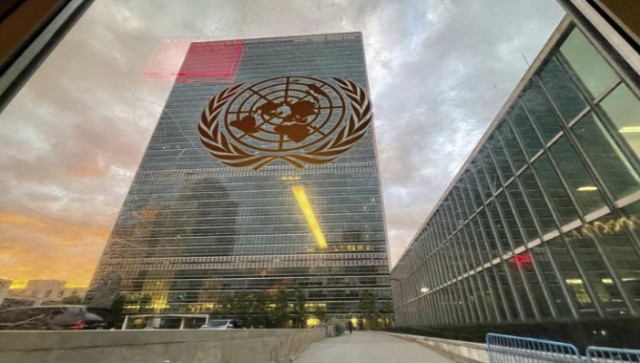
File - The United Headquarters building is seen inside the General Assembly hall, Sept 21, 2021, during the 76th session of the U.N. General Assembly in New York.
The United Nations has long been recognized for peacekeeping and diplomatic efforts. However, beyond Security Council debates and humanitarian aid, the U.N. works quietly on the ground across over 150 countries, improving lives in ways many people aren’t aware of.
Here are five powerful but lesser-known ways the United Nations changes the world daily.
Empowering Women After Gender-Based Violence
One of the United Nations’ impactful missions involves helping women and girls recover from gender-based violence. Through its Population Fund (UNFPA), the U.N. runs multiple support programs worldwide.
In Chad, a young woman named Halima Yakoy Adam escaped from a Boko Haram camp where she was being trained as a suicide bomber. Severely injured but alive, she received help from U.N.-backed programs on the islands of Lake Chad. These programs offered her reproductive healthcare and vocational training.
Today, Adam works as a paralegal, helping other survivors rebuild their lives. This initiative is one of many where the U.N. empowers women to move forward with dignity and strength.
Refugee Resettlement in Mexico
While global attention often focuses on refugees seeking asylum in the U.S. or Europe, Mexico has quietly become a sanctuary for many. Since 2016, the U.N. Refugee Agency (UNHCR) has helped resettle over 50,000 refugees in Mexico.
These refugees, mostly from Central America, are welcomed with transportation, healthcare, and employment services. Over 650 Mexican companies collaborate with the U.N. to train and employ refugees. Remarkably, 94% of working-age refugees find jobs within a month of arrival.
This initiative contributes around $15 million annually to the Mexican economy and offers clear pathways to citizenship, helping displaced families find long-term stability.
Removing Explosive Remnants of War
Long after wars end, explosive devices continue to pose deadly risks. The U.N. Mine Action Service, launched in 1997, tackles this silent threat by removing land mines and unexploded munitions in post-conflict countries like Syria, Afghanistan, and Nigeria.
In 2024, tragic incidents in Syria and Cambodia highlighted the ongoing danger. A young Syrian man lost his leg after stepping on a mine while harvesting olives. In Cambodia, a leftover rocket grenade killed two toddlers.
The U.N. not only removes these dangers but also educates communities on how to stay safe. Since its inception, over 55 million land mines have been destroyed, and more than 30 countries have been declared mine-free.
Teaching Self-Defense to Refugee Girls in Kenya
In northwest Kenya’s refugee camps, young girls are learning to protect themselves through U.N.-sponsored self-defense programs. Every Saturday, girls aged 12 to 18 attend Taekwondo classes in a women’s empowerment center run by the U.N. Population Fund.
Many of these girls come from war-torn countries like South Sudan and Congo. In the safety of the center, they discuss sensitive issues like period poverty, abuse, and family trauma.
The initiative, funded by the Olympic Refuge Foundation, is not just about physical defense. It’s about giving these girls confidence, support, and a voice—something the U.N. hopes to replicate globally.
Monks Teaching Sex Education in Bhutan
Sexual and reproductive education is often taboo in religious societies. But in Bhutan, the U.N. has found a unique solution—partnering with monks and nuns.
Since 2014, the U.N. has worked with Buddhist leaders to provide sex education in temples and nunneries. Over 1,500 nuns and 50 trained monks now lead discussions on reproductive health and gender-based violence.
Thanks to this collaboration, Bhutan has seen improved maternal healthcare, increased contraception use, and a drop in preventable maternal deaths. It’s a groundbreaking approach blending tradition with modern health education.
A Quiet Force for Change
The United Nations is more than peace talks and crisis response. From minefields in Syria to empowerment centers in Kenya, it addresses long-term challenges with practical, human-centered solutions. As the organization nears its 80th anniversary, these under-the-radar efforts reflect its evolving role as a global problem solver, working every day to make sure it’s needed a little less tomorrow.