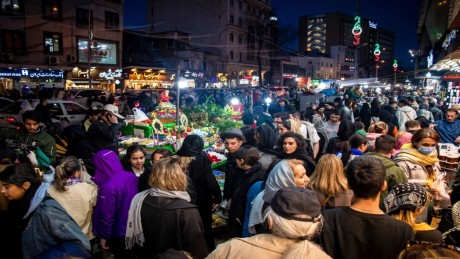
People shop at a market, as they prepare for Nowruz, the Persian New Year, in Tehran, Iran on March 12, 2024.
Tensions are rising as former U.S. President Donald Trump hints at a possible regime change in Iran. While not officially declared, his recent statements have ignited global debates and drawn attention to what such a political shift might entail for the region—and the world.
On Sunday, Trump posted a controversial message on social media, writing, “If the current Iranian regime is unable to MAKE IRAN GREAT AGAIN, why wouldn’t there be a regime change??? MIGA!!!” Though vague, the post left many questioning whether he’s pushing for the downfall of Iran’s current leadership.
A Shift in U.S. Messaging
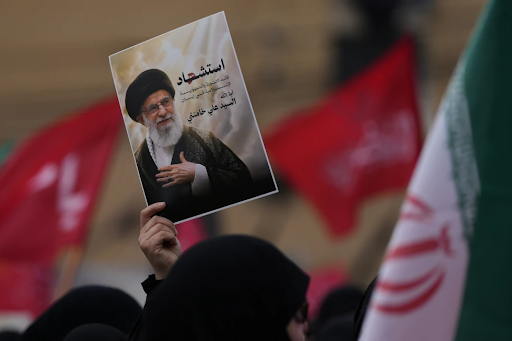
Trump’s remarks came in contrast to U.S. officials’ recent claims that the United States is not pursuing regime change in Iran. The mixed signals have fuelled speculation, especially as talk of targeting Iran’s Supreme Leader, Ayatollah Ali Khamenei has gained traction in Israeli political circles.
Israeli Prime Minister Benjamin Netanyahu hinted that removing Khamenei could “end the conflict,” while Defence Minister Israel Katz openly declared the cleric should no longer be allowed to exist. Trump himself described Khamenei as an “easy target,” escalating the rhetoric.
What Happens If Khamenei Falls?
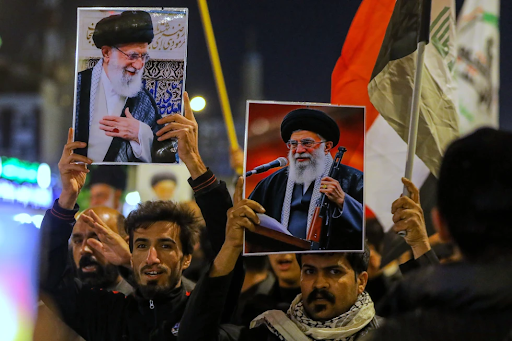
Ayatollah Khamenei, now 86, has ruled Iran for over 35 years. He rose to power after the 1979 Islamic Revolution, crushing dissent and expanding Iran’s influence through proxy groups across the Middle East. He never publicly named a successor, though reports suggest three clerics are being considered.
Experts warn that regime change in Iran wouldn’t guarantee peace or democracy. In fact, a violent or abrupt transition could trigger internal chaos, with separatist groups and military factions scrambling for control.
Possible Collapse and Chaos
Iran is home to more than 90 million people and is one of the world's oldest continuous civilizations. Despite its diverse population, the country has maintained stable borders for over a century. A sudden power vacuum could threaten that stability.
Trita Parsi of the Quincy Institute warned that without a clear successor or structured plan, regime collapse could plunge Iran into violent disarray. He emphasized that replacing Khamenei could require not only military intervention but also the installation of a new leadership figure, potentially with U.S. or Israeli backing.
Reza Pahlavi, the U.S.-based son of the ousted Shah, has been floated as one such figure. Though he has gained attention among some Iranian exiles, many inside Iran view him with suspicion or hostility.
The Nuclear Risk
One of the gravest concerns is the nuclear threat. Analysts suggest that a more hardline government—or military rulers—might see nuclear armament as the only way to deter further attacks. This could fast-track Iran’s path to building nuclear weapons, increasing regional instability.
Ethnic Tensions Could Explode
Iran’s population includes Persians, Azeris, Kurds, Arabs, and Baloch—groups that have long suffered under systemic discrimination. Amnesty International recently reported that minorities in Iran are denied access to quality education, jobs, housing, and political representation.
If the central government collapses, these marginalized groups could rise up. Kurdish, Arab, and Baloch militants have already voiced support for Israeli attacks on the regime, seeing them as opportunities to assert autonomy.
Groups like the Baloch militant faction “Army of Justice” and the Kurdish “Kurdistan Freedom Party” have openly backed Israel’s military actions, indicating they are preparing to exploit any potential power vacuum.
A Fragile Regional Balance
Any regime change in Iran would ripple across the Middle East. Countries like Iraq and Turkey, home to large Kurdish populations, worry that unrest in Iran could embolden separatist movements within their own borders.
Even U.S.-backed opposition groups like the Mujahadin-e Khalq (MeK) have credibility issues inside Iran. Despite international support, the MeK’s violent history and alignment with Saddam Hussein have tainted its domestic reputation.
Is Civil War on the Horizon?
Fatemeh Haghighatjoo, a former Iranian lawmaker, fears that a regime collapse may push Iran into civil war. While she opposes the current regime, she warns that the signs of internal conflict are already appearing.
“I would like to get rid of this regime. I am the opposition,” she said. “But my main concern is… I see the signs of civil war.”
Conclusion
Though the idea of regime change in Iran appeals to some foreign powers and opposition groups, experts agree—it’s a high-risk path. A weakened or fragmented Iran could fuel further conflict, destabilize the region, and increase the chance of nuclear escalation.
In the end, removing Iran’s leadership might not bring peace—it could unleash a far more dangerous future.