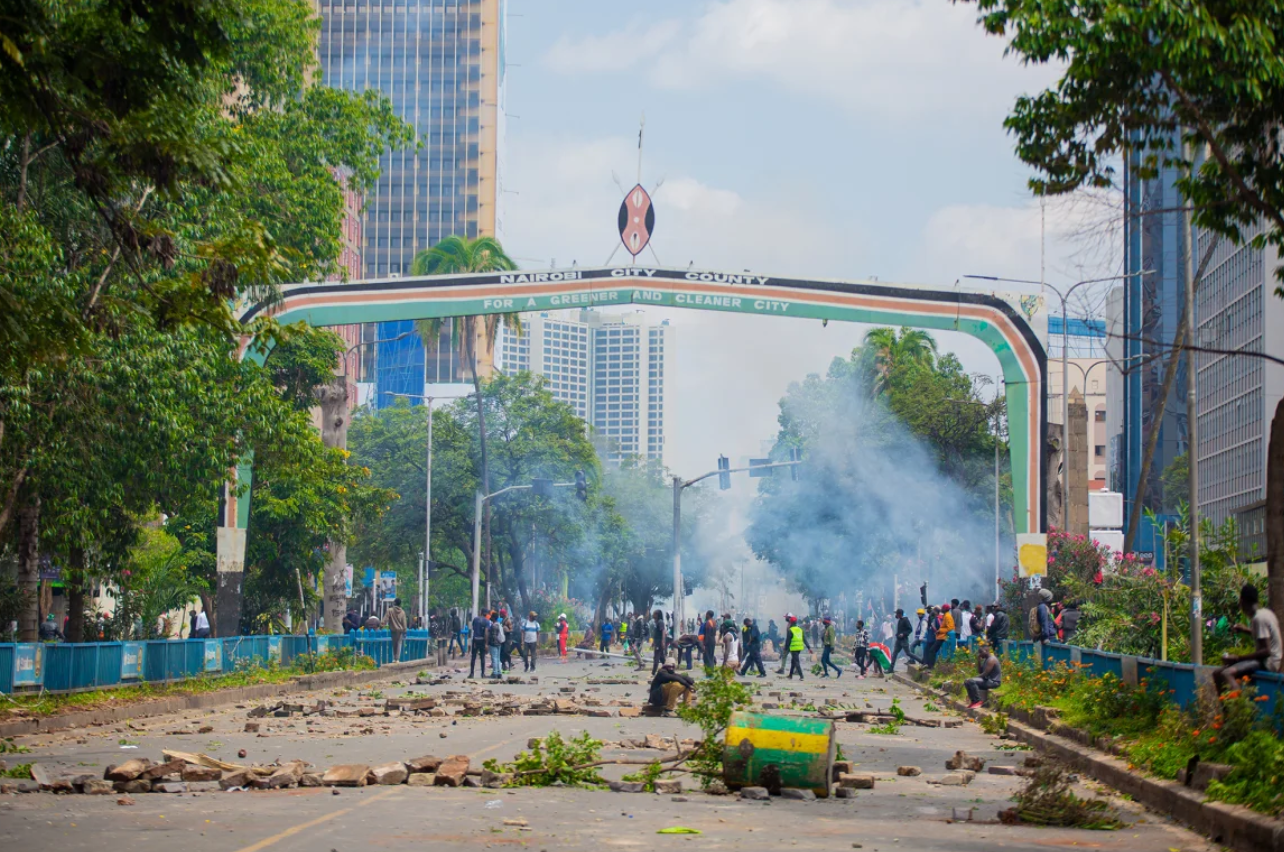
Thousands of people took to Kenya's streets in protest on June 25, including in the capital city.
Thousands of Kenyans took to the streets on Wednesday in mass protests marking one year since the 2023 anti-tax demonstrations. What began as a peaceful remembrance quickly spiraled into chaos. Human rights organization Amnesty International Kenya has reported at least 16 people dead and nearly 400 others injured in the latest wave of Kenya protests.
Irungu Houghton, Executive Director of Amnesty Kenya, confirmed the toll . The large-scale protests erupted across Nairobi, Mombasa, and other towns, drawing attention once again to the deeply rooted frustration among Kenya’s youth.
A Year On, Anger Still Boils Over
The 2023 Kenya protests forced the government to withdraw a controversial finance bill that raised taxes. But the underlying discontent remains. Allegations of police brutality have only added fuel to the fire. Incidents like the suspicious death of a teacher in police custody and the shooting of an unarmed street vendor have further enraged the public.
This year’s protests were meant to commemorate the victims of past brutality and demand lasting reforms. Instead, the anniversary became a fresh battleground between the public and state forces.
Capital Turns into a Fortress
In anticipation of the Kenya protests, security forces barricaded roads leading to key government buildings in Nairobi. Protesters, undeterred by the obstacles, still marched toward Parliament and the President’s office. Witnesses described police opening fire with live rounds, even on peaceful demonstrators.
CNN reporters on the ground captured scenes of chaos as tear gas and water cannons were deployed. Protesters displayed spent cartridges, evidence of the violent crackdown.
Media Silenced as Protests Escalate
In a controversial move, the Communications Authority of Kenya banned live coverage of the protests. The authority claimed the broadcasts violated local laws, threatening action against stations that defied the directive.
Several Kenyan TV channels were briefly taken off air. However, a Nairobi court later suspended the ban, allowing the media to resume their broadcasts. Civil society groups, led by Amnesty Kenya, slammed the censorship as unconstitutional. They emphasized that live coverage plays a critical role in holding the government accountable.
According to their joint statement, “Live coverage deters excessive force and human rights violations by ensuring that actions are witnessed and recorded.”
The Kenya Editors’ Guild condemned the move, calling it “draconian” and a direct attack on press freedom and democracy.
Mounting Casualties, Growing Concern
A joint report from Amnesty Kenya, the Law Society of Kenya, the Police Reforms Working Group, and the Kenya Medical Association painted a grim picture. Out of the nearly 400 injured during the Kenya protests, 83 sustained serious injuries. At least eight people suffered gunshot wounds and required urgent medical attention.
Human rights advocates are calling for immediate investigations into the use of force by police and justice for the victims. Civil society groups insist that peaceful protest is a constitutional right and must be protected, not punished.
A Nation Demanding Change
The tragic events unfolding during the 2024 Kenya protests have once again put the government under the spotlight. As voices grow louder against police brutality and government overreach, the Kenyan public seems more determined than ever to hold leaders accountable.
With youth-led movements leading the charge, the nation stands at a critical crossroads. Will the government listen, or will the cycle of violence and suppression continue?
One year later, Kenya’s fight for justice is far from over.