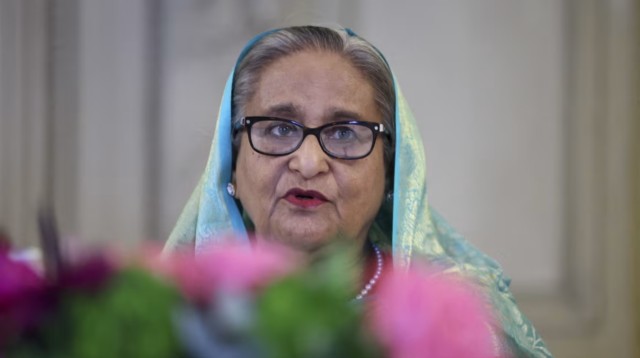
Bangladesh's former Prime Minister Sheikh Hasina speaking at the annual Munich Security Conference in Germany while still in office in February 2024.
Bangladesh’s former Prime Minister Sheikh Hasina has been handed a six-month jail sentence in absentia. The verdict, delivered on Wednesday, stems from a contempt of court case.
This marks the first conviction among several cases Hasina faces since her dramatic exit from the country.
Exile and Escalating Legal Battles
Hasina has been living in self-imposed exile in India since last August. She fled following deadly student-led protests that erupted across Bangladesh. The unrest ultimately led to her government’s collapse. Since then, she has faced multiple legal cases. However, this is the first to result in a formal sentence.
Court Delivers Verdict Without Her Presence
The sentence was passed by Bangladesh’s International Crimes Tribunal (ICT), a special court initially established by Hasina’s own administration in 2010. The tribunal was originally tasked with trying war crimes committed during the country’s 1971 liberation war. Now, it is being used to prosecute former regime members.
The ruling was issued by a three-judge panel led by Justice Golam Mortuza Mozumder. The court made it clear that the sentence will only be enforced if Hasina is arrested or surrenders voluntarily.
Hasina’s Controversial Phone Call Triggers Case
The contempt charge against Hasina arose from a leaked phone call. In the recording, she was allegedly heard saying, “There are 227 cases against me, so I now have a licence to kill 227 people.” A government forensic agency later verified the recording’s authenticity, igniting national outrage.
Prosecutors argued the statement undermined the judiciary and mocked the rule of law. The court agreed, ruling that her remarks amounted to gross contempt.
Party Leader Also Sentenced
Alongside Hasina, Shakil Akand Bulbul—associated with the banned student wing of her Awami League party—received a two-month prison sentence. Bulbul had been a prominent figure in student politics and a known loyalist of Hasina.
The Awami League party, long led by Hasina, was officially outlawed following her ouster. Several of its former leaders are now on trial for various charges including crimes against humanity and corruption.
Interim Government Stands Firm
The interim government, now led by Nobel Peace Prize winner Muhammad Yunus, has made accountability a top priority.
Yunus’s administration has vowed to investigate all rights abuses, particularly those linked to the July 2024 crackdown on student demonstrators.
So far, three separate arrest warrants have been issued against Hasina. Among them are serious accusations involving crimes against humanity connected to last year’s violent clashes.
Political Reactions and Public Sentiment
Hasina’s supporters have rejected the court’s ruling, labelling it a politically driven vendetta. They argue that the charges aim to silence a powerful political figure and dismantle her influence.
On the other hand, the interim government maintains that the legal actions are part of a broader effort to restore justice and rebuild trust in Bangladesh’s democratic institutions.
Future Uncertain for Hasina and Her Party
With her party banned and legal troubles mounting, Hasina’s political comeback seems uncertain. The ongoing trials signal a deeper shift in Bangladesh’s political climate. The new leadership is determined to dismantle the power structures of the past and move the country toward transparency and democratic reform.
Whether Hasina will return to face justice or continue to operate from exile remains to be seen. What’s certain is that Bangladesh has entered a new era—one that is shaping the future of its politics, justice, and leadership.