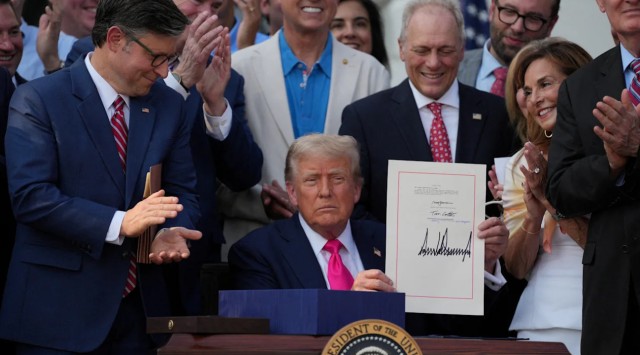
Former President Donald Trump spoke to reporters on July 1, just before heading to Florida. (Photo: Mark Schiefelbein/AP) · ASSOCIATED PRESS
In a bold and celebratory White House event, President Donald Trump officially signed a massive new tax and spending bill into law. Marking the occasion on Independence Day, Trump called it a turning point in U.S. history, declaring, “The golden age of America is upon us.” The bill, packed with sweeping financial changes, was passed just in time for July 4, meeting the president's self-imposed deadline.
This far-reaching legislation touches nearly every American household, offering tax breaks on tips, overtime pay, student loan adjustments, and broader deductions for state taxes. For students and families, there are changes to Pell Grants and 529 education savings plans. But while many will see some financial relief, critics warn of significant consequences.
Business World Reacts with Mixed Emotions
The corporate world is closely watching the bill’s impact. It makes permanent several tax breaks for businesses, including deductions on property investments, research spending, and factory construction. Small businesses organized as S corporations or partnerships will benefit from a permanent 20% pass-through deduction.
Senator Mike Crapo, who led the Senate’s tax effort, praised the bill for offering long-term certainty to businesses. Business Roundtable Chair and Cisco CEO Chuck Robbins said it helps companies plan and grow.
Still, not all reactions were positive. Tesla CEO Elon Musk sharply criticized the bill, calling it a “mockery” of government budgeting, especially due to the projected $3.3 to $4 trillion spike in national debt. He was also vocal about the bill’s retreat from clean energy incentives.
Clean Energy Faces Major Cuts
The bill marks a stark shift in energy policy. It phases out support for clean energy projects, such as electric vehicles and solar power, much faster than expected. Credits for EVs will vanish by the end of September, with other renewables soon to follow. There was a scare over a proposed tax on solar and wind, which was eventually dropped from the final version.

Meanwhile, fossil fuels gained ground. The bill reclassifies coal as a "critical mineral" eligible for government benefits. Trump even touted coal’s comeback in a recent interview, while dismissing solar as “ugly.”
Musk and other clean energy advocates believe the bill could weaken the national energy grid and drive up household electricity bills.
Healthcare Changes Spark Uproar
Healthcare provisions drew the most heated debates. The bill will cut about $900 billion from Medicaid, affecting low-income families and rural healthcare providers. As a result, the Congressional Budget Office projects 11.8 million more Americans could lose health coverage by 2034. Senator Susan Collins of Maine voted against the bill, citing its harmful impact on rural hospitals and nursing homes.
The most controversial elements include stricter eligibility rules and fewer benefits, with undocumented immigrants and many low-income Americans among the groups expected to lose coverage.
Legislative Journey: Tense Until the Final Vote
The bill’s path through Congress was anything but smooth. The Senate passed it on a razor-thin 50-50 vote, broken by Vice President JD Vance. The House followed suit with a narrow 218-214 margin. Lawmakers on both sides clashed over the bill’s scope, especially around healthcare, energy, and the mounting federal debt.
Despite the fierce opposition, Trump remained focused on victory, personally lobbying to flip votes. He called it the “greatest bill ever passed,” promising it would define his presidency and reshape America’s economic future.