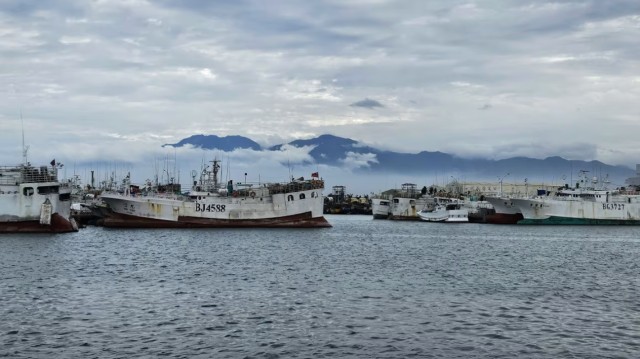
Taiwan’s Donggang port is a hub for its distant-water fishing fleet.
Taiwan, often celebrated for its democratic values and human rights record, is facing serious allegations. Beneath the surface of its booming seafood industry lies a dark reality—one filled with abuse, forced labor, and neglect of migrant workers, particularly in its distant-water fishing sector.
Promises at Sea, Pain in Reality
Silwanus Tangkotta, a 38-year-old Indonesian fisherman, is one of many whose dreams turned into trauma. Drawn by the promise of better pay—Taiwan’s minimum wage of $550 compared to Indonesia’s meager $100—he joined a Taiwanese fishing vessel in 2019. But just a few years later, a crushing injury at sea left him in agony, with no immediate help in sight.
When a rolling metal door slammed on his fingers during a turbulent wave, Tangkotta’s pleas for medical help were ignored.
The captain insisted they hadn’t caught enough fish to return to port. For weeks, he used nail clippers and toothpicks to remove exposed bone and stop infection. “I thought I had to pull it out, or it would rot,” he said.
Distant-Water Fishing: Profits Over People
Taiwan owns the second-largest distant-water fishing fleet in the world. Its vessels provide tuna, squid, and other seafood to major markets, including the US and Europe. But this multi-billion-dollar industry is powered by over 20,000 migrant workers, mostly from Indonesia and the Philippines, many of whom report unsafe conditions and unpaid wages.
In 2020, the US Department of Labor flagged Taiwan’s fishing sector for signs of forced labor—citing deceptive recruitment, withheld wages, physical abuse, and exhausting work hours.
The Taiwanese Fisheries Agency dismissed these claims as based on “unverified” reports, saying the workers are “important partners” and that Taiwan has a “concrete action plan” to protect them. Still, the ground reality tells another story.
Trapped, Overworked, and Isolated
Tangkotta worked on a vessel meant for 23 crew members, but only 16 were aboard. Shifts lasted up to 18 hours, food was scarce, and the boat had no internet—leaving the crew cut off from family or emergency services.
Even when his injuries worsened, and he was transferred to another boat, it continued fishing instead of heading to port. Eventually, he reached Taiwan, where doctors amputated two fingers. His reward? Immediate termination without compensation.
The Fisheries Agency claimed a doctor had deemed his condition non-critical and that the captain followed medical advice. But Tangkotta’s experience is not unique—it’s part of a wider pattern of neglect.
No Protection, No Rights
Unlike most foreign workers in Taiwan, distant-water fishermen fall outside the Labor Standards Act. This means no protections for overtime, limited healthcare, and zero job mobility without returning to their home countries or repaying hefty agency fees.
Allison Lee of the Yilan Migrant Fishermen Union said promises of decent pay often end in abuse. “The government’s reforms are superficial—focused on image, not real change,” she noted.
Even basic safety measures are ignored. Life jackets are discouraged because they “get in the way.” Overwork is the norm, with some boats operating with half the promised crew.
When Food Becomes Bait
In 2023, ten Indonesian fishermen on the You Fu vessel were left starving—surviving on bait and instant noodles for months. With no way to contact their families, they also endured verbal abuse. Their 15-month salary backlog was only resolved after media pressure mounted.
Wage theft is rampant, says Achmad Mudzakir of FOSPI, a Taiwan-based NGO. “Late or unpaid wages have devastating effects. Families suffer while we risk our lives at sea.”
He advocates mandatory WiFi access on all boats so workers can verify payments and contact support. He also calls for scrapping job-switching restrictions, which keep workers trapped and silent under threat of debt.
A Death That Shouldn’t Have Happened
Adrian Dogdodo Basar, another Indonesian fisherman, lost a close friend at sea in 2023. His friend fell gravely ill, but the captain refused to divert to port, offering only expired medication. He died before ever reaching land.
When Adrian demanded the body be returned home, he was punished with food deprivation. “They threatened to cut our pay if we protested,” he said. Like others, he had paid over $2,000 in agency fees just to get the job.
Global Demand, Local Suffering
Taiwan is the seventh-largest seafood exporter. Yet behind many seafood products on store shelves lies the invisible labor of exploited fishermen.
“American consumers are still at risk of consuming seafood tainted by modern slavery,” warned Sari Heidenreich from Greenpeace USA.
In 2024, four Indonesian fishermen filed a landmark U.S. lawsuit against Bumble Bee Foods and its parent company, FCF Co. They accused the company of knowingly benefiting from forced labor and debt bondage.
A Hope for Change
Today, Tangkotta relies on help from friends and NGOs. But he hopes his story sparks reform.
“I wish no one else has to go through what I did,” he said. “Let this end with me, not repeat with others.”
The fight for human rights in Taiwan’s fishing industry is far from over. Until reforms go beyond cosmetic fixes and center the dignity of migrant laborers, the global seafood trade will continue to carry a human cost.