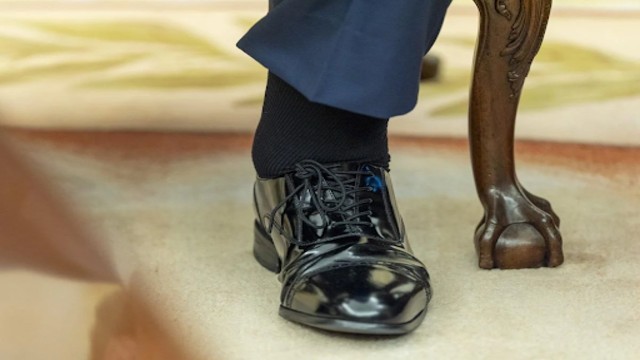
The left foot and swollen of President Donald Trump are pictured as he sits with Bahrain's Crown Prince Salman bin Hamad Al Khalifa in the Oval Office of the White House, Wednesday, July 16, 2025, in Washington. (AP Photo)
Leg swelling is more than just uncomfortable—it might be a sign your veins aren’t working properly. Former U.S. President Donald Trump’s recent diagnosis has pushed the term chronic venous insufficiency (CVI) into headlines. But what exactly is CVI, and why should you care?
What Exactly Is Chronic Venous Insufficiency?
Imagine the veins in your legs are highways for blood, taking it back to your heart. Now, imagine traffic backing up because something's gone wrong.
That’s essentially what happens in CVI. The veins in your legs stop moving blood upward efficiently. Gravity doesn’t help either—it pulls blood downwards, which means your veins need to work even harder to send it back up. When they can't, blood pools in your lower legs.
This can cause your feet and ankles to swell. Your legs may feel achy, heavy, or tingly. You might notice varicose veins—those twisted, bulging veins that often appear just under the skin. In severe cases, sores or ulcers can develop, making it even more uncomfortable.
Why Do Veins Struggle Like This?
Here’s the science in plain English.
Your leg veins have tiny one-way valves. Their job? To stop blood from flowing backward. But when these valves weaken or get damaged, the system fails. Blood can’t flow smoothly. It gets stuck or even starts to go the wrong way.
This backup leads to chronic venous insufficiency.
So, what causes the damage? A few key factors include:
- Long periods of sitting or standing: Staying in one position for too long is hard on your veins.
- Blood clots or phlebitis: These can physically block or weaken your veins.
- Excess weight: More pressure means more strain on those one-way valves.
- Age: As we get older, vein walls and valves naturally become less elastic and efficient.
- Pregnancy and genetics: Yes, you can inherit vein problems.
How Is CVI Diagnosed?
Swollen legs can be caused by lots of things—heart disease, kidney issues, or even blood clots. That’s why a proper diagnosis is crucial.
Doctors usually start by ruling out these more serious problems. Then, they use an ultrasound scan to check blood flow in your leg veins. This test is painless and helps determine if your valves are working as they should.
What Can You Do About It?
The good news? You’ve got options.
In mild cases, simple lifestyle changes can make a world of difference:
- Wear compression stockings. These help push blood up and reduce swelling.
- Elevate your legs when you’re resting. Let gravity work in your favor for once.
- Stay active. Walking is especially good. Every step you take works your calf muscles, which help your veins pump blood.
- Maintain a healthy weight. Less weight means less pressure on your veins.
In more advanced cases, doctors might recommend medication or medical procedures to fix damaged veins. Treatments like sclerotherapy or endovenous laser therapy are often effective and minimally invasive.
Better Not Ignore the Signs
Swelling in your legs may not seem like a big deal at first. But it can be your body’s way of flagging a problem with your circulation. If you’re experiencing discomfort, don’t brush it off.
Chronic venous insufficiency is common—especially among older adults—but it’s manageable with the right approach. The key is early detection and taking action before the condition worsens.
If your legs feel heavy, swollen, or sore by day’s end, it’s worth talking to a doctor. A quick checkup could save you a lot of discomfort down the road.