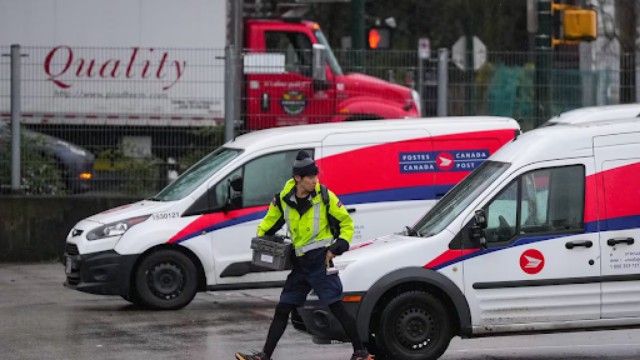
Over 50,000 Canada Post employees are set to vote this week on a new contract proposal from their employer. Reporter Paul Hollingworth looks into how important their role still is to Canadians today.
As Canada Post faces a possible strike, opinions from across the country reveal a clear divide in how people view the national postal service. While some Canadians rely on it heavily, others admit they barely use it at all.
This week, around 55,000 Canada Post employees are voting on a new offer after over 18 months of ongoing negotiations. The proposed deal includes a 13% wage hike and an increase in part-time positions. While Canada Post believes this is a fair proposal, the union strongly disagrees.
“We’ve put a reasonable offer on the table. It gives everyone clarity moving forward,” said Canada Post spokesperson Jon Hamilton.
But the Canadian Union of Postal Workers (CUPW) sees it differently. Negotiator Jim Gallant shared his frustration: “We feel like we’re being robbed. The post office is taking too much away from us.”
Amid this dispute, Canadians are asking themselves a simple question: Do they still need Canada Post?
Canadians Speak Up on Canada Post’s Relevance
For many young Canadians, the answer seems to be no.
“I don’t send mail or anything,” said Gurpreet Singh, a university student in Halifax. “I don’t really use it.”
Ashleigh Marshall, in her 20s, agrees. “It’s not part of my daily life. Some age groups might still use it, but not me.”
But others remain committed to the tradition of mail delivery.
“I still send and receive letters and pay bills through Canada Post,” said Judith Boyce, a Halifax senior. “Our family mails letters and parcels weekly,” added John Clark, another resident.
For Pat McDonell, receiving mail is more than just utility—it's about the feeling. “There’s something special about opening a letter or parcel that comes in the mail.”
Canada Post’s Role in Rural Communities
One major concern is the impact on rural Canadians. Ed McHugh, a marketing professor at Mount Saint Vincent University, worries that without Canada Post, many remote areas will be left behind.
“Private delivery companies often won’t go to places like rural Newfoundland or remote Alberta,” he said. “Canada Post is essential in those regions.”
McHugh also noted that younger generations don’t connect with the postal service the way older ones do. “They know Amazon, but not Canada Post.”
The Bigger Picture: What’s at Stake
Canada Post has been around since 1867, but changing habits, digital alternatives, and generational shifts have put pressure on its relevance. Still, people like Boyce hope the service doesn’t disappear.
“We get a lot of junk mail,” she admits. “But I’d still hate to see it go.”
As the strike vote unfolds, the future of Canada Post remains uncertain. But one thing is clear: Canadians are not all on the same page when it comes to the value of their national mail service.