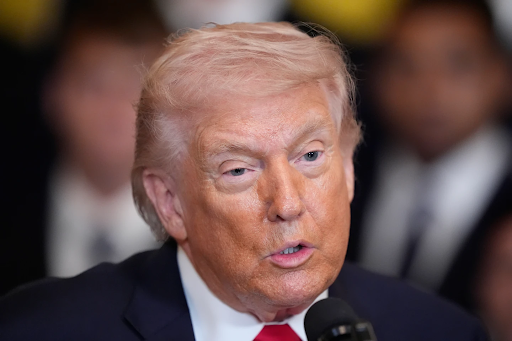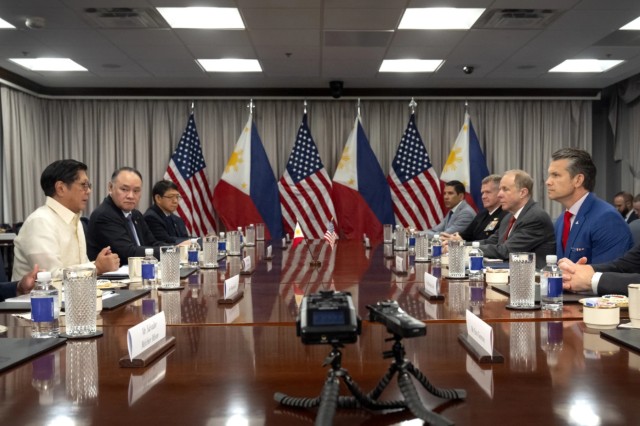
Philippine President Ferdinand Marcos Jr. Left Speaking during a meeting of Secratary Defense Pete Hegseth, right, at the pentagon, on Monday, July 21, 2025.
U.S. President Donald Trump is set to welcome Philippine President Ferdinand Marcos Jr. at the White House on Tuesday. This high-level visit highlights deepening ties between the two nations amid growing tensions in the Indo-Pacific region.
Strengthening a Historic Alliance
Marcos’ three-day trip to Washington underscores the evolving U.S.–Philippine alliance. It also marks a milestone—he is the first Southeast Asian leader to meet Trump during his second term. The visit follows his meetings with U.S. Secretary of State Marco Rubio and Defense Secretary Pete Hegseth on Monday.
As China grows more assertive in the South China Sea, both nations are prioritizing stronger economic and security cooperation. The Philippines, a long-standing U.S. treaty ally, is at the center of territorial disputes involving China, Vietnam, Malaysia, Brunei, and Taiwan.
Trade Talks: A Deal or New Tariffs?
Trade is expected to dominate the conversation. Trump has warned of imposing a 20% tariff on Filipino goods starting August 1 unless a new trade agreement is reached. Marcos, however, appears ready to negotiate.
"The Philippines is open to a forward-looking trade deal with the U.S.," Marcos said before departing Manila. He emphasized a desire for "mutually beneficial" terms that would boost long-term cooperation. Philippine Finance Secretary Ralph Recto also noted the country may offer zero tariffs on select U.S. goods to secure a deal.
White House Press Secretary Karoline Leavitt hinted at progress, saying trade discussions will likely feature in the leaders’ meeting.
Security Commitments in the Spotlight
Trump and Marcos are also expected to reaffirm their commitment to a “free, open, and secure Indo-Pacific.” Hegseth stressed that the U.S.–Philippines defense pact remains a cornerstone of peace in the region.
“The alliance has never been more essential,” Hegseth said. “Our treaty includes defense against any armed attack, including those in the South China Sea.”
Marcos agreed, saying the U.S. guarantee of mutual defense is vital. He praised America’s continued support, particularly in enhancing the Philippines’ military strength.
The two nations have recently expanded joint military drills and cooperation. The U.S. is also assisting in modernizing the Philippine armed forces to counter increasing regional threats.
Rising Tensions in the South China Sea
China’s growing aggression in the South China Sea remains a major concern. Filipino vessels have frequently been targeted by Chinese coast guard water cannons, leading to escalating maritime clashes. China accuses the Philippines of illegal entry into disputed waters.
In response, Hegseth told a Singapore security forum that the U.S. is now reorienting its military strategy to deter Chinese aggression in the Pacific.
Diplomatic Balancing Act
Despite rising tensions, the U.S. is keeping diplomatic lines open with Beijing. Secretary Rubio and Chinese Foreign Minister Wang Yi met in Malaysia earlier this month. They discussed possible cooperation while stressing the importance of managing conflicts through dialogue.
Meanwhile, Marcos and Rubio on Monday reaffirmed their nations’ commitment to “regional peace and stability.” They also discussed building stronger economic links and reinforcing supply chains to support both countries’ growth.
Looking Ahead: A United Front
Marcos’ visit is a clear sign that the U.S. and the Philippines are ready to present a united front. Whether it’s trade talks, defense strategy, or maritime disputes, both leaders aim to align their countries for a safer and more stable Indo-Pacific region.
As the global focus sharpens on the South China Sea and broader Indo-Pacific tensions, this meeting may shape the future of U.S.–Philippine relations—and the regional balance of power.