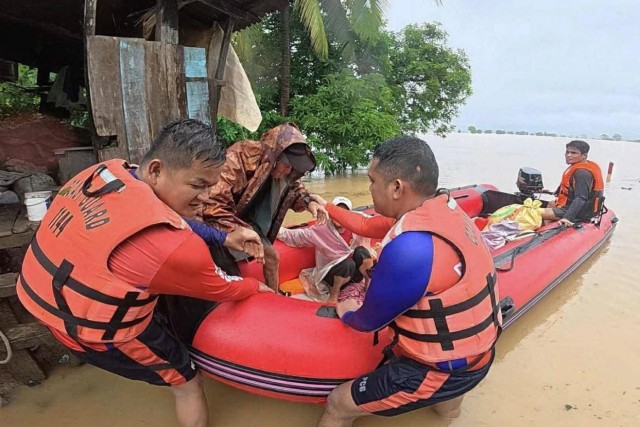
In this photo provided by the Philippine Coast Guard, rescuers assist a man to a rubber boat as they bring him to safer grounds following floods in Mamburao, Occidental Mindoro provinve, Philippines on Wednesday, July 23, 2025.
A tropical storm has intensified an already deadly week of severe weather in the Philippines. As of Friday, at least 25 lives have been lost and over 278,000 residents forced to flee their homes due to landslides, floods, and relentless rainfall.
Typhoon Co-may Slams Pangasinan
Typhoon Co-may, known locally as Emong, made landfall late Thursday night in Agno town, Pangasinan. The storm initially carried maximum winds of 120 kilometers per hour and gusts reaching 165 kph. By Friday morning, it had weakened slightly, moving northeast with winds at 100 kph.
Though weakening, the storm worsened the effects of the seasonal southwest monsoon already drenching large parts of the country. Authorities have yet to report any direct casualties from Co-may, but the storm aggravated ongoing weather damage.
Torrential Rains Trigger Floods and Landslides
Since last weekend, flash floods, falling trees, landslides, and electrocution have claimed 25 lives. Eight people remain missing. Heavy rains have forced tens of thousands to seek safety in evacuation shelters or relatives’ homes. Nearly 3,000 homes have suffered damage.
Travel by sea and air was restricted across northern provinces. Roads were blocked by landslides, fallen trees, and debris. Emergency teams — including soldiers, police, coast guard, and volunteers — were deployed to reach isolated villages and rescue stranded residents.
Widespread School Closures and State of Calamity
On Friday, schools remained closed in Metro Manila for the third consecutive day. Thirty-five provinces across northern Luzon also suspended classes. At least 77 towns and cities have declared a state of calamity. This move allows faster release of emergency funds and freezes the prices of essential goods, including rice.
The widespread damage highlights the country’s vulnerability to extreme weather. Located between the Pacific Ocean and the South China Sea, the Philippines is struck by around 20 typhoons and storms each year.
Marcos Visits Survivors, Calls for Climate Adaptation
President Ferdinand Marcos Jr., fresh from a visit to Washington D.C., toured emergency shelters in Rizal province on Thursday. He personally distributed food packs and assured displaced residents of continued government aid.
Later that day, he held an emergency meeting with disaster-response officials. The president stressed the urgency of preparing for more frequent and intense climate-related disasters.
“Everything has changed,” Marcos warned. “Let’s not ask, ‘What if a storm comes?’ because storms will come.”
U.S. Offers Support for Relief Efforts
The United States, a longstanding ally of the Philippines, has offered military transport to deliver food and relief goods to hard-to-reach areas if the situation worsens. According to the military, aircraft will be on standby to assist with logistics in remote islands and the countryside.
Disaster Risk Rising in the Philippines
The current crisis is a stark reminder of the country’s high disaster risk. Along with typhoons, the Philippines also faces frequent earthquakes and volcanic eruptions. With around two dozen active volcanoes and fault lines, it remains one of the most disaster-prone nations in the world.
As climate change accelerates, experts warn of stronger, more erratic storms in the future. Government officials and citizens alike are now being urged to adapt and prepare.
Final Word
Tropical Storm Co-may has added to an already devastating spell of weather in the Philippines. As rescue efforts continue and rainfall persists, the need for long-term climate resilience and disaster preparedness has never been clearer.