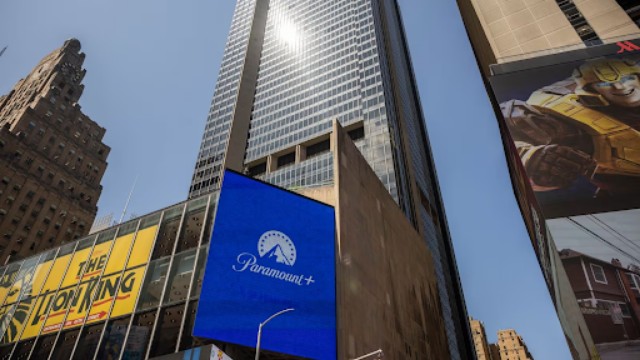
The Paramount Global office building in New York City, photographed (Photo by Yuki Iwamura/Bloomberg)
The U.S. government has officially approved Paramount’s massive $8 billion merger with Skydance, marking the end of a dramatic chapter that tied together corporate power, Hollywood’s brightest names, and Washington’s political drama.
After months of uncertainty, the U.S. Federal Communications Commission (FCC) gave the green light on Thursday, paving the way for Paramount and Skydance to move forward with one of the most high-profile deals in recent entertainment history. But this wasn’t just about business—it came with intense public scrutiny, legal tension, and more than a few surprising twists.
The Trump Connection
At the heart of the drama was a legal battle involving former U.S. President Donald Trump and “60 Minutes,” the long-running investigative show owned by Paramount through CBS. Trump had taken issue with a segment aired by “60 Minutes,” which prompted legal action and political pressure that threatened the merger.
To clear the path, Paramount agreed earlier this month to pay a $16 million settlement to Trump. This move raised eyebrows. Many critics saw the payment as a political maneuver designed to win favour and avoid potential interference with the merger.
Fallout and Public Backlash
Not long after the settlement, CBS made headlines again—this time for abruptly cancelling “The Late Show with Stephen Colbert.” The popular late-night host had recently taken jabs at the parent company’s deal with Trump. Though Paramount cited financial reasons for the cancellation, skeptics weren’t convinced. Inside sources and media veterans questioned whether it was retaliation disguised as cost-cutting.
The backlash was swift. Many within the industry, along with viewers and media watchdogs, expressed concern that the network’s editorial independence was under threat. The timing of Colbert’s exit fueled speculation that creative voices were being sidelined in favour of corporate interests.
FCC Chair Speaks Out
Despite the controversy, FCC Chairman Brendan Carr defended the decision to approve the merger. In a statement, Carr emphasized that the deal would help reshape the future of CBS and restore public confidence in news reporting.
He was direct in his criticism of current media outlets, saying, “Americans no longer trust the legacy national news media to report fully, accurately, and fairly. It is time for a change.”
Carr’s comments signalled a broader ambition to shake up the status quo in broadcast journalism, with hopes that the new partnership between Paramount and Skydance could mark a turning point for the iconic CBS network.