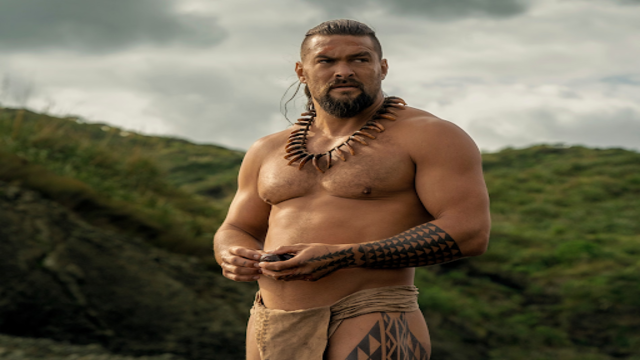
Playing to his strengths … Jason Momoa in Chief of War. The Guardian
Jason Momoa returns to the small screen not as a superhero or fantasy warrior, but as a real-life Hawaiian legend. In Chief of War, the Aquaman star takes on the role of Kaʻiana, an 18th-century warrior who helped unite Hawaii’s four kingdoms. The historical epic doesn’t shy away from its complexity, but Momoa’s charisma carries it through.
A Passion Project with Real Muscle
Momoa doesn’t just act in Chief of War. He co-created the series, co-wrote every episode, and serves as executive producer. The nine-part drama, made with filmmaker Thomas Paʻa Sibbitt, is deeply personal to the Hawaiian-born actor. It’s a rare moment when a Hollywood production tells native Hawaiian history on such a large scale—with a Hawaiian leading the charge.
Stunning Visuals, Brutal Action
Director Justin Chon opens the series with breathtaking shots of the Hawaiian islands. Each one is captured in vivid detail—lush, dramatic, and dreamlike. But before the viewer gets too comfortable, the story plunges into action.
Kaʻiana’s first major scene? Diving into the ocean to wrestle and kill a shark—an act of bravery and tradition. It’s a wild, symbolic start that sets the tone: this will be a brutal, physical, and emotional journey.
Return of the Warrior
Kaʻiana is soon pulled back into political chaos. He’s summoned by Kahekili, the chief of Maui, whom he once served. The relationship is rocky. Many of Kahekili’s men see Kaʻiana as a traitor. Tensions erupt in a violent spear-throwing showdown that ends with Kaʻiana catching a spear mid-air and driving it into his attacker.
Violence runs throughout the series, and it’s often gory. Blood sprays, skulls crack, and one battle ends with a literal tower of bones. Yet these moments are not just for shock—they represent the brutal reality of the time.
History with Heavy Baggage
At its heart, Chief of War tries to unpack Hawaii’s rich, complicated history. But the series often struggles to balance storytelling with its educational ambitions. The dense backstory slows the pace, and dialogue sometimes feels clunky. Historical events are packed tightly between battle scenes, making it difficult for unfamiliar viewers to follow every political twist.
Even so, the series deserves credit. This is the first major attempt to tell the story of Kaʻiana and Hawaii’s unification for a global audience. That’s a big step.
Character Depth Falls Short
While Momoa shines as the conflicted Kaʻiana—strong, stoic, and deeply loyal—many supporting characters fall flat. The male cast spends most of their time grunting or growling. Female characters, though present, lack complexity and feel secondary to the plot.
Still, Momoa brings nuance. Behind the muscles and action, there’s a quiet dignity to his performance. His portrayal of Kaʻiana as a reluctant warrior with strong moral values gives the show a beating heart.
A Solid Start for Indigenous Storytelling
Despite its flaws, Chief of War is a milestone for indigenous storytelling in mainstream media. It’s bold, heartfelt, and ambitious. With brutal battles and rich culture, it sheds light on a pivotal period in Hawaiian history.
As the series progresses, it begins to find its rhythm—blending violence, politics, and emotion with more confidence. And if this is just the beginning, there’s hope for more stories like this to be told—with authenticity, power, and pride.