

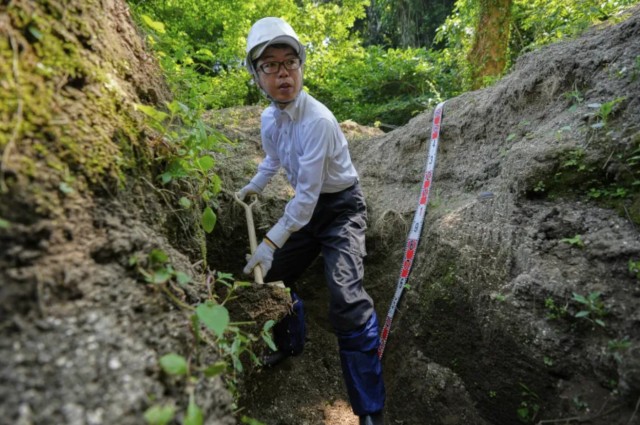
Rebun Kayo, a Hiroshima University researcher, searches for remains of victims of the 1945 Hiroshima bombing in Ninoshima in Hiroshima, western Japan, Tuesday, July 8, 2025.
Eighty years have passed since the atomic bomb devastated Hiroshima on August 6, 1945. While the city has since rebuilt and mourned, the small island of Ninoshima—just 10 kilometers away—still silently bears the scars of the past. In the immediate aftermath of the bombing, thousands of severely injured victims were ferried to this rural island. Few survived. Most were buried hastily and anonymously.
The Island of Lost Souls
Victims brought to Ninoshima had suffered unimaginable pain. Their skin hung in shreds, and they screamed in agony. With limited medical aid and overwhelmed staff, only a few hundred were alive by the time the field hospital shut down on August 25. The rest were buried in makeshift graves, bomb shelters, or even incinerated.
Today, researchers and locals still search for remains. Their mission is to identify the lost, offer closure to grieving families, and ensure the dead are not forgotten.
Silent Digs, Loud Memories
Rebun Kayo, a researcher from Hiroshima University, has made it his mission to locate remains on Ninoshima. He started in 2018. On each visit, he dons protective gear, prays, and begins the solemn dig. The process is slow and sacred.
So far, Kayo has uncovered nearly 100 bone fragments. Among them was a toddler’s jawbone with tiny teeth. A local tip led him to the site—someone remembered soldiers burying bodies in that very area during the war.
“These children have waited alone for so long,” Kayo said. “It’s heartbreaking.”
One Survivor’s Haunting Memory
Tamiko Sora, now elderly, was just three years old when the bomb hit. She and her family lived just 1.4 kilometers from the hypocenter. Their house was destroyed. Her face burned, but she survived.
On her way to a relative’s house, she met a little girl named Hiroko and a badly burned woman carrying a baby. These strangers left a lasting mark. Sora’s family searched for them for years but never found them.
She now believes they may have ended up on Ninoshima.
Three Weeks of Chaos and Despair
In the days following the bombing, Ninoshima became an emergency hub. Boats brought victims nonstop. The No. 2 quarantine station overflowed. Many died en route or shortly after arrival.
Eiko Gishi, then 18, helped move patients from the pier. Bamboo cups were made for water. Some died after just one sip.
Soldiers initially handled bodies with care. But as numbers grew, they were forced to use horse incinerators. When that filled, they buried bodies in shelters and mounds.
“It was hell on Earth,” recalled army medic Yoshitaka Kohara. The survivors’ blank stares when told the war had ended on August 15 haunted him forever.
Carrying the Legacy Forward
Hiroshi Miyazaki, 77, lost several family members in the bombing. His mother served as a nurse at the island’s field hospital. He believes the real lessons of Hiroshima lie in untold stories like those of Ninoshima.
“Hiroshima wasn’t always a city of peace. We must pass on these stories,” he said.
Since 1947, the remains of roughly 3,000 victims have been found on the island. Thousands more may still be buried there.
Healing Through Remembrance
Sora has since visited Ninoshima to honor the lives lost and perhaps the girl and infant she once met. At the cenotaph, she whispers their names, sharing stories and love.
On a recent visit, Kayo brought her a box. Inside were bones—possibly from a child like Hiroko.
Sora stared at them with reverence. Then, softly, she spoke:
“I’m so happy you were finally found. Welcome back.”
A Continuing Search for Peace
Ninoshima may be quiet now, but beneath its soil lie voices of the past. For people like Kayo and Sora, the war didn’t end in 1945. It continues with each memory uncovered and each life remembered.
As Japan remembers Hiroshima, Ninoshima’s story reminds us that healing still takes place—one bone, one prayer, one visit at a time.













