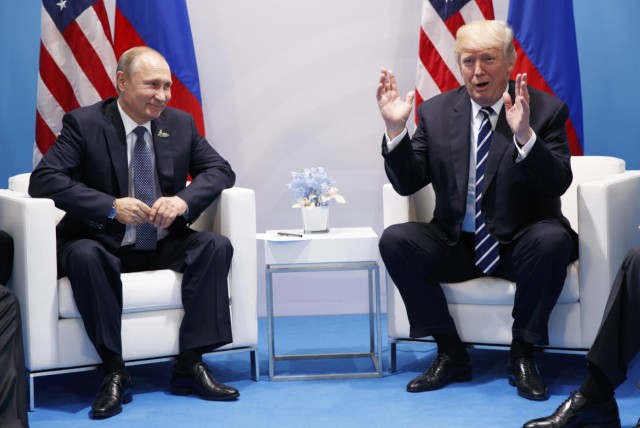
President Trump speaks during a meeting with Russia President Putin at G20 Summit, July 7, 2017.
Donald Trump’s upcoming meeting with Vladimir Putin in Alaska could reshape their complex relationship. It may also influence the war in Ukraine.
Trump once praised Putin as “pretty smart” for invading Ukraine. Lately, his tone has shifted. He has voiced frustration and threatened stronger sanctions.
He has called the Alaska meeting a “feel-out” session to discuss a possible ceasefire. Yet, he has warned of “severe consequences” if Putin refuses peace.
Putin views the summit as a chance to rebuild ties with Washington. He also hopes to ease Russia’s isolation since the Ukraine invasion began over three years ago.
Critics warn that inviting Putin benefits Moscow, especially since Ukraine’s president is excluded. The White House insists the meeting does not hand Putin a win.
Republican Support for Trump’s Approach
Republican Senator Lindsey Graham expressed confidence in Trump’s stance. He believes Trump will meet Putin “from a position of strength.” Graham said the president will protect both European and Ukrainian interests while seeking an honorable end to the war.
A History of Political Controversy
Trump’s ties to Russia have been questioned since the 2016 presidential race. U.S. intelligence agencies accused Russian hackers of targeting Democrats to damage Hillary Clinton’s campaign.
In a 2016 press event, Trump famously addressed Russia directly, urging them to find Clinton’s missing emails.
These suspicions fueled years of investigations, including Special Counsel Robert Mueller’s probe. While several Trump associates were convicted, no criminal conspiracy between Trump and Moscow was proven.
Public Praise and Political Fallout
Trump met Putin six times during his first term. The 2018 Helsinki summit shocked many when Trump appeared to side with Putin over U.S. intelligence agencies regarding election interference.
After backlash, Trump walked back his remarks but later cast doubt again. Putin called the summit “the beginning of the path” toward better ties and admitted he wanted Trump to win in 2016.
Praise After Ukraine Invasion
Even after leaving the White House, Trump maintained friendly comments about Putin. When Russia invaded Ukraine in 2022, Trump called Putin “smart” and suggested he was acting as a peacekeeper.
He repeatedly claimed the invasion would not have happened if he were president. Putin publicly agreed, linking his view to Trump’s false election fraud claims.
During his campaign, Trump criticized U.S. military aid to Ukraine and mocked President Volodymyr Zelenskyy as a “salesman” for seeking weapons and funds.
From Trust to Frustration
In early 2025, Putin pushed for a summit, proposing broader economic cooperation with the U.S. Tensions spiked when Trump clashed with Zelenskyy in February, calling him “disrespectful.”
By March, Trump still expressed trust in Putin regarding a ceasefire. But as Russian attacks intensified, he publicly pleaded, “Vladimir, STOP!”
He later accused Putin of “tapping me along” and called him “absolutely crazy.” The U.S. repositioned nuclear submarines after provocative statements by former Russian president Dmitry Medvedev.
Lowering Expectations for Alaska
Trump’s earlier confidence about ending the war in 24 hours has faded. Now, he describes the Alaska meeting as exploratory rather than decisive.
“I think it’ll be good,” Trump said. “But it might be bad.”
The world will watch closely as Trump and Putin face each other again—this time with war, politics, and history shaping every word.