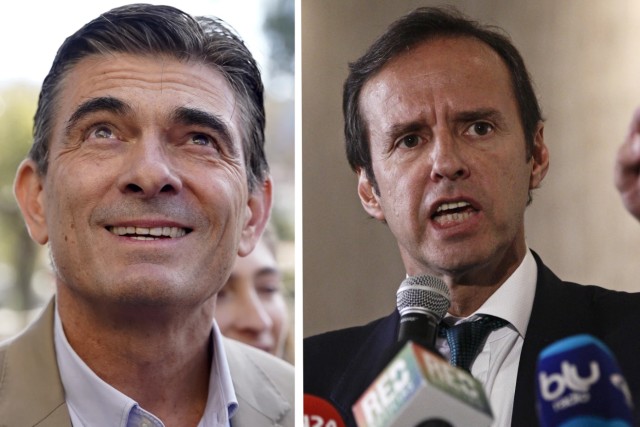
This combination photo shows presidential candidates Rodrigo Paz, left and Bolivia’s former President Jorge Quiroga, right.
Bolivia is heading toward a historic presidential runoff. The election has ended over two decades of left-wing dominance. Yet, the results show voters are cautious about a sharp shift to the right.
Centrist Senator Rodrigo Paz surprised the nation by taking the lead. He outperformed right-wing front-runners but fell short of a majority. Paz will now face former President Jorge “Tuto” Quiroga in a second round on October 19.
Centrist Candidate Leads the Race
Rodrigo Paz, a former mayor, captured 32.8% of the vote with 91% of ballots counted. Quiroga followed with 26.4%. To win outright, candidates needed 50%, or 40% with a 10-point margin.
Paz promised change while addressing cheering supporters. “This economic model must change,” he said. His campaign gained momentum through an alliance with ex-police captain Edman Lara, popular among younger voters for his anti-corruption stance.
Quiroga acknowledged Paz’s lead but framed the outcome as a victory for democracy. “Bolivia told the world we want to live in a free nation,” he said.
A Historic Blow to the Left
The results dealt a heavy defeat to the ruling Movement Toward Socialism (MAS) party. Once led by Evo Morales, the MAS has dominated Bolivian politics for over 20 years.
This time, the official candidate Eduardo del Castillo managed only 3.2% of votes. Another leftist hopeful, Senate president Andrónico Rodríguez, secured just 8%.
Morales, once a champion of Indigenous rights and social reforms, left behind a divided legacy. His efforts to cling to power and scandals eroded his support. The economic crisis under current President Luis Arce worsened public anger.
Inflation soared above 16% in just two years. Fuel shortages and a lack of U.S. dollars crippled trade. Power struggles between Morales and Arce fractured the MAS, giving opponents a rare opening.
Voter Anger Turns Against MAS
Public frustration erupted at polling stations. Leftist leaders faced insults, thrown objects, and even dynamite blasts near voting centers. Rodríguez, attempting to vote in Morales’ stronghold, was attacked with bottles and rocks.
The anger signaled that Bolivians are no longer willing to tolerate the MAS leadership.
Paz Emerges as a Moderate Alternative
Polls had predicted right-wing dominance. Instead, Paz, a centrist with a softer tone, became the surprise leader. Businessman Samuel Doria Medina, once seen as a contender, failed again in his fourth presidential bid.
Paz has distanced himself from proposals to sell Bolivia’s lithium reserves or seek IMF loans. But he has also sharply criticized the MAS model of subsidies and heavy state spending.
Supporters see him as a fresh choice. “We want new people, new proposals,” said Jaqueline Cachaca, a voter who lost her job during the economic crisis.
New Face With Old Political Roots
Despite his appeal as a reformer, Paz is no stranger to Bolivian politics. The 57-year-old senator is the son of former President Jaime Paz Zamora, who governed from 1989 to 1993.
He also ran in past elections with Quiroga’s right-wing party. These connections raise questions about whether he truly represents a new era.
Still, many voters believe Paz offers the best chance for stability and gradual reform. His rise reflects Bolivians’ desire for change, but without an extreme shift to the right.
What Lies Ahead
The October 19 runoff will shape Bolivia’s future direction. A victory for Paz could bring moderate reforms and cautious economic restructuring. A win for Quiroga may mark a sharp return to neoliberal policies.
For now, the election signals the end of MAS dominance. Bolivia is at a turning point, and voters will decide if the future lies in moderation or a full embrace of right-wing politics.