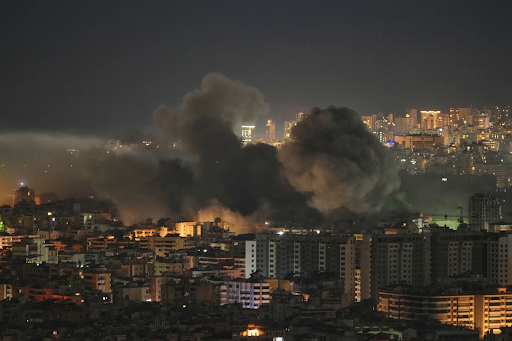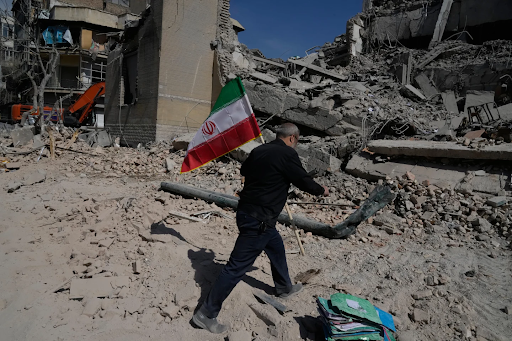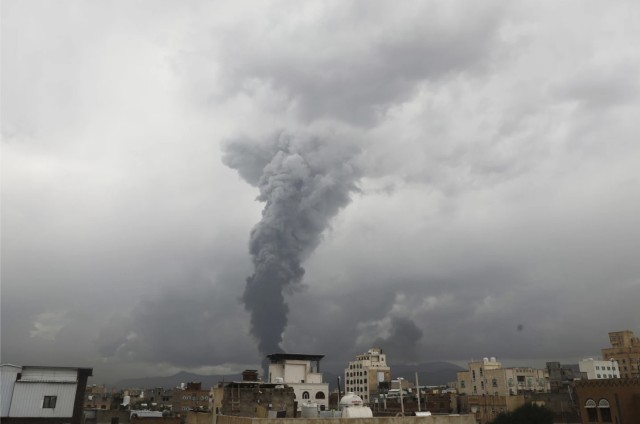
Smoke billows following Israeli airstrikes in multiple areas in Sanaa, Yemen, Sunday, Aug. 24, 2025.
Israeli airstrikes pounded Yemen’s capital, Sanaa, on Sunday. The strikes came just days after Iran-backed Houthi rebels fired a cluster bomb missile toward Israel, marking a dangerous escalation in the conflict.
Explosions Shake Sanaa
The Houthis confirmed that several areas across Sanaa were hit. The rebel-run health ministry reported four deaths and 67 injuries. Their Al-Masirah television claimed an oil company was struck. Videos circulating online showed a massive fireball rising from the site.
Residents described the intensity of the blasts. Explosions were heard near the closed military academy and the presidential palace. Thick plumes of smoke covered parts of the city, including Sabeen Square.
“The sounds of explosions were very strong,” said Hussein Mohamed, who lives near the palace. Another resident, Ahmed al-Mekhlafy, added, “The house was rocked, and the windows were shattered.”
Israel Confirms Targets
Israel’s military said its strikes hit the Asar and Hizaz power plants, which it described as major facilities used for military activities. A military site inside the presidential palace compound was also targeted.
An Israeli Air Force official said more than 10 fighter jets carried out the mission. According to him, Friday’s Houthi missile was a new threat — a cluster munition designed to release multiple explosives upon impact. This technology, he said, likely came from Iran.
Defense Minister Israel Katz declared that Israel would continue to impose an air and naval blockade. Prime Minister Benjamin Netanyahu warned that the Houthis are “paying a heavy price for their aggression.”
Houthis Vow More Attacks
Despite the strikes, Houthi leaders promised to keep up attacks on Israel. Nasruddin Amer, deputy head of the Houthi media office, wrote on social media: “Our military operations supporting Gaza won’t stop unless the aggression ends and the siege is lifted.”
For nearly two years, the Houthis have launched missiles and drones at Israel and targeted ships in the Red Sea. They say these actions are in solidarity with Palestinians during the Gaza war.
Rising Threat to Global Shipping
The Houthis’ activities have disrupted vital shipping lanes in the Red Sea, through which about $1 trillion in goods passes annually. From late 2023 to the end of 2024, the group attacked more than 100 commercial and naval ships.
During a brief ceasefire in Gaza earlier this year, the Houthis paused their assaults. However, they soon resumed, triggering a U.S.-led air campaign. In May, Washington struck a deal with the group to stop targeting global shipping in exchange for halting airstrikes. Yet, the Houthis insisted that the agreement did not prevent them from hitting Israeli-linked assets.
Last month, the Houthis escalated further. They threatened to attack merchant ships owned by any company doing business with Israel, regardless of nationality. This marked what they called a “new phase” of operations.
Previous Israeli Strikes
Sunday’s attack was Israel’s second round of strikes in a week. Earlier, it targeted Houthi energy infrastructure. In May, Israeli jets carried out a rare daytime strike on Sanaa’s airport. The raid destroyed the terminal, left deep craters on the runway, and damaged six passenger planes, including three from Yemenia Airways.
A Dangerous Escalation
The latest events highlight the growing risks of regional conflict spreading beyond Gaza. With Houthis acquiring advanced weapons and Israel intensifying its military response, tensions in the Middle East continue to rise.