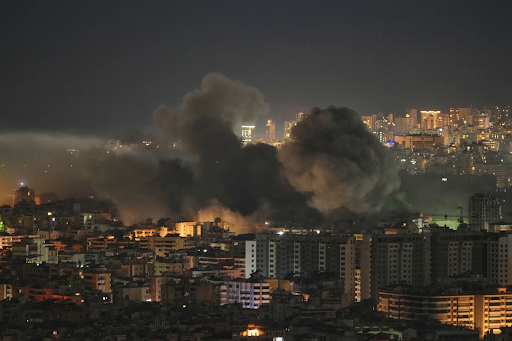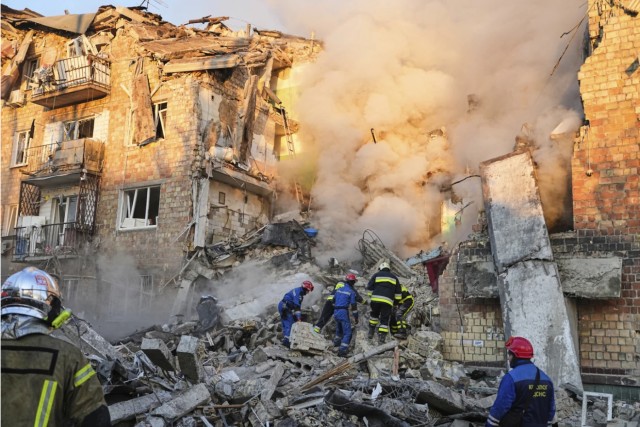
Fire fighters work on the site of a burning building after a Russian attack in Kiyv, Ukraine, early Thursday, Aug 28, 2025.
European defense ministers have vowed to intensify pressure on Russia after a deadly missile strike on Kyiv killed 23 people and damaged a European diplomatic mission. The attack has triggered fresh outrage across Europe, with leaders calling for tougher sanctions, seizure of Russian assets, and stronger support for Ukraine’s military and future EU membership.
Europe Condemns Russia’s Attack on Kyiv
Thursday’s assault left Kyiv shaken. Two missiles struck near an EU diplomatic mission, shattering windows and doors just 50 meters away. The European Union summoned Russia’s envoy in Brussels, calling the damage a “serious violation” of the Vienna Convention on Diplomatic Relations.
European officials said the attack highlighted the urgent need to strengthen Ukraine’s defenses and reinforce Europe’s role in postwar security.
Push for Tougher Sanctions and Asset Seizures
EU defense ministers agreed that stronger economic pressure is the only way to curb Moscow’s aggression. Calls grew louder to seize more than €200 billion in frozen Russian assets. Officials argued that the funds could be used to support Ukraine’s defense industry and purchase weapons.
Ireland’s Defense Minister Simon Harris stressed the need for immediate action. “We must consider stronger sanctions and more measures to pressure Russia to end this brutal war,” he said.
European Security Guarantees for Ukraine
Discussions also focused on future security guarantees. EU leaders are weighing the creation of a European-backed security force that could enforce a peace deal once achieved. A coalition of 30 nations, including Japan and Australia, has expressed support for the idea.
EU foreign policy chief Kaja Kallas said Europe must shoulder the majority of responsibility. “The U.S. expects Europe to carry the lion’s share of security guarantees,” she explained.
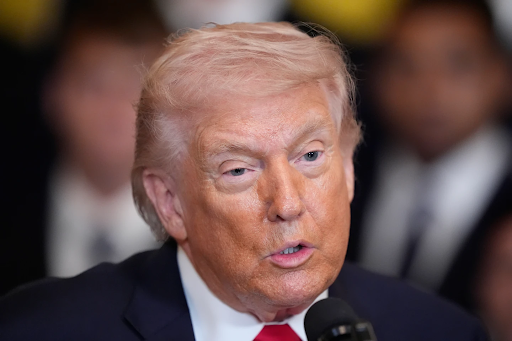
While American involvement remains uncertain, former President Donald Trump has ruled out sending U.S. troops to defend Ukraine.
U.S. and International Response
The U.S. approved an $825 million arms sale to Ukraine on Thursday, including long-range missiles and defense equipment. The move underscores Washington’s continued military support despite political disagreements.
White House press secretary Karoline Leavitt condemned both Vladimir Putin and Volodymyr Zelenskyy, suggesting neither side appears ready for peace. She noted Ukraine’s recent strikes on Russia’s oil infrastructure, adding, “Perhaps both sides are not ready to end it themselves.”
Meanwhile, the U.N. Security Council convened an emergency meeting on the Kyiv strikes, following a request from Ukraine and five European members.
Hungary Blocks EU Aid, NATO Steps In
One obstacle remains within the European Union—Hungary’s refusal to approve funding for Ukraine. Around €6.6 billion in EU aid remains blocked. Kallas suggested the money could instead be funneled through NATO’s newly approved Ukraine Requirements List to bypass the deadlock.
Growing Belief That Peace Is Out of Reach
Several leaders expressed doubt that peace talks with Russia hold any value. Lithuania’s Defense Minister Dovilė Šakalienė called optimism “naive,” arguing that Putin is only buying time to kill more civilians. “Europe must act more forcefully,” she urged.
Her statement reflects a growing belief in Europe that the only viable path forward is stronger military support and economic pressure.
Von der Leyen Tours EU’s Eastern Borders
European Commission President Ursula von der Leyen began a tour of EU states bordering Russia and Belarus. She visited arms factories and border posts, signaling Europe’s determination to reinforce its eastern defenses.
In Latvia, she met Prime Minister Evika Siliņa and toured a drone manufacturing facility. Her visit highlighted Europe’s push to boost its defense capabilities while standing firmly with Ukraine.
A United Front with Uneasy Challenges
The deadly Kyiv strike has united European defense leaders in demanding tougher action against Moscow. Yet challenges remain—Hungary’s resistance, unclear U.S. military involvement, and the daunting prospect of a prolonged war.
For now, Europe’s strategy is clear: intensify sanctions, seize Russian assets, and strengthen Ukraine’s path toward EU membership and long-term security.