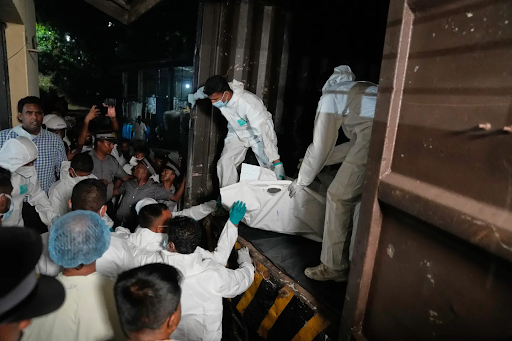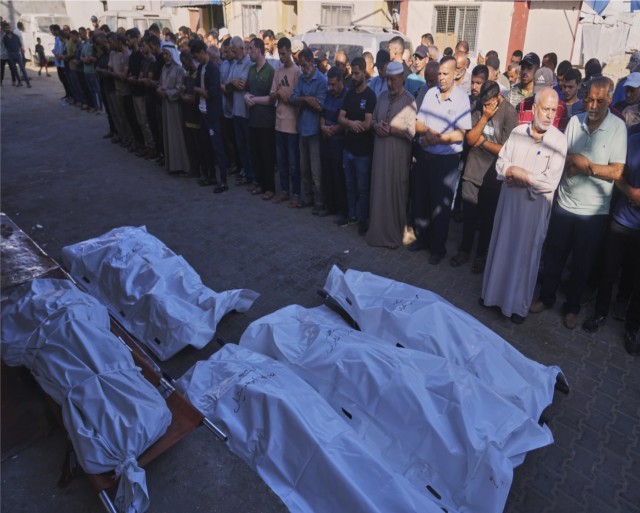
Palestinians pray over the bodies of people killed in an Israeli military strike as they gather outside Al-Aqsa Hospital in Deir al-Balah, in the central Gaza Strip, Monday, Sept. 1, 2025.
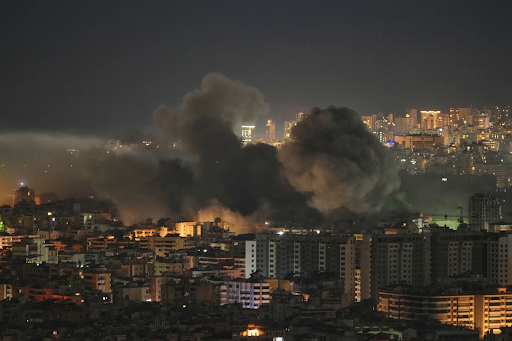
Israel’s latest offensive in Gaza has killed at least 31 people, health officials confirmed on Monday. The strikes targeted Gaza City and surrounding areas, including the crowded Jabaliya refugee camp.
Leading genocide scholars have accused Israel of committing genocide, a charge the Israeli government firmly denies.
Escalating Strikes Shake Gaza City
Airstrikes and artillery fire have thundered across Gaza City since Israel declared it a combat zone. Witnesses described explosive-laden robots demolishing buildings on the city’s outskirts.
“Another merciless night in Gaza City,” said Saeed Abu Elaish, a medic displaced to the northwestern part of the city.
At least 13 people were killed in Gaza City alone. More than half of the overall victims were women and children. Israel says it only targets militants, blaming Hamas for civilian deaths because it operates in densely populated areas.
Death Toll Continues to Climb
According to Gaza’s Health Ministry, 63,557 Palestinians have died since the war began on October 7, 2023. Another 160,660 have been injured. The ministry reports that women and children account for nearly half of the fatalities.
Israel disputes these numbers but does not provide its own casualty count. International organizations and U.N. agencies consider Gaza’s ministry figures to be credible, despite its affiliation with Hamas.
The conflict began after Hamas-led militants killed 1,200 people, mostly civilians, and took 251 hostages in southern Israel. Forty-eight hostages remain in Gaza, with around 20 believed to be alive.
Starvation Adds to the Suffering
For Gaza residents, war is not the only threat. Hunger is now widespread. The world’s leading authority on food crises declared last month that Gaza faces famine.
Repeated mass displacement, the collapse of food production, and Israel’s blockade have fueled the crisis. Israel has also tightened restrictions on food deliveries to northern Gaza during its current offensive.
Scholars Label Israel’s Actions as Genocide
The International Association of Genocide Scholars, with nearly 500 global members, issued a resolution on Monday. It declared that Israel’s policies in Gaza “meet the legal definition of genocide.”
The resolution was backed by 86% of voting members. President Melanie O’Brien emphasized that experts on genocide recognize the situation clearly.
Israel rejected the resolution, calling it “an embarrassment to the legal profession.” Officials claimed the accusations rely on “Hamas’ campaign of lies.”
In July, Israeli rights groups B’Tselem and Physicians for Human Rights-Israel also accused Israel of genocide. This marked the first time Jewish-led organizations within Israel made such a claim.
Anger at Hostage Funeral
Tensions were also high in Israel. Thousands attended the funeral of Idan Shtivi, a hostage whose body was recovered in Gaza. Another recovered hostage, Ilan Weiss, was buried in a private ceremony.
Mourners expressed frustration at the government for failing to secure a ceasefire or hostage deal. Some accused Prime Minister Benjamin Netanyahu of prolonging the war for political purposes.
Mass protests in Israel demanding a ceasefire and hostage release have intensified in recent weeks.
Flotilla Sets Sail for Gaza
Meanwhile, a major activist flotilla departed Barcelona after a weather delay. The Global Sumud Flotilla, made up of about 20 boats from 44 countries, aims to break Israel’s blockade of Gaza.
Climate activist Greta Thunberg is among the participants. Previous flotillas have all been intercepted by Israeli forces.
Israel defends the blockade, saying it prevents Hamas from importing weapons, while claiming other channels exist for humanitarian aid.