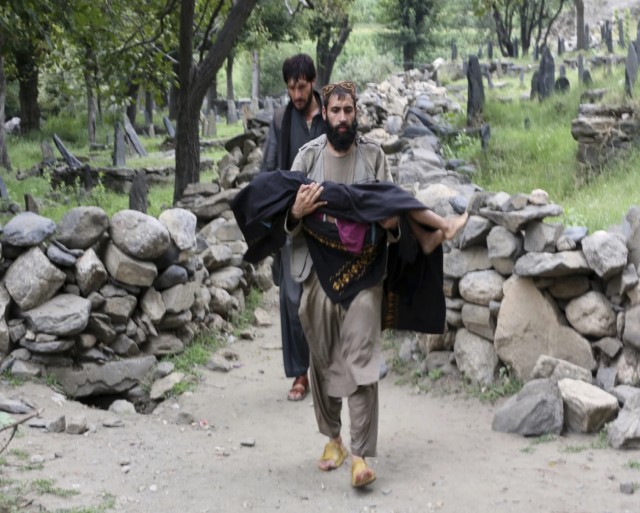
An injured person is carried to a military helicopter that landed to evacuate injured victims of an earthquake that killed many people and destroyed villages in eastern Afghanistan, in Mazar Dara, Kunar province, Monday, Sept. 1, 2025.
A powerful earthquake struck eastern Afghanistan late Sunday, flattening villages and leaving families buried under rubble. The Taliban government confirmed at least 800 deaths and more than 2,500 injuries. Survivors are desperately searching for loved ones while rescue efforts face severe challenges.
Villages Reduced to Rubble
The 6.0 magnitude quake hit Kunar province near Jalalabad, shaking communities in the middle of the night. Residents in Nurgal district, one of the worst-hit areas, reported near-total destruction.
“Children are under the rubble. The elderly are under the rubble,” said a villager. His plea for urgent help reflects the desperation on the ground.
The Quake and Its Impact
The U.S. Geological Survey reported the quake struck 27 kilometers east-northeast of Jalalabad at a depth of 8 kilometers. Shallower quakes often cause greater devastation, and this one was no exception. Several aftershocks followed, deepening the panic.
Footage showed rescuers pulling survivors on stretchers from collapsed homes. With many structures built from mud bricks and wood, buildings crumbled within seconds.
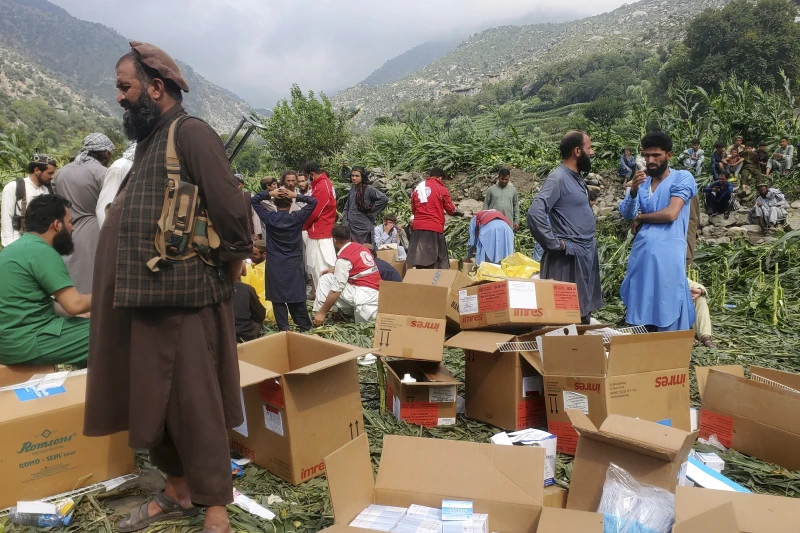
Civil defense workers, locals, and army soldiers prepare to evacuate injured victims of an earthquake that killed hundreds and destroyed numerous villages in eastern Afghanistan, in Mazar Dara, Kunar province, Monday, Sept. 1, 2025
Survivors’ Heartbreaking Stories
Sadiqullah, from Maza Dara in Nurgal, recalled being woken by a booming sound. He rescued three of his children but was trapped when the rest of his home collapsed.
“My wife and two sons are dead,” he said from Nangarhar Hospital. “We were trapped for hours until neighbors pulled us out.” His story echoes the grief shared by countless families across Kunar.
Rescue Operations Under Strain
Health officials said many affected areas remain unreachable. Roads are blocked, forcing aid workers to walk hours to reach survivors. Helicopters are airlifting the injured to hospitals, but access to remote villages remains extremely difficult.
The Taliban spokesman, Zabihullah Mujahid, admitted the death toll may rise. “There are villages where bodies remain under the rubble,” he said. Medical teams from Kunar, Nangarhar, and Kabul have been dispatched to assist.
Humanitarian Needs Rising
The earthquake has worsened Afghanistan’s already fragile humanitarian situation. According to the International Federation of Red Cross and Red Crescent Societies, immediate needs include search and rescue aid, medical supplies, clean water, food, and road repairs.
Sharafat Zaman, health ministry spokesman, warned that casualty figures could change as isolated areas report in. Aid workers fear the disaster may overwhelm already stretched resources.
International Reaction and Support
UN refugee chief Filippo Grandi said the tragedy adds to Afghanistan’s humanitarian struggles, including drought and mass refugee returns. He urged donors to step up support.
Pakistan’s Prime Minister Shehbaz Sharif expressed condolences and offered assistance. “Our hearts go out to the victims,” he said. Despite tensions over refugee expulsions, Pakistan has pledged help.
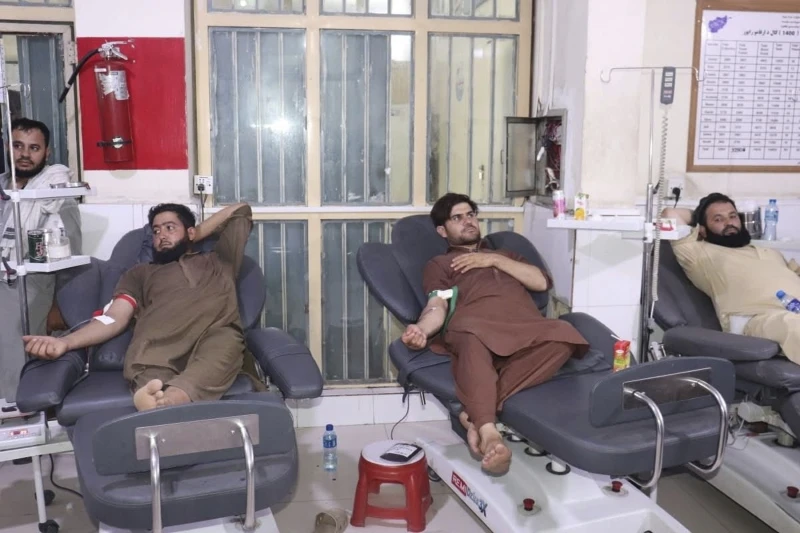
In this photo released by the Ministry of Public Health, Afghans donate blood for victims of an earthquake that killed hundreds and destroyed numerous villages in eastern Afghanistan, at Nangarhar Regional Hospital in Nangarhar, Monday, Sept. 1, 2025.
A Nation Hit Repeatedly by Quakes
Afghanistan has a history of deadly earthquakes due to its mountainous terrain and fragile infrastructure. In October 2023, a 6.3 quake killed thousands in Herat province. Sunday’s disaster, aid agencies warn, could surpass even that tragedy in scale and humanitarian need.
Outlook: A Race Against Time
With villages destroyed, families grieving, and survivors still trapped, the race to save lives continues. Roads remain blocked, hospitals are overwhelmed, and resources are scarce. Aid groups fear global funding cuts could cripple relief efforts.
For Afghanistan, already struggling with poverty and displacement, this earthquake is yet another devastating blow.