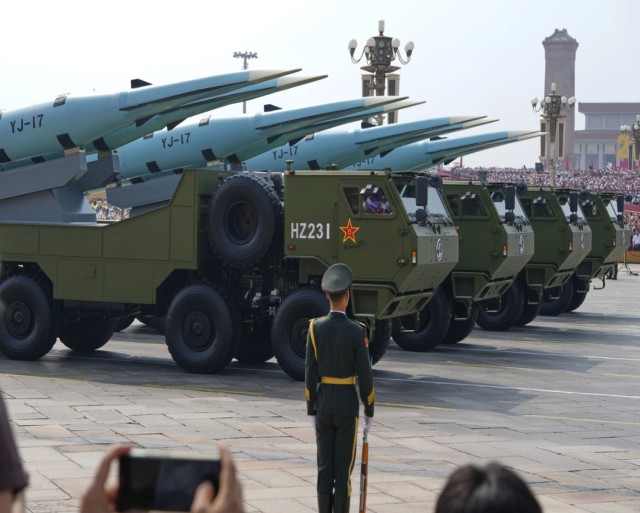
Hypersonic anti-ship missiles pass during a military parade to commemorate the 80th anniversary of Japan’s World War 2 surrender held in front of Thainanmin In Beijing.
China displayed its latest military power in a tightly orchestrated parade on Wednesday. The grand event featured missiles, fighter jets, and advanced defense equipment, with many weapons making their first public appearance. President Xi Jinping, who heads both the Communist Party and the military, oversaw the spectacle.
The parade was held to mark the 80th anniversary of the end of World War II. About two dozen foreign leaders attended, signaling China’s growing influence in global geopolitics.
Advanced Weaponry on Display
Chinese military officials revealed that several cutting-edge weapons were shown publicly for the first time. These included land, sea, and air-based strategic systems, precision warfare equipment, and drones.
The skies above Beijing saw a striking formation of warplanes and helicopters, reinforcing China’s aerial strength. The exhibition highlighted the country’s ability to advance in modern warfare technology.
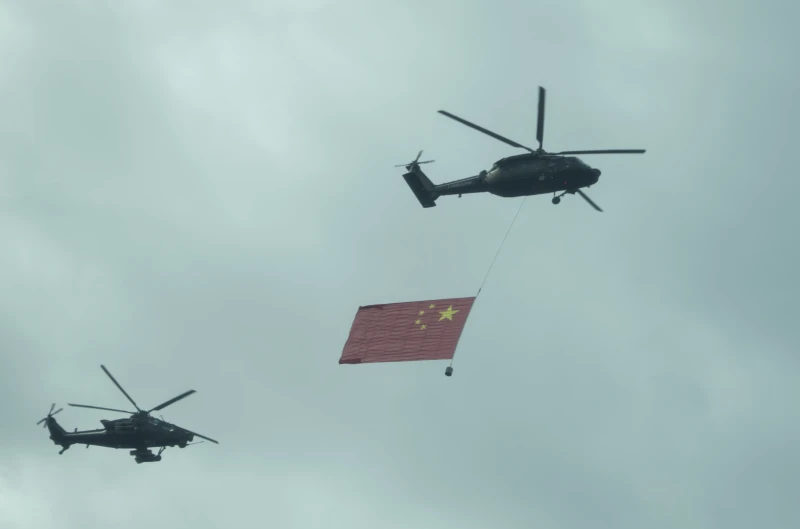
Chinese military helicopters fly over the central business district during a rehearsal ahead of the Sept. 3 military parade to commemorate the 80th anniversary of Japan’s World War II surrender, in Beijing on Aug. 24, 2025.
A Symbol of National Strength
This military parade was the first major event of its kind since 2019, which marked the 70th anniversary of communist China’s founding.
The latest parade carried a deeper message: instilling national pride and assuring citizens of China’s readiness to defend itself. The government presented it as a reminder of resilience since World War II, a period that left China devastated.
However, this show of strength also raised concerns abroad. Many Asian nations and the United States remain cautious about China’s expanding military capabilities.
Leaders Who Attended—and Those Who Did Not
While China welcomed several international guests, some major powers stayed away. Leaders from the U.S., Japan, India, South Korea, and Western Europe were absent. Their absence highlighted ongoing tensions and unease over Beijing’s military rise.
In contrast, North Korean leader Kim Jong Un made a rare foreign trip to attend the parade. Russian President Vladimir Putin and Iran’s President also joined, signaling closer ties among these nations.
Among other notable attendees were leaders from Southeast Asia, Africa, and South Asia. Indonesia’s President Prabowo Subianto managed to arrive despite delays caused by protests in his country.
Parade for a Select Audience
Unlike open national celebrations, this event was not designed for mass public participation. Authorities imposed strict security and access controls.
Barriers kept ordinary citizens at least one block away from the parade route. Commercial buildings along the path were emptied and shut down until the event concluded.
For the wider population, television broadcasts and livestreams were the only means to witness the display.
A Carefully Managed Image of Power
The military parade emphasized China’s ambition to project confidence both at home and abroad. By showcasing advanced weaponry and hosting select world leaders, Beijing reinforced its status as a global power.
While the event boosted national pride, it also underlined the delicate balance China faces—demonstrating strength without deepening regional fears.