

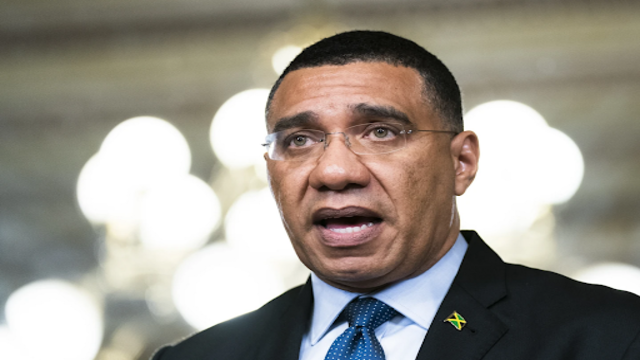
Jamaican Prime Minister Andrew Holness speaks after meeting U.S. Vice President Kamala Harris at the Eisenhower Executive Office Building in Washington on Wednesday, March 30, 2022. AP Photo
Jamaican Prime Minister Andrew Holness claimed a third term on Thursday after a close election marked by debates over corruption, inequality, and economic struggles. Early results showed his Jamaica Labour Party winning at least 34 seats, while Mark Golding’s opposition People’s National Party captured 29 seats. Golding conceded quickly, admitting disappointment but acknowledging Holness’ win.
Other contenders included the Jamaica Progressive Party, United Independents’ Congress, and nine independent candidates. Official turnout stood at 38.8%, only slightly higher than in 2020 during the pandemic. Over two million registered voters were eligible, with 63 parliamentary seats up for grabs. The winning party leader becomes prime minister and appoints 13 of 21 senators. The opposition appoints the remaining eight.
Crime and Security
Holness campaigned on improved security, noting a 43% drop in killings this year, the largest decline in decades. The government credited stronger firearm seizures and coordinated security forces. Supporters applauded emergency measures in crime-heavy regions, which reduced killings by up to 70% in areas like St. James.
Yet human rights groups voiced concern about extended states of emergency, citing alleged illegal detentions. Critics urged the government to balance security with civil rights. Despite these debates, many Jamaicans backed the government’s tough stance on crime.
Economic Promises
Holness also pushed fiscal stability, job growth, and continuity. His bold promise to double the minimum wage from $100 for a 40-hour week stirred debate. “We believe in growing the economy so that everyone gets a bigger slice,” Holness told a rally. He said fair wages would reward workers and draw more youth into the labour force.
The business sector, however, warned of risks. The Jamaica Hotel and Tourist Association stressed that tourism powers one-third of the country’s GDP and feared wage hikes could harm jobs, competitiveness, and affordability.
Opposition’s Push for Change
The People’s National Party highlighted ongoing poverty, weak infrastructure, and corruption. Golding said frustration among citizens was high, promising reforms, new investments, and more accountability. The PNP proposed raising the income tax threshold to $21,800, nearly double the current $11,200, to give families more breathing room amid rising prices.
Despite the PNP’s push, voters opted for stability. Holness’ leadership, backed by crime reduction and economic pledges, won enough support for another five years.
Low Voter Turnout
Voter participation continued to slip, with less than four in ten Jamaicans casting ballots. Security forces and election day workers had earlier voted with a 57% turnout. Analysts say apathy and disillusionment with both major parties played a role.
Looking Ahead
Holness now faces pressure to deliver on his promises. His government must balance wage growth with economic realities, while continuing to push crime rates lower. Critics warn that Jamaicans want more than statistics; they want lasting change in everyday life.













