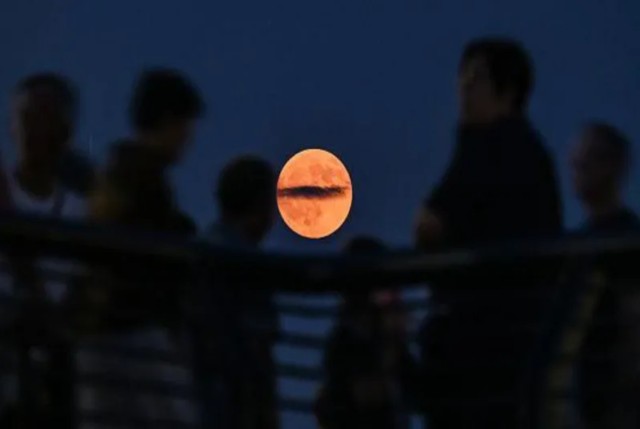
The Moon illuminates a promenade along the Huangpu river in Shanghai.
Sky-watchers worldwide were treated to a spectacular sight as a striking Blood Moon illuminated the night sky. This captivating phenomenon occurs when the Moon passes through Earth’s shadow, taking on a deep reddish hue.
The lunar event was fully visible in many countries across the Eastern Hemisphere on the night of September 7–8. During this total lunar eclipse, the moon shifted from its usual silvery glow to a rich coppery-red color. Although North and South America missed this event, regions in Asia, Africa, and Western Australia enjoyed clear views. The total eclipse lasted an impressive 82 minutes, making it one of the longest lunar eclipses of the decade. Nearly six billion people had the chance to witness this celestial spectacle.
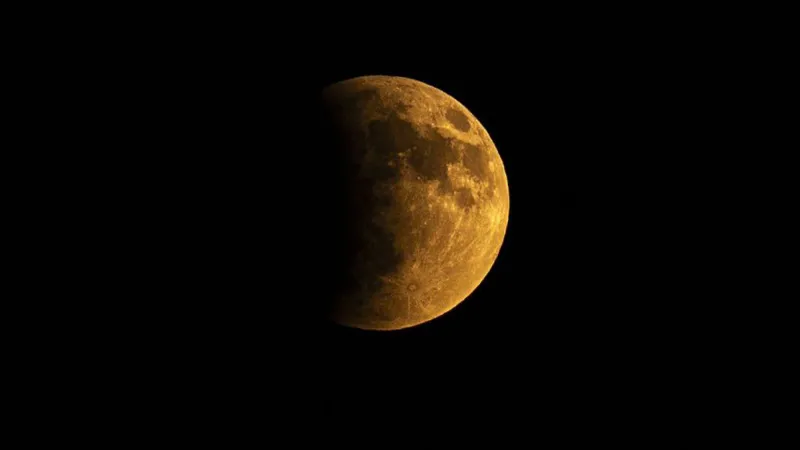
Sky-watchers also saw the red Moon in Ankara, Turkey.
What Causes a Lunar Eclipse?
A lunar eclipse occurs when Earth moves directly between the Sun and the Moon, casting a shadow across the lunar surface. As the Moon enters the central, darkest part of Earth’s shadow, known as the umbra, its color transforms from silver to red.
Lunar eclipses don’t happen every month because the Moon’s orbit is tilted. Typically, only two or three lunar eclipses occur annually, and they are visible from only half of the planet at a time.
Why Does the Moon Turn Red?
During totality, sunlight passes through Earth’s atmosphere and is bent, filtering out blue light while allowing red wavelengths to reach the Moon. This natural process gives the eclipse its nickname: Blood Moon.
Depending on atmospheric conditions, the Moon may appear bright orange or deep rusty red. This year, predictions suggested a bright orange-red Moon because the atmosphere is largely free of volcanic dust and heavy particles.
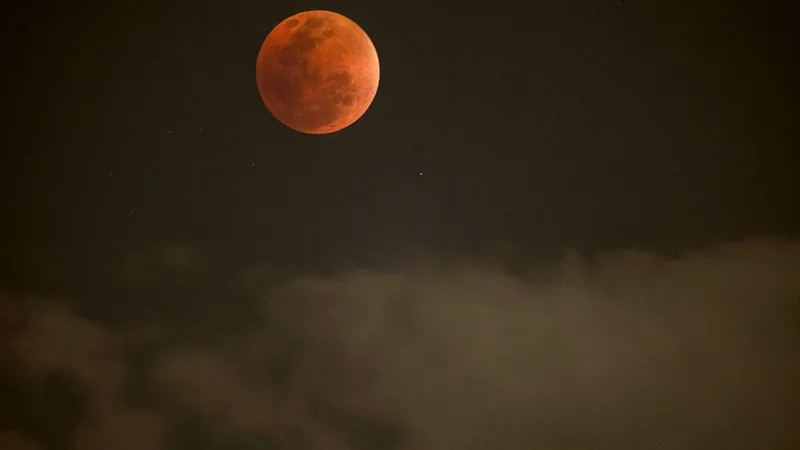
The Blood Moon rose above the clouds in Johannesburg, South Africa.
Key Phases of the Eclipse
This September’s eclipse unfolded over roughly five and a half hours, with critical moments as follows (in Universal Time, UTC):
- Penumbral Eclipse Begins: 15:28 UTC
- Partial Eclipse Begins: 16:27 UTC
- Total Eclipse Begins: 17:30 UTC
- Greatest Eclipse: 18:11 UTC
- Total Eclipse Ends: 18:52 UTC
- Partial Eclipse Ends: 19:56 UTC
The highlight was the total phase, lasting 82 minutes, when the Moon reached its deepest red hue. Observers had ample time to enjoy the full spectacle.
Best Places to Watch
Unlike the March lunar eclipse, this event was invisible in the Americas. Asia and Western Australia had the best overnight views. In Europe and Africa, the full moon rose already partially eclipsed. With visibility across densely populated areas, most of the world’s population could witness the Blood Moon firsthand.
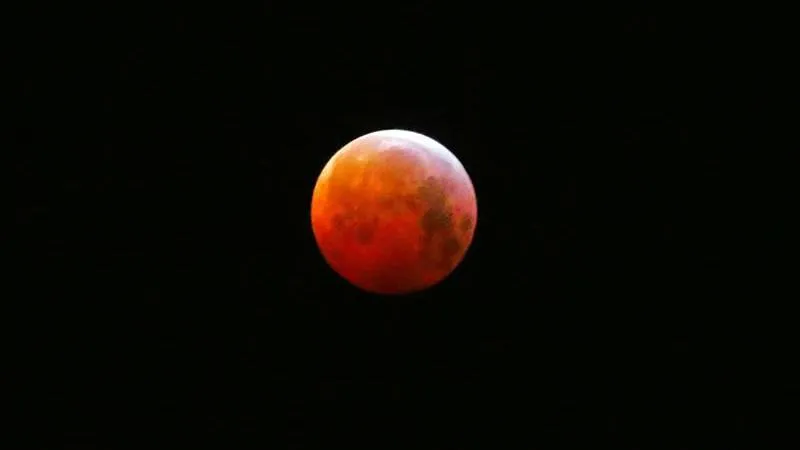
The Blood Moon was also pictured above Malton in the UK
How to Watch and Capture the Eclipse
No special glasses are needed to safely watch a lunar eclipse. Simply find a dark, clear sky. Smartphones or cameras on tripods can capture stunning images. For a closer look, binoculars or small telescopes reveal lunar craters and mountains bathed in reddish light.
During totality, the night sky becomes more vivid. Observers may spot Saturn, glowing yellow near the Moon, or Neptune, appearing as a faint blue-green dot. Small telescopes can even reveal Saturn’s famous rings.
Missed It? Watch Online
Cloudy skies or the wrong location don’t mean missing out. The Virtual Telescope Project livestreams lunar eclipses from various locations. For those who missed this year’s spectacle, the next lunar eclipse will occur March 2–3, 2026, and will be visible across Europe, Asia, the Americas, Australia, and polar regions.