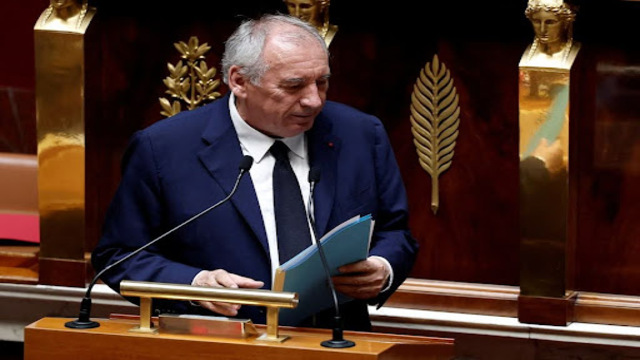
French Prime Minister Francois Bayrou left the National Assembly in Paris on September 8, 2025, after delivering a policy speech on the budget ahead of a debate and confidence vote during a special session. Reuters
France’s parliament voted Monday to remove Prime Minister Francois Bayrou and his minority government. Lawmakers rejected him with 364 votes against and 194 in support. The decision deepens the political crisis and adds more uncertainty to the euro zone’s second-largest economy.
Macron Faces Pressure
President Emmanuel Macron must now choose a new prime minister. It will be his fifth in under two years. Opposition leaders demand a snap election, and some even call for Macron to resign. His office says he will appoint a new head of government in the coming days.
Debt at the Centre
Bayrou’s government collapsed over its plan to curb national debt. France’s deficit nearly doubles the European Union’s 3% ceiling, while debt sits at 114% of GDP. Bayrou pushed for 44 billion euros in savings, but opposition parties refused to back him. He warned lawmakers that debt pressures “will grow heavier and more costly.”
Harsh Opposition Reaction
Far-right leader Marine Le Pen called the government’s fall “the end of the agony of a phantom government.” She repeated demands for new parliamentary elections. Left-wing leader Jean-Luc Melenchon said Macron himself “must go,” urging voters to hold the president accountable.
Uncertain Future
The new government must quickly pass a budget, the same challenge Bayrou failed to meet. Macron could pick another centrist, a conservative ally, or even a moderate socialist. Some suggest he may turn to a technocrat. None of these choices guarantees a parliamentary majority.
Finance Minister Eric Lombard warned that deficit-cutting plans will now weaken. Markets expect gridlock and possible ratings downgrades. France already pays more to borrow than Spain, and its bond spreads are at their highest in months. A downgrade could make it harder for France to finance its debt at low cost.
Europe Watches Closely
France’s troubles draw attention across the European Union. The country has the largest budget deficit in the euro zone. Financial markets await a Fitch Ratings review on Friday, followed by others later this year. Economists warn of “paralysis and downward pressure” if the political deadlock continues.
Street Anger Builds
Tensions are rising beyond parliament. A protest movement called “Bloquons Tout” plans nationwide action Wednesday. Trade unions are also preparing strikes next week. Many citizens doubt leaders can fix the crisis. Mohamed, 80, who sells produce at a Paris market, said, “Come back in 10 days and you’ll see nothing will have changed.”