

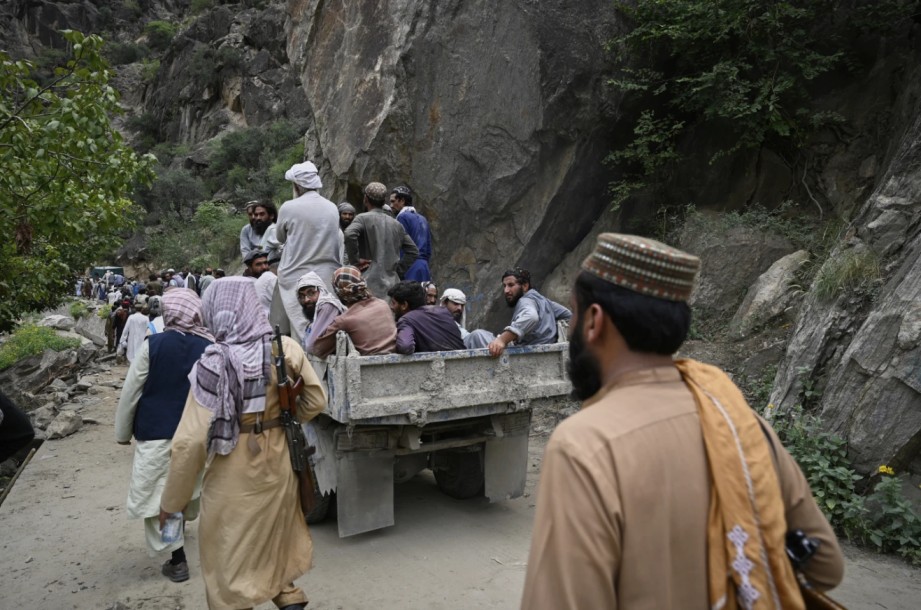
Residents from surrounding towns and villages try to reach the quake-hit-region to assist survivors after Sunday night’s powerful 6.0 magnitude earthquake that struck several provinces, in the Nurgol district, Afghanistan.
Afghanistan’s recent earthquake has left a trail of destruction across mountainous eastern provinces. Thousands are homeless, aid is scarce, and winter is fast approaching. The United Nations is struggling to reach many of the hardest-hit areas due to damaged roads, aftershocks, and landslides.
5,230 Homes Destroyed, Thousands More at Risk
An initial UN assessment revealed 5,230 homes destroyed and 672 damaged in 49 villages. However, 362 remote villages remain unreachable. In total, 441 villages were affected by the 6.0 magnitude earthquake that struck on August 31.
At least 2,200 lives have been lost, with numbers expected to rise as rescue operations continue. The UN estimates the quake has impacted up to 500,000 people, over half of them children. Many victims include Afghans recently deported from Pakistan and Iran.
Roads Blocked, Aid Delayed
Shannon O’Hara, chief of coordination for the UN humanitarian office in Afghanistan, described the enormous challenges. She explained that the only road to the epicenter, a narrow mountain track, was blocked by landslides. Her team took over six hours to travel just 100 kilometers from Jalalabad to the worst-hit region.
Trucks filled with humanitarian aid struggled to move, while displaced families walked in the opposite direction, carrying what little they could. Many survivors still wore the same clothes from the night of the disaster.
Entire Villages Reduced to Rubble
Conditions worsened closer to the epicenter. Entire villages lay flattened, and the smell of dead animals filled the air. Families left homeless were forced to sleep under open skies or squeeze into crowded tents.
O’Hara reported alarming conditions: no clean water, no sanitation, and 92% of communities practicing open defecation. With cholera already endemic in the region, the risk of an outbreak is dangerously high.
Survivors Facing Hunger, Cold, and Disease
The UN official highlighted overwhelming needs — food, clean drinking water, tents, latrines, and warm clothing. With snow expected by late October, time is running out.
Women in displacement camps stressed the urgent need for clothing and clean water for themselves and their children. O’Hara warned that flash floods, aftershocks, and heavy snow could soon cut off access completely.
“If we don’t act now,” she said, “these communities may not survive the coming winter.”
UN to Launch Emergency Appeal
To respond to the disaster, the UN is preparing an emergency appeal for urgent funding. Relief operations are underway with support from Taliban authorities, who led initial search and rescue missions.
Despite restrictions on Afghan women, O’Hara noted that women have been included in health teams and aid distribution. She emphasized that no reports suggested women were left behind in rescue efforts.
A Race Against Time
As Afghanistan faces one of its most devastating earthquakes in years, survivors wait in desperation. With winter weeks away, the risk of disease, hunger, and isolation grows by the day.
The international community’s response will determine whether thousands can withstand the coming cold or face further tragedy.













