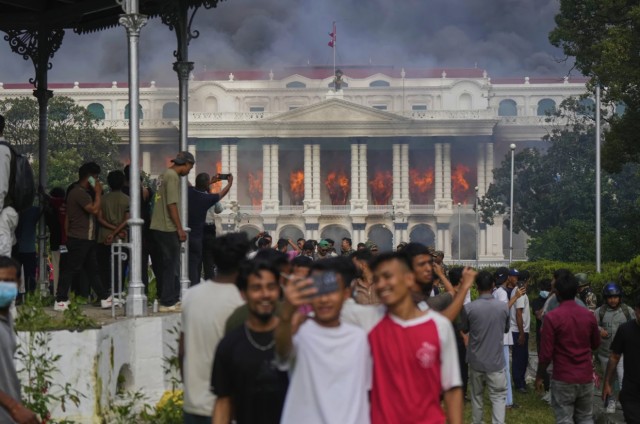
Protesters take selfies and celebrate at the Singha Durbar, the seat of Nepal’s government’s various ministries and offices, after it was set on fire during a protest against social media ban and corruption in Kathmandu, Nepal, Tuesday, Sept. 9, 2025
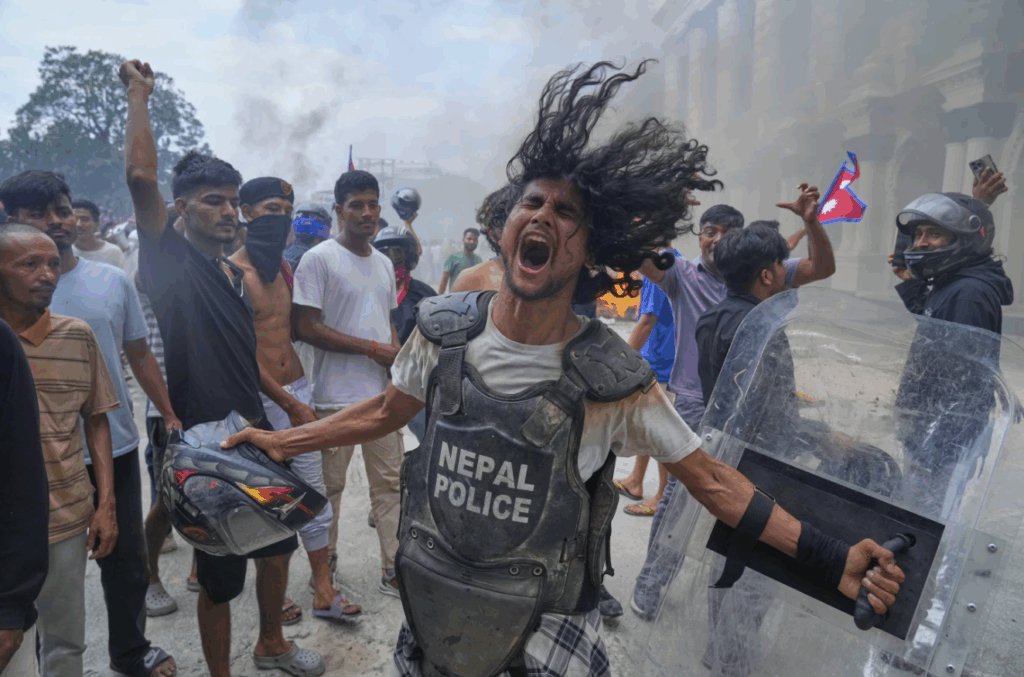
Nepal’s capital, Kathmandu, is under tight military control after days of violent protests shook the city. Armed soldiers patrolled the streets on Wednesday, enforcing a strict curfew and ordering citizens to remain indoors. The move came after tens of thousands of demonstrators torched government buildings, stormed offices, and physically attacked political leaders.
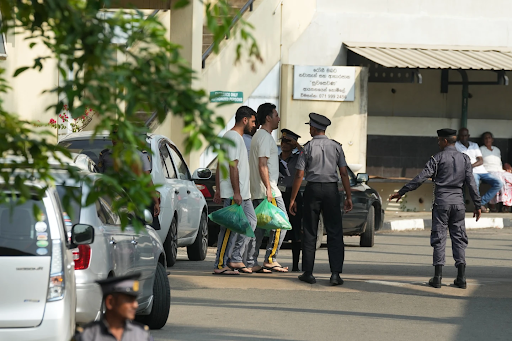
The deployment of the army, a rare step in Nepal’s democratic era, follows repeated failures by the police to contain the unrest. Soldiers have been checking vehicles, arresting looters, and issuing public warnings that security forces are committed to restoring law and order. Officials confirmed that at least 21 suspects were detained.
Curfew Follows Widespread Violence
Kathmandu’s streets, once filled with chaos, are now guarded by soldiers with weapons. The curfew order was strictly enforced, signaling the government’s attempt to regain control.
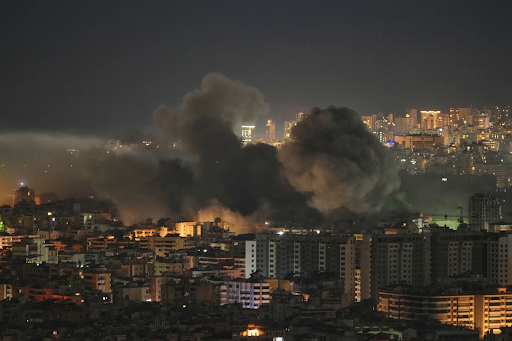
The protests turned especially violent on Tuesday. Demonstrators set fire to the parliament building, ministries, the prime minister’s official residence, and even the presidential house. Smoke was seen rising from several key government complexes.
Private property was not spared. Car showrooms and Nepal’s largest media group, Kantipur Publications, were torched. Burned vehicles lined major roads, creating scenes of devastation.
Prime Minister Resigns Amid Crisis
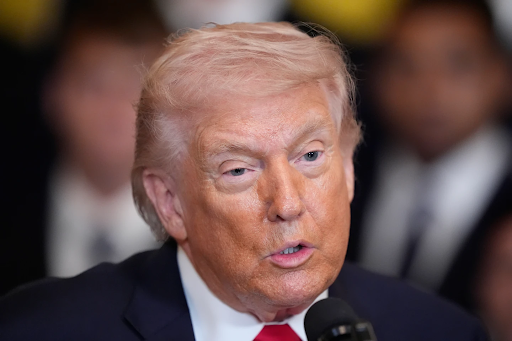
The political fallout was swift. Prime Minister Khadga Prasad Oli announced his resignation following growing criticism of the ruling elite. However, the step had little effect in calming public anger.
President Ram Chandra Poudel accepted Oli’s resignation but asked him to serve as caretaker until a new government is formed. Questions remain about Oli’s actual influence, given the scale of the unrest and uncertainty about his whereabouts.
Protests Sparked by Social Media Ban
The crisis began on Monday after the government blocked popular social media platforms, including Facebook, X, and YouTube. Authorities claimed the companies failed to register and comply with oversight rules.
Young Nepalis, heavily reliant on these platforms for communication, reacted with fury. The movement, dubbed the “Gen Z Protest,” quickly grew into one of the country’s largest demonstrations in recent years.
Police opened fire on protesters on Monday, killing 19 people. The government lifted the ban the next day, but by then, the protests had spiraled into nationwide rage fueled by anger over corruption, inequality, and police brutality.
Nepotism and Unemployment Add to Discontent
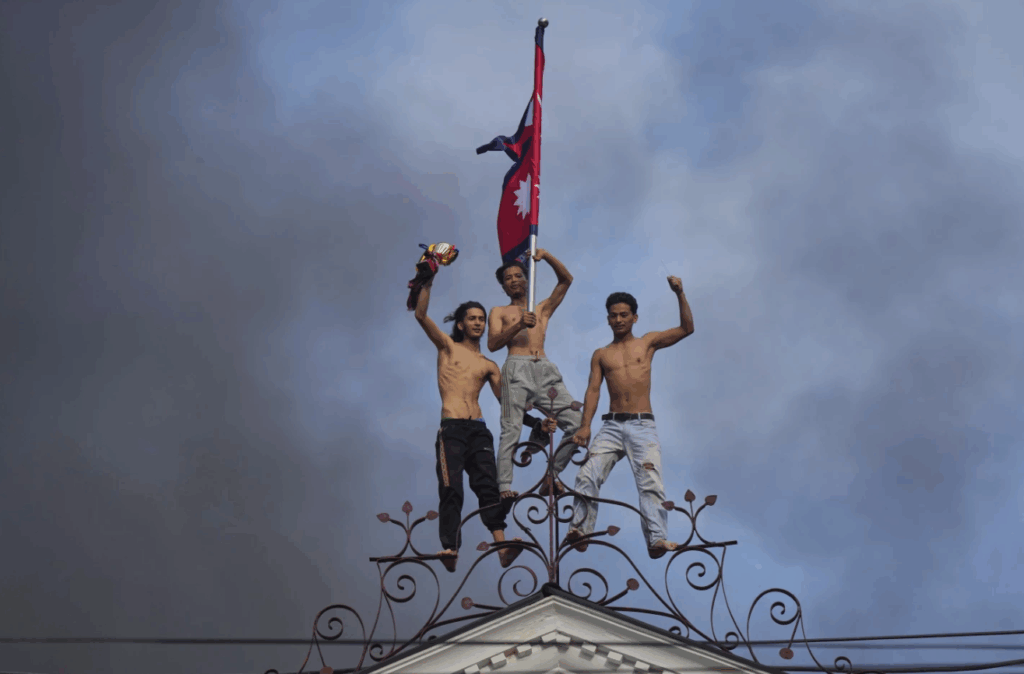
While the ban ignited the movement, frustration runs deeper. Many young people accuse political families of nepotism. They say leaders’ children enjoy lavish lifestyles while ordinary youth face grim prospects.
According to the World Bank, youth unemployment reached nearly 20% last year. The government admits that more than 2,000 Nepalis leave the country daily for jobs in the Middle East and Southeast Asia. For many, the protests represent a broader demand for fairness and opportunity.
Political Leaders Targeted
Protesters vented their anger directly at politicians. Videos on social media showed opposition leader Sher Bahadur Deuba and his wife, Foreign Minister Arzu Rana Deuba, being attacked and bleeding. Both were rushed to safety by supporters.
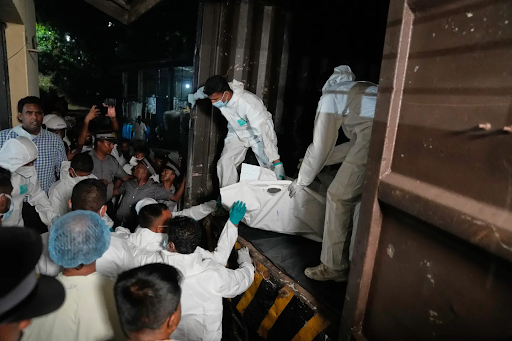
The violence left scores wounded in addition to the 19 confirmed dead. Oli has ordered an investigation into the police shootings and promised compensation for the victims’ families.
Social Media Regulation Sparks Outrage
The unrest is unfolding as Nepal pushes a controversial bill to regulate social media. The proposed law would require platforms to establish a liaison office in Nepal and comply with strict government oversight.
Supporters argue it will make social media companies more accountable. Critics, however, view it as an attempt to censor dissent and silence political opponents. Human rights groups warn that the bill could severely restrict freedom of expression in Nepal.
A Nation at a Crossroads
Nepal now faces a moment of reckoning. The protests have exposed deep frustration with corruption, inequality, and restrictions on free speech.
Despite the army’s presence, tens of thousands of protesters remain defiant on the streets. With political leadership in disarray and public trust at an all-time low, the path to peace remains uncertain.