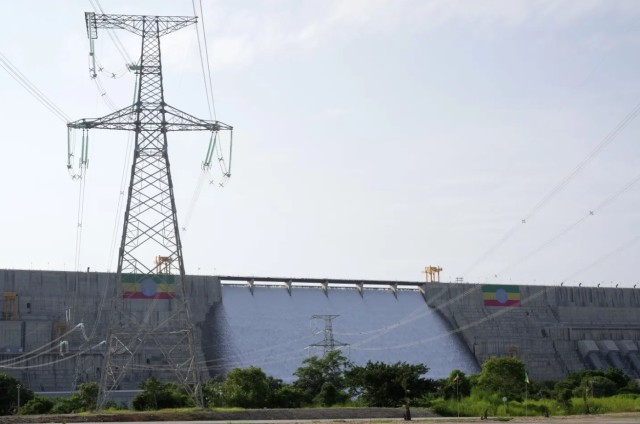
A view of a Grand Ethiopian Renaissance dam in benishangul-gumuz, Ethiopia, Sept 9, 2025.
Ethiopia has officially inaugurated the Grand Ethiopian Renaissance Dam (GERD), Africa’s largest hydroelectric project. The $5 billion mega-structure promises to double the nation’s electricity capacity, cut blackouts, and support its electric vehicle revolution.
The inauguration marked a historic day, with Ethiopians celebrating nationwide. Across Addis Ababa, large screens broadcasted the ceremony, while crowds danced to traditional music in vibrant attire.
Powering a New Era for Ethiopia
Water from the massive Blue Nile reservoir has started turning turbines, producing over 5,000 megawatts of power. Officials say this will drastically improve the reliability of electricity supply.
For many citizens, the project is life-changing.
“We will have enough power to charge our electric vehicles from the new dam,” said bus driver Belay Tigabu at the capital’s main terminal.
Ethiopia banned the import of gasoline-powered cars, accelerating its push toward cleaner transport. The GERD is expected to power this transition.
A Landmark African Achievement
Prime Minister Abiy Ahmed hailed the inauguration as a “big achievement,” symbolizing African innovation and self-reliance. He emphasized that the dam showcases what Africans can accomplish together.
Dozens of African leaders attended the ceremony. Their presence highlighted continental interest in importing clean energy from Ethiopia.
South Sudan’s President Salva Kiir confirmed his country’s plans to sign a deal for electricity supply. “This power will benefit our hospitals and schools,” he said.
Kenya’s President William Ruto also praised the project, describing it as a “pan-African statement.” He noted that Kenya, already an importer of Ethiopian electricity, seeks to expand its access to reduce energy shortages.
Regional Concerns Over Nile Waters
Despite celebrations, the dam remains controversial. Egypt has long opposed the project, fearing it could reduce Nile water flows. The country, home to over 100 million people, relies almost entirely on the river for farming and drinking water.
Tamim Khallaf, spokesperson for Egypt’s Foreign Ministry, called the dam an “existential threat.” He argued Ethiopia failed to properly consult downstream countries, violating international law.
Ethiopia Promises Cooperation
Responding to concerns, Prime Minister Abiy Ahmed assured neighbors that Ethiopia does not intend to harm them.
“I assure you that Ethiopia will never take away your rightful share,” he said. “The hunger of our brothers in Egypt, in Sudan, or anywhere else is also our hunger. We must share and grow together.”
This message was aimed at easing tensions, while emphasizing the dam as a tool for regional prosperity rather than conflict.
Pride Among Ethiopians
For Ethiopians, the GERD represents more than electricity—it is a symbol of resilience and progress.
“This dam will provide stable electricity and improve online services,” said Yabsira Misganw, a 20-year-old university student promoting a new mobile shopping app.
Many citizens see it as a turning point for economic growth, technology adoption, and industrial expansion.
A Future of Shared Energy
The Grand Ethiopian Renaissance Dam is now Africa’s largest source of hydroelectric power. While it sparks regional debate, it also promises economic opportunities and clean energy for millions.
For Ethiopia, the project signals national pride and a future driven by sustainable power. For its neighbors, it may become the cornerstone of cross-border energy cooperation—if trust can be built.