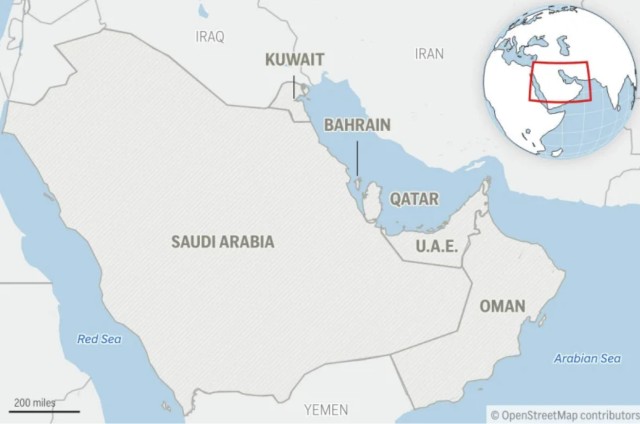
This is a locator map for the Gulf Cooperation Council member states: Saudi Arabia, Bahrain, Qatar, Oman, Kuwait and United Arab Emirates.
Israel carried out a dramatic airstrike in Doha, Qatar, targeting Hamas’ political leadership while they were weighing a U.S.-backed Gaza ceasefire proposal. The attack has thrown peace talks into chaos and deepened international outrage.
Strike in Qatar Stuns Allies
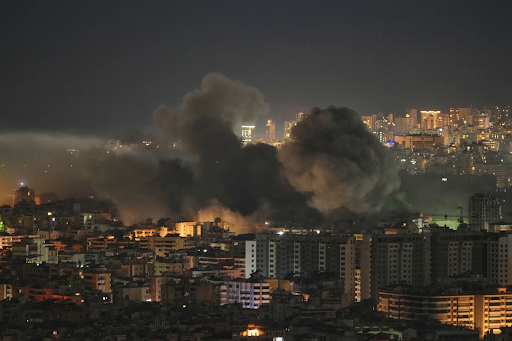
The strike took place in Qatar’s diplomatic quarter, hitting buildings used by Hamas’ political wing. Smoke rose above Doha as leaders from the group reportedly gathered to discuss a ceasefire deal.
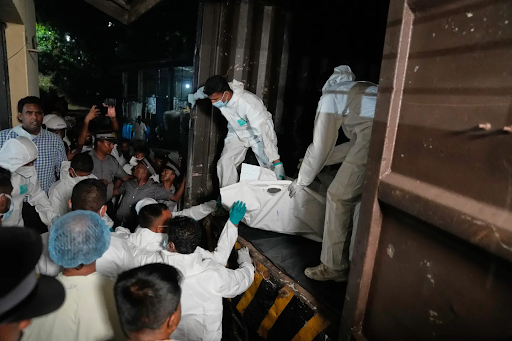
Hamas later said its top figures survived but confirmed five deaths, including the son of senior leader Khalil al-Hayya, three bodyguards, and the head of al-Hayya’s office. However, it offered no proof of survival claims.
Qatar condemned the strike as a “flagrant violation of international law.” The Gulf nation, home to thousands of U.S. troops, has been a central mediator in the 23-month Gaza war.
Qatar and Gulf States React Strongly
Qatar’s prime minister, Sheikh Mohammed bin Abdulrahman Al Thani, blasted Israeli Prime Minister Benjamin Netanyahu for “dragging the region into irreparable damage.” He questioned the future of ceasefire talks, saying “I don’t think there’s anything valid” after the attack, though Qatar has not withdrawn from mediation.
Saudi Arabia and the United Arab Emirates quickly voiced solidarity with Qatar, further isolating Israel regionally.
A member of Qatar’s Internal Security Force was also killed, with others wounded, according to Qatar’s Interior Ministry.
U.S. Response and Distance
Washington confirmed it was alerted before the strike but sought to distance itself from the incident.
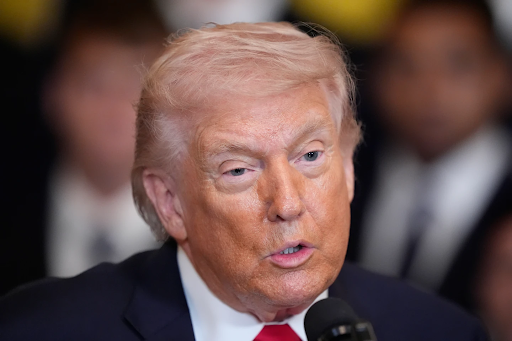
White House press secretary Karoline Leavitt said President Donald Trump viewed the strike as an “unfortunate incident” that does not advance peace. Trump spoke with Netanyahu afterward, expressing “thoughts and concerns.”
Qatari officials criticized U.S. handling, claiming the warning reached them as explosions were already being heard in Doha.
Israel Claims Responsibility
Breaking from past silence over overseas operations, Netanyahu quickly claimed responsibility. He said the decision followed deadly attacks in Jerusalem and Gaza that killed ten Israelis, including soldiers.
The Israeli military said “precise munitions and intelligence” were used but provided no operational details. Netanyahu declared: “Israel initiated it, Israel conducted it, and Israel takes full responsibility.”
Ceasefire Talks at Risk
The strike comes as mediators push a U.S.-drafted ceasefire proposal. The plan includes releasing hostages in exchange for Israeli withdrawal from Gaza.
Hamas, however, branded the proposal a “humiliating surrender document.” Still, it had agreed to review and respond within days. The group insists it will only release the remaining 48 hostages in return for Palestinian prisoner exchanges, a permanent ceasefire, and Israel’s complete withdrawal from Gaza.
Netanyahu has rejected those terms, vowing to continue the war until Hamas is disarmed and all hostages are freed.
Hostage families in Israel expressed “deep concern and great fear” that the strike further jeopardizes negotiations.
International Condemnation Grows
Egypt, another key mediator, denounced the strike as a “direct assault” on Qatar’s sovereignty. It stressed that Hamas leaders were meeting to discuss ceasefire terms when the attack occurred.
The United Nations Security Council has scheduled an emergency session to address the crisis at the request of Algeria, Pakistan, and Somalia.
Saudi Arabia’s Crown Prince Mohammed bin Salman condemned the strike as a “criminal act” and violation of international law. The UAE’s foreign minister also declared “full solidarity” with Qatar.
Regional Stability at Stake
The Gaza war, triggered by Hamas’ October 7, 2023 attack on Israel, has already left Israel increasingly isolated. Western allies are pressing for an end to the conflict as Gaza faces famine and humanitarian disaster.
The strike in Qatar now risks collapsing fragile negotiations, threatening regional stability, and dimming hopes for broader diplomatic agreements, including Trump’s ambitions to expand the Abraham Accords.
As Israel prepares for a major offensive in Gaza City, global pressure mounts for a ceasefire. Whether negotiations survive this latest escalation remains uncertain.