

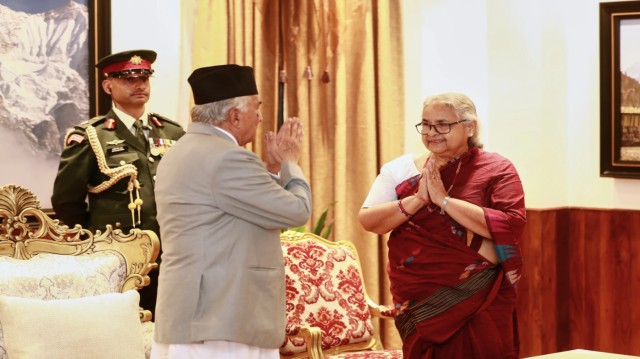
Former Supreme Court Chief Justice Sushila Karki, right, greets Nepalese President Ram Chandra Poudel after taking the oath as interim prime minister during a ceremony at the presidential residence in Kathmandu, Nepal, Friday, Sept. 12, 2025.
Nepal has made history with the appointment of its first woman prime minister. Former Chief Justice Sushila Karki has been named interim leader following violent protests that forced the previous administration to collapse.
The announcement came on Friday as President Ram Chandra Poudel dissolved parliament and declared fresh elections for March 5. The decision followed recommendations from Karki, who was sworn in during a brief ceremony at the presidential residence.
Sushila Karki Creates History
At 73, Sushila Karki has become Nepal’s first woman to head the government. She previously served as the nation’s only female Supreme Court Chief Justice between 2016 and 2017.
Karki is widely respected for her bold stance against corruption. During her tenure in the judiciary, she resisted political pressure and faced impeachment attempts. Lawmakers accused her of bias, but the move was seen as an attack on judicial independence.
Her reputation as a fearless anti-corruption advocate has made her a popular figure, especially at a time when public anger against political elites is rising.
Violent Protests Force Government Collapse
The political crisis escalated after protests erupted in Kathmandu on Monday. Demonstrations began over a sudden social media ban targeting platforms like Facebook, YouTube, and X. Although the ban was quickly withdrawn, protests intensified, reflecting deeper frustrations among Nepal’s youth.
Thousands of demonstrators, calling themselves the “Gen Z Protest,” stormed government offices and set fire to parliament, the presidential residence, and private businesses. Security forces responded with gunfire, leaving dozens dead.
By Friday, police confirmed at least 51 deaths, including protesters, inmates attempting a jailbreak, and three police officers.
Prime Minister Oli Resigns, Army Steps In
Amid escalating violence, then-Prime Minister Khadga Prasad Oli resigned on Tuesday and fled his official residence. The Nepal Army moved quickly to secure Kathmandu, imposing a strict curfew and deploying soldiers across the capital.
Residents are now allowed only limited hours outside to buy essentials. Armed troops continue to guard major streets as negotiations take place between protesters, the army, and the president.
Why the Youth Are Angry
The unrest is about more than just social media. Protesters argue the ban highlighted a deeper disconnect between leaders and citizens.
Young Nepalis accuse political families of promoting “nepo kids” who enjoy privilege while ordinary youth face unemployment and limited opportunities. Many see the leadership as corrupt and out of touch with the struggles of everyday people.
With over half the population under 30, the frustration of Nepal’s youth has become a powerful political force. The protests reflect not just anger over policies but also a demand for change and accountability.
Fresh Elections in March
President Poudel has dissolved parliament and scheduled new elections for March 5, 2026. The last legislative elections were held in 2022, but instability and public dissatisfaction have shaken the government since then.
As interim prime minister, Sushila Karki is tasked with restoring order, ensuring fair elections, and rebuilding public trust. Her leadership is seen as a symbolic break from traditional politics, though challenges remain immense.
A Turning Point for Nepal
Nepal now stands at a crucial crossroads. The appointment of the first woman prime minister marks a historic step. But violent protests, widespread anger, and a fragile political environment highlight the road ahead is uncertain.
Whether Sushila Karki can stabilize the nation and lead it toward peaceful elections will determine Nepal’s democratic future. For now, her leadership carries both the hopes of progress and the burden of a country in turmoil.













