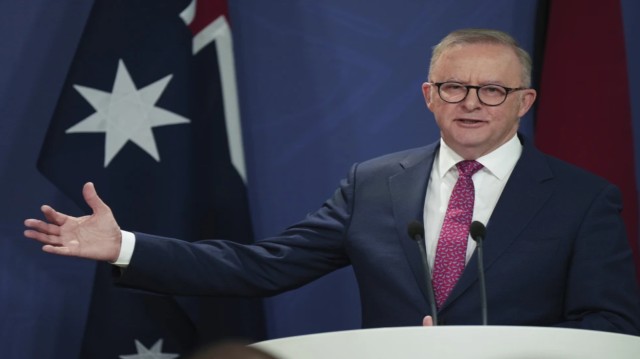
Australian Prime Minister Anthony Albanese gestures during a press conference in Sydney, Australia, Dec. 12, 2024.
Australia and Papua New Guinea (PNG) are set to deepen defense ties through a landmark security pact this week. Prime Minister Anthony Albanese confirmed the deal as both nations mark PNG’s 50th independence anniversary. The agreement comes at a time of intensifying regional competition, with China expanding its influence across the Pacific.
A Historic Upgrade in Defense Cooperation
Albanese will join PNG Prime Minister James Marape on Wednesday in Port Moresby for the signing. The pact represents a significant expansion of defense cooperation between the neighboring countries.
“It provides for mutual defense and integration of our forces and assets,” Albanese told Australian media. He emphasized that the deal strengthens interoperability, making both defense forces more capable of supporting each other.
The announcement underscores Australia’s strategy to remain the Pacific’s security partner of choice, countering China’s growing role in regional security.
Citizens to Serve in Either Military
A major highlight of the pact is the provision allowing citizens of both countries to serve in each other’s militaries. For Papua New Guineans, joining the Australian Defense Force could come with an added incentive—Australian citizenship.
Currently, Australia restricts military recruitment to its closest intelligence-sharing allies, known as the Five Eyes partners: the United States, United Kingdom, Canada, and New Zealand. This new pathway could expand opportunities for Papua New Guineans while strengthening bilateral defense integration.
Why the Pact Matters for the Pacific
With nearly 12 million people, PNG is the Pacific’s most populous nation after Australia’s 27 million. Its location and size make it strategically vital in shaping regional stability.
The agreement follows a 2023 security pact that broadened cooperation but faced delays. Protests erupted in PNG last year after a separate U.S. defense deal was seen as threatening national sovereignty. That experience has made wording in the new pact crucial.
Experts note that phrases such as “exclusivity” will determine how PNG balances ties with other partners, including China. “If Australia is named the security partner of choice, it’s a significant win,” said Oliver Nobetau from the Lowy Institute. However, he cautioned that PNG remains protective of its sovereignty and wary of language that could limit third-party partnerships.
China’s Expanding Footprint
The defense pact comes against the backdrop of China’s rising presence in the Pacific. Since 2019, three island nations have switched diplomatic recognition from Taiwan to Beijing. China has also expanded security cooperation, including police training in Fiji, Samoa, Kiribati, Solomon Islands, and Vanuatu.
This shift has raised alarms in Washington, Canberra, and other allied capitals. For Australia, securing PNG’s partnership is key to maintaining influence and stability in its neighborhood.
A Replacement for a 1977 Agreement
Australian Defense Minister Richard Marles described the new pact as “transformational.” It will replace an agreement signed in 1977 with a newly independent PNG.
“This treaty is about the future of defense cooperation in our region,” Marles said. He added that discussions would continue with Fiji and Tonga on advancing bilateral defense ties.
Albanese also attempted to seal a security and economic treaty with Vanuatu last week. But talks were delayed as Vanuatu weighed how closer ties with Australia might affect Chinese infrastructure funding.
A Balancing Act in the Pacific
Pacific island nations often avoid choosing sides between China and U.S.-aligned powers. PNG’s careful navigation of its sovereignty while strengthening defense with Australia highlights the region’s complex balancing act.
For Australia, however, this week’s pact with PNG is a major diplomatic win. It secures a stronger defense partnership, counters Beijing’s growing influence, and reaffirms Canberra’s role as the Pacific’s leading security partner.