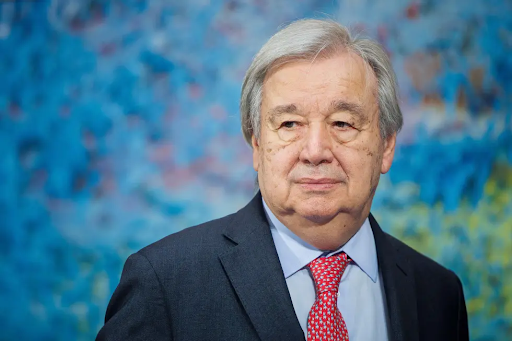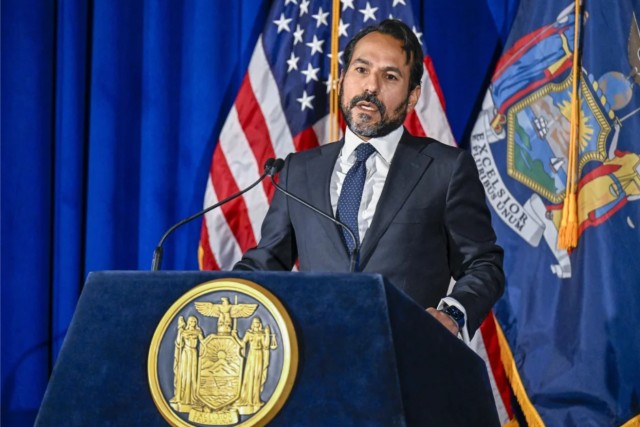
Robert Mujica, budget director of the State of New York, answers budget questions during a news conference after Gov. Kathy Hochul presented her first executive state budget at the state Capitol, Jan. 18, 2022, in Albany, N.Y
Three former members of Puerto Rico’s financial control board are taking legal action against former U.S. President Donald Trump. They claim their sudden dismissals were illegal and are seeking reinstatement through a federal court.
Lawsuit Targets Trump and Officials
The lawsuit names Trump, Sergio Gor—director of the White House personnel office—John E. Nixon, the remaining board member, and Robert F. Mujica, the board’s executive director.
The plaintiffs are Arthur J. Gonzalez, Andrew G. Biggs, and Betty A. Rosa. They argue their dismissals violated federal law and the congressional act that created the oversight board.
“This case is about power over the board and Puerto Rico,” said Eduardo Santacana, an attorney at Cooley LLP, which is assisting with the case. “The president is exercising authority he does not have.”
Firings by Email
Court documents reveal the abrupt manner of the firings. On August 1, Gonzalez and Rosa each received a two-sentence email from the deputy director of the presidential personnel office. The email stated they had been removed. Gonzalez was serving as board chairman at the time.
Two weeks later, Biggs received the same email.
“Neither email cited cause or justification,” the lawsuit said. “These removals were unlawful.”
Attorneys argue that because board members are not U.S. executive branch officers, the president lacks authority to fire them at will.
Role of the Promesa Act
Congress passed the Promesa Act in 2016, creating Puerto Rico’s Financial Oversight and Management Board. According to the lawsuit, this means board members fall under Puerto Rico’s territorial government, not the federal executive branch.
The filing warned of wider consequences: “If the president can override Congress and remove territorial officials, he could do the same in the District of Columbia.”
The lawsuit also notes that board members can only be removed “for cause” and are entitled to notice and a hearing. None of the three plaintiffs received either.
Six Members Fired in Total
The Trump administration dismissed six members of the board in total. They included Cameron McKenzie, Juan Sabater, and Luis Ubiñas. However, only Gonzalez, Rosa, and Biggs have joined the lawsuit.
Four of the six dismissed members are Democrats. Nixon, who remains, is a Republican.
The plaintiffs bring notable experience. Gonzalez is a retired bankruptcy judge. Rosa serves as commissioner of the New York State Education Department and president of the University of the State of New York. Biggs is a Social Security reform expert.
Board’s Debt Battle
The board was created after Puerto Rico defaulted on more than $70 billion in public debt in 2015. In 2017, the territory filed for the largest municipal bankruptcy in U.S. history.
Until recently, the board was in tough negotiations with creditors over $9 billion in debt held by Puerto Rico’s Electric Power Authority. It had pushed for a $2.6 billion payment plan before the dismissals.
Experts fear Trump’s new appointees may side with bondholders demanding the full $8.5 billion. This has raised concerns about Puerto Rico’s fragile recovery efforts.
Structure of the Control Board
The board should have seven members. Six are appointed by the U.S. president with Senate approval. Members serve three-year terms and, under the law, can only be removed “for cause.”
With six members dismissed and the lawsuit pending, the board’s authority and future remain uncertain.