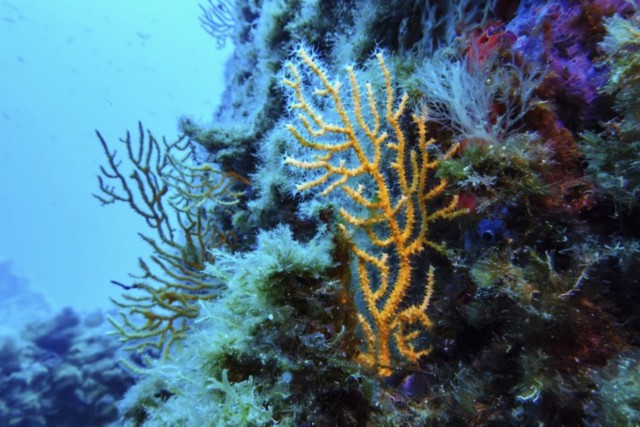
Coral is visible in the protected area of France’s Porquerolles National Park ahead of the U.N. Ocean Conference on June 6, 2025.
A historic milestone in ocean conservation was reached this week. Morocco became the 60th nation to ratify the High Seas Treaty, unlocking its entry into force next year. This groundbreaking agreement marks the world’s first legal framework to safeguard marine biodiversity in international waters.
Covering nearly two-thirds of the world’s oceans and almost half of Earth’s surface, international waters face serious threats. Overfishing, deep-sea mining, and climate change have pushed marine ecosystems to the brink. The treaty aims to reverse this decline and secure the oceans for future generations.
A Global First in Ocean Protection
The High Seas Treaty establishes rules to protect biodiversity beyond national borders. These waters play a vital role in regulating Earth’s climate. They absorb carbon dioxide, store heat, and produce nearly half of the oxygen we breathe.
The pact also supports the global “30x30” pledge, which seeks to conserve 30% of land and sea by 2030. Experts say the treaty offers the foundation needed to achieve that goal.
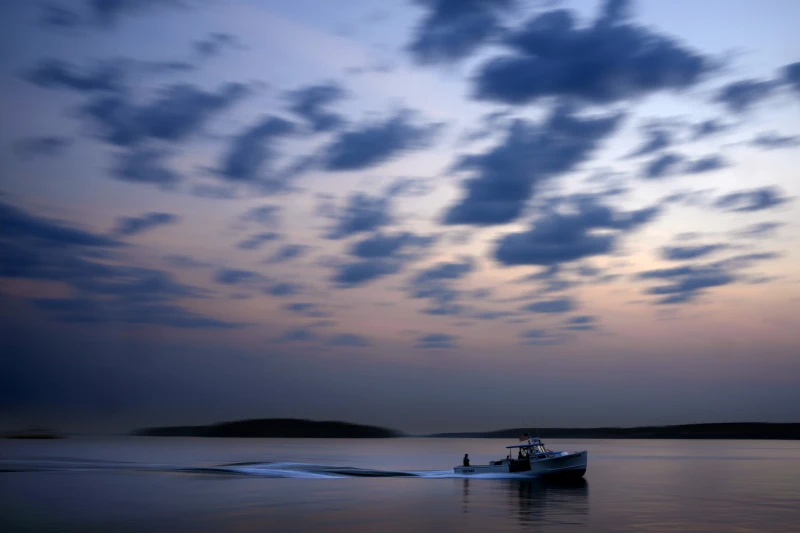
A lobster fishing boat motors out to sea under the dawn sky Aug. 14, 2024, on Casco Bay in South Portland, Maine.
What the Treaty Will Do
The treaty introduces a process for creating marine protected areas in international waters. It sets rules for activities like deep-sea mining and geoengineering. It also provides a framework for funding, technology sharing, and international scientific cooperation.
Decisions will be made collectively at conferences of parties, ensuring multilateral governance. Countries that ratify before the first meeting will hold voting rights on critical matters, including financing and enforcement.
Enforcement Remains a Challenge
Despite progress, concerns remain about enforcement. The treaty has no independent policing authority. Instead, nations are responsible for regulating ships and companies flying their flag.
“If a German ship violates the rules, Germany must take action,” explained Torsten Thiele, founder of the Global Ocean Trust. This system highlights why widespread ratification is essential. Without universal participation, violators may argue they are not bound by the rules.
Major Powers Still Missing
Although 60 nations have ratified, key global powers remain hesitant. The United States and China have signed but not ratified. Japan and Russia, both heavily engaged in high seas activities, are still on the sidelines.
Marine experts warn that their absence could weaken the treaty’s effectiveness. “If major fishing nations don’t join, they could undermine protected areas,” said Guillermo Crespo of the International Union for Conservation of Nature.
The Stakes for Marine Life
The high seas host a dazzling variety of marine life, from whales and sharks to seabirds and turtles. These species migrate across vast waters and ignore political boundaries.
“Marine life doesn’t respect borders,” said Lisa Speer of the Natural Resources Defense Council. “What happens in international waters affects coastal ecosystems everywhere.”
Without robust protections, fragile ecosystems risk irreversible damage. Overexploitation and pollution could devastate not just ocean life, but global food security and climate resilience.
A Step Forward, Not the Finish Line
While many conservationists celebrated the ratification, they also stressed that the journey has just begun. Ocean explorer Sylvia Earle called it a “way station, not an endpoint.”
She warned against complacency: “If we continue to take from the ocean at current levels, we’re putting ourselves at risk.”
Some nations may even misuse the treaty as an excuse to delay domestic conservation. Experts caution that leaders must balance global commitments with urgent national action.
Hope for Small Island Nations
For vulnerable island states, the treaty represents more than conservation—it means inclusion. Countries like Vanuatu, long at the frontlines of climate change, now have a stronger voice in decisions that directly affect them.
“Everything that affects the ocean affects us,” said Ralph Regenvanu, Vanuatu’s climate change minister. For such nations, the High Seas Treaty is a crucial step toward fairness and survival.
A Defining Moment for the Planet
The ratification of the High Seas Treaty signals a turning point in international cooperation. It shows a collective will to safeguard the ocean, though much depends on how the treaty is enforced.
The coming years will test whether global leaders can turn this framework into meaningful action. For now, one thing is clear: the fate of the high seas is tied to humanity’s own survival.