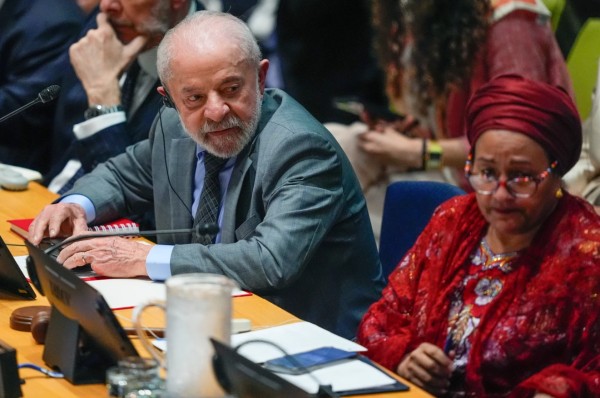
Brazil President Luiz Inacio Lula da Silva, left, attends a climate summit, Wednesday, Sept 24, 2025.
China, the world’s largest carbon polluter, has announced a new climate goal. President Xi Jinping pledged that the country will cut emissions by 7% to 10% by 2035. The announcement came at the United Nations climate summit in New York, where more than 100 world leaders gathered to address the urgent fight against climate change.
China’s Emission Target Sparks Global Attention
China is responsible for over 31% of global carbon dioxide emissions. Until now, its numbers have been climbing. Xi’s statement signals the first time Beijing has committed to a direct emission reduction target. Alongside the pledge, he promised to boost wind and solar power sixfold compared to 2020 levels. Xi also vowed to make clean vehicles mainstream and build a climate-adaptive society.
World Leaders Push for Urgency
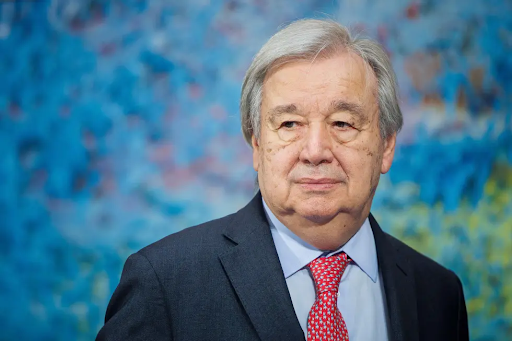
The summit was called by UN Secretary-General António Guterres ahead of key negotiations in Brazil in November. Leaders focused on plans to curb emissions from coal, oil, and gas. After more than six hours of speeches, nearly 100 nations offered commitments. Together, they account for two-thirds of global emissions.
Europe followed China’s move with its own plan. European Commission President Ursula von der Leyen confirmed that EU members had agreed to cut emissions between 66% and 72%. The formal plan will be submitted before November’s talks.
Not Enough to Prevent Climate Damage
Experts welcomed the new commitments but warned they are still insufficient. Jake Schmidt of the Natural Resources Defense Council said these targets “will not be enough to keep us safe from climate destruction.” Climate scientists also highlighted worsening threats, warning that the world is already close to irreversible damage.
Johan Rockström, a leading climate scientist, admitted, “Warming appears to be accelerating. Here we must admit failure to protect people.” Katharine Hayhoe added that every fraction of warming increases risks of floods, wildfires, storms, and deaths.
Responses to Trump’s Climate Stance
Xi and Brazil’s President Luiz Inácio Lula da Silva indirectly addressed U.S. President Donald Trump’s recent criticism of renewable energy. Xi stated, “While some countries are acting against it, the international community should stay focused.”
Lula, who will host the next climate conference, warned that no country is immune. “Nature does not bow to bombs or warships,” he said. “Walls will not stop droughts or storms.”
Leaders Share Climate Realities
Island nations and vulnerable countries gave stark reminders of the crisis. Marshall Islands President Hilda Heine urged leaders to “wake up” as her nation battles rising tides destroying homes, hospitals, and schools.
Pakistan’s Prime Minister Shehbaz Sharif highlighted his country’s devastating floods, which displaced millions and caused billions in damage. He stressed that scars from 2022’s disaster remain even as new floods hit villages.
Australia’s Prime Minister Anthony Albanese called this decade decisive, pointing to his nation’s experience with bushfires, cyclones, and droughts. “Australia knows we are not alone,” he said.
The Paris Accord and the Way Forward
Under the 2015 Paris Agreement, 195 countries are required to submit stricter plans every five years. UN officials urged nations to deliver updates by the end of this month so progress can be measured before November’s talks.
Before Paris, the world was on track for 4°C of warming. Current pledges lower this to 2.6°C. But the Paris target is 1.5°C. The Earth has already warmed by about 1.3°C.
UN Climate Chief Simon Stiell welcomed the China climate goal, calling it a “clear signal that the future economy will run on clean energy.” He said stronger climate action means jobs, cleaner air, and healthier lives.
Praise and Skepticism for China
While many leaders applauded the announcement, some argued it does not go far enough. Former Colombia President Juan Manuel Santos said China must “go further and faster” given its vast clean energy capabilities. Yet advocates noted China often under-promises and over-delivers, leaving hope that the country’s real actions may surpass its stated targets.
A Global Call to Act
As floods, storms, wildfires, and droughts intensify, the summit made one fact clear: the world is running out of time. Guterres summed it up: “The science demands action. The law commands it. The economics compel it. And people are calling for it.”