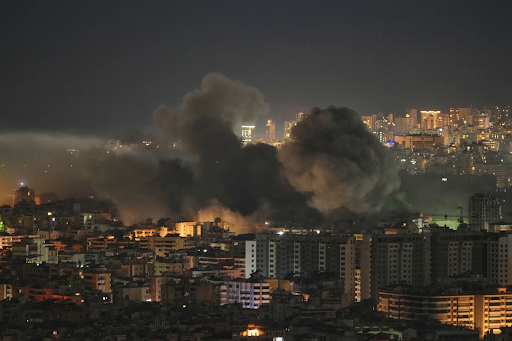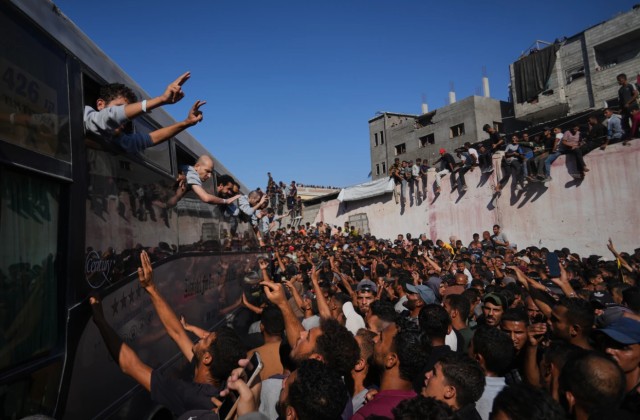
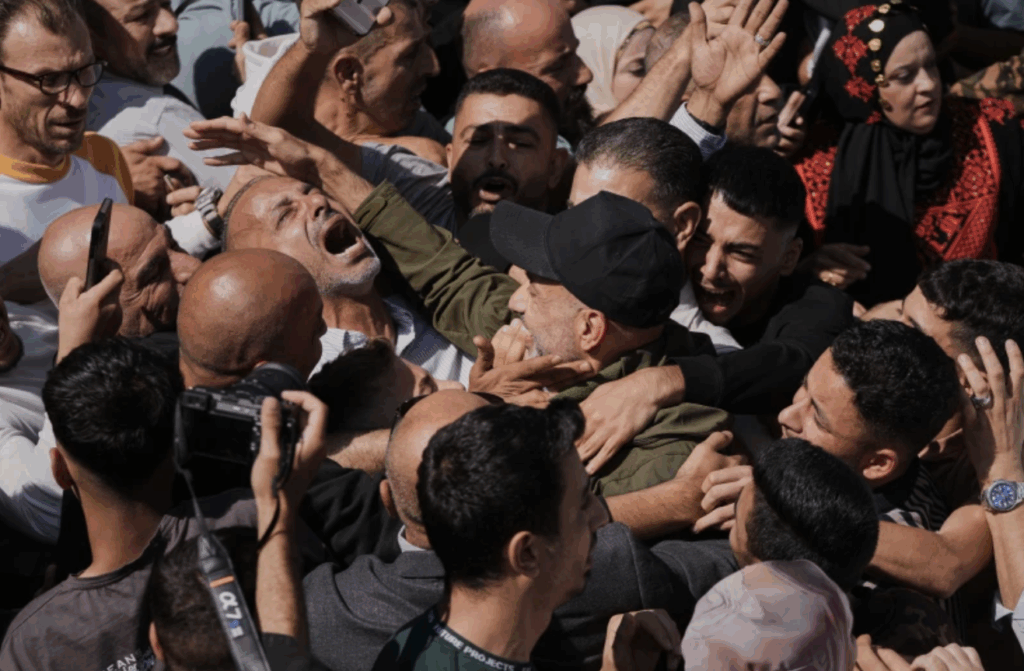
People gathered to greet freed Palestine prisoners arriving on buses in the Gaza strip after their release from Israeli jails under a ceasefire agreement between Hamas and Israel.
The guns have fallen silent in Gaza. On Monday, the long-awaited ceasefire brought freedom for Israeli hostages and the release of Palestinian prisoners. Yet, despite the historic breakthrough, the road ahead remains steep and uncertain. The task now goes far beyond halting the violence — it involves rebuilding lives, restoring trust, and laying the foundation for genuine peace.
A Hard-Won Moment of Calm
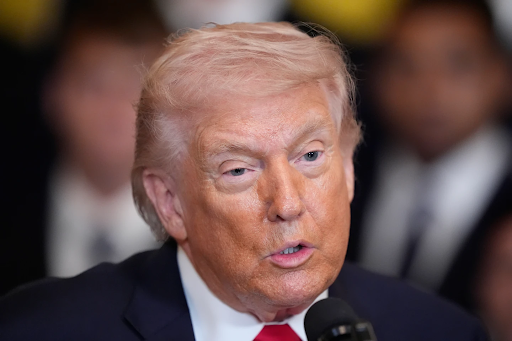
The fragile truce, brokered by President Donald Trump, was hailed as the “end of the war in Gaza” and the beginning of reconstruction. Standing beside world leaders at the Gaza International Peace Summit in Egypt, Trump declared, “Rebuilding is maybe going to be the easiest part.”
But peace experts warn that the challenges ahead are immense. “Peace has to start somewhere,” said Mona Yacoubian, Director of the Middle East Program at the Center for Strategic and International Studies. While calling the deal a “euphoric moment,” she cautioned that there are “several potential points of failure going forward.”
Unanswered Questions Cloud the Peace Plan
Many aspects of the ceasefire agreement remain vague. Key concerns — including how Hamas will disarm, where its weapons will go, and the timeline for Israel’s withdrawal — are yet to be defined.
Plans for a multinational peacekeeping force in Gaza are also uncertain. It is unclear which nations will contribute troops, how they will operate, or what happens if they face resistance. Similarly, the composition of the temporary governing body for Gaza and its acceptance by local residents remain open questions.
Experts believe that sustained diplomatic engagement from the U.S. and international allies will be essential to prevent the truce from unraveling. “Keeping the peace alive will require constant effort,” Yacoubian added.
Decades of Failed Peace Attempts
While optimism surrounds this ceasefire, history offers reasons for caution. Past U.S.-led peace efforts — from the 1991 Madrid Conference to the Oslo Accords and later negotiations — have repeatedly collapsed.
Lucy Kurtzer-Ellenbogen of the Middle East Institute described the current deal as “a meaningful but fragile pause.” She warned that unless the involved nations remain committed, the ceasefire could easily “serve as a chance for both sides to regroup” rather than a step toward resolution.
Trump’s Role and Political Complexities
Trump’s re-election gave him leverage to push forward talks between Israel and Arab mediators. Yet, even his plan leaves crucial issues unresolved — particularly the extent of Israel’s withdrawal and Hamas’s hold on power.
Israeli Prime Minister Benjamin Netanyahu has expressed support for Trump’s peace plan but stopped short of declaring the war over. His coalition’s hardline partners oppose ending the conflict without “total victory” over Hamas. Meanwhile, Hamas, though weakened, remains influential in Gaza’s governance.
The proposed “Board of Peace,” which Trump says he will chair, also faces uncertainty. Former British Prime Minister Tony Blair’s rumored involvement has already drawn Palestinian criticism. “I like Tony,” Trump said, “but I want to make sure he’s acceptable to everyone.”
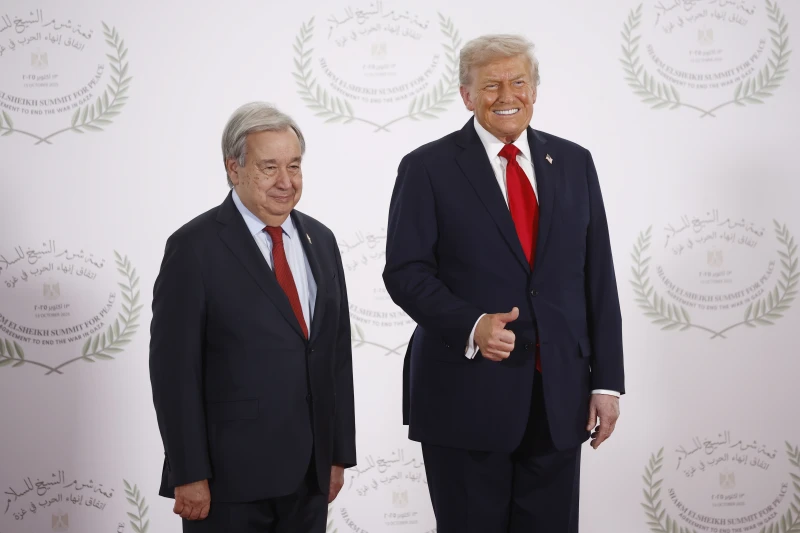
President Donald Trump and United Nations Secretary-General Antonio Guterres pose during the greeting ceremony before the family picture at the Gaza International Peace Summit, in Sharm el-Sheikh, Egypt, Monday, Oct.13 2025.
The Enormous Task of Rebuilding Gaza
Beyond political complexities, Gaza faces staggering humanitarian challenges. More than 90% of its 2 million residents are displaced. Hospitals lie in ruins. Homes, schools, and farmland are destroyed. Hunger and trauma grip the population.
The World Bank, the U.N., and the European Union estimate rebuilding costs at over $53 billion. Wealthy Arab states are expected to contribute — but only with guarantees of a credible peace process and a path to Palestinian self-determination.
“There’s no luxury of sequencing,” Kurtzer-Ellenbogen noted. “Reconstruction and governance must happen simultaneously.”
The Elusive Question of Statehood
Perhaps the most contentious issue remains Palestinian statehood. Trump’s plan mentions it only as a future possibility, after a “lengthy transition.” Netanyahu and his allies reject a two-state solution, while Palestinians see independence as essential for lasting peace.
Yacoubian observed that the agreement seems “purposely vague” to balance opposing expectations. “It avoids the term ‘two-state solution’ altogether,” she said, “which makes it palatable for Israel but problematic for Palestinians.”
As Trump departed Egypt, he sidestepped questions about Palestinian independence. “Some people like the one-state solution, some the two-state,” he said. “We’ll have to see.”
A Fragile Beginning
Despite cautious optimism, diplomats and analysts agree that sustaining peace will require relentless global attention. Robert Wood, former U.S. ambassador to the U.N., summarized it best: “It’s a good day, but the war isn’t over yet.”
The ceasefire in Gaza marks a rare moment of hope — but transforming that pause into permanent peace may prove the hardest battle of all.