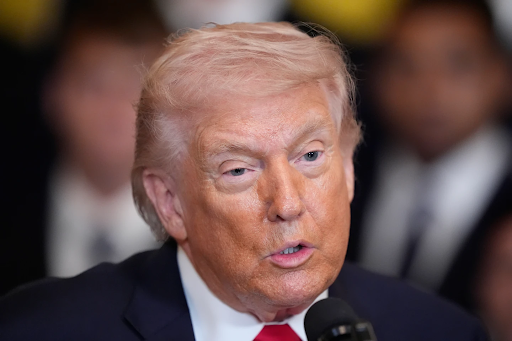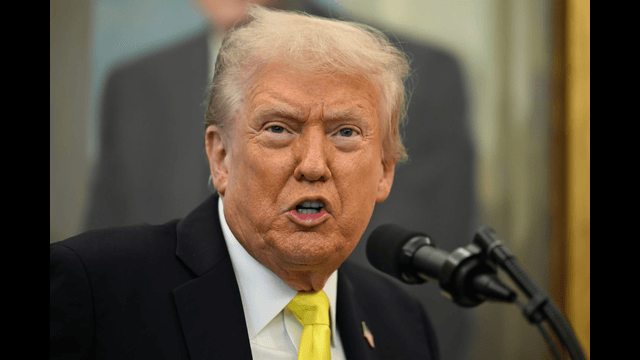
President Donald Trump speaks during an event in the Oval Office at the White House, Wednesday, Oct. 15, 2025, in Washington.
President Donald Trump has publicly confirmed that the CIA is conducting covert operations inside Venezuela, marking one of the most direct U.S. acknowledgments of secretive intelligence activities in recent years. Speaking from the Oval Office on Wednesday, Trump also revealed he is considering possible land operations in the region.
CIA Action Aimed at Drug Trafficking and Prison Releases
The confirmation follows a series of U.S. military strikes in the Caribbean targeting alleged drug-smuggling vessels linked to Venezuela. Since early September, five boats have been destroyed and 27 people killed. Four of those vessels reportedly originated from Venezuela.
When questioned about the CIA’s involvement, Trump said he authorized the operations for two primary reasons: Venezuela’s release of prisoners into the U.S. and the increasing drug trafficking coming from the country.
“They have emptied their prisons into the United States,” Trump stated. “And we have a lot of drugs coming in from Venezuela, mostly by sea.”
Trump added that his administration is “looking at land” as a potential next step but declined to confirm whether the CIA has authority to act directly against Venezuelan President Nicolás Maduro.
The unusual admission came shortly after The New York Times reported that the CIA had been given approval to carry out covert action in Venezuela.
Maduro Condemns U.S. “Interventionism”
Venezuelan President Nicolás Maduro fired back during a televised session of the National Council for Sovereignty and Peace. Without directly naming Trump, Maduro criticized the U.S. intelligence agency’s history of regime change and interventions.
“No to regime change that reminds us of the failed wars in Afghanistan, Iraq, and Libya,” he declared.
Maduro accused the CIA of fueling coups and violence across Latin America, referencing the 30,000 disappeared victims during Argentina’s dictatorship and the 1973 Chilean coup.
“How long will the CIA continue with its coups? Latin America rejects them,” he said passionately.
He concluded his remarks in English, appealing directly to Americans:
“Not war, yes peace. The people of the United States, please—no more war.”
Venezuela Calls U.S. Statements a “Violation of International Law”
Venezuela’s Foreign Ministry issued a statement condemning Trump’s comments as “bellicose and extravagant.” It argued that publicly admitting to authorizing operations against another sovereign state represents a serious breach of international law and the U.N. Charter.
Foreign Minister Yván Gil shared the statement on Telegram, urging the global community to denounce what it called “immoderate and inconceivable” U.S. behavior threatening peace in the region.
Congress Pushes Back Against Covert Escalation
Trump’s move has also sparked bipartisan backlash in Congress. Lawmakers warned that the administration’s actions—declaring drug cartels as unlawful combatants and launching strikes without congressional approval—could amount to an act of war.
Senator Jeanne Shaheen, a senior member of the Senate Foreign Relations Committee, expressed deep concern.
“Authorizing covert CIA actions and hinting at land operations slides the U.S. closer to open conflict,” she said. “There’s no transparency or oversight.”
Critics argue that the White House has yet to present solid evidence that the targeted boats were smuggling narcotics. Officials familiar with the operations, speaking anonymously, confirmed that Congress has only seen unverified video clips shared by Trump and Defense Secretary Pete Hegseth.
Human Rights Concerns and Global Implications
Human rights organizations have warned that these lethal strikes could constitute extrajudicial killings, violating international law. They fear the operations may escalate tensions across South America and the Caribbean, risking regional instability.
Trump, however, defended the aggressive strategy, calling traditional Coast Guard interdictions ineffective.
“We’ve been doing that for 30 years. It hasn’t worked,” he said. “They have fast boats—but not faster than missiles.”
A Region on Edge
As both Washington and Caracas trade accusations, the situation remains tense. The CIA’s involvement in Venezuela adds a volatile new layer to U.S.–Latin America relations, rekindling memories of past interventions.
Whether these covert operations will curb drug trafficking or ignite another regional conflict remains uncertain—but one thing is clear: the world is watching closely as U.S.–Venezuela tensions reach a new high.